What is nominal steel sheet thickness? Understand correctly to avoid buying under-gauge steel sheet.
1. Why is steel sheet thickness always a contentious issue?
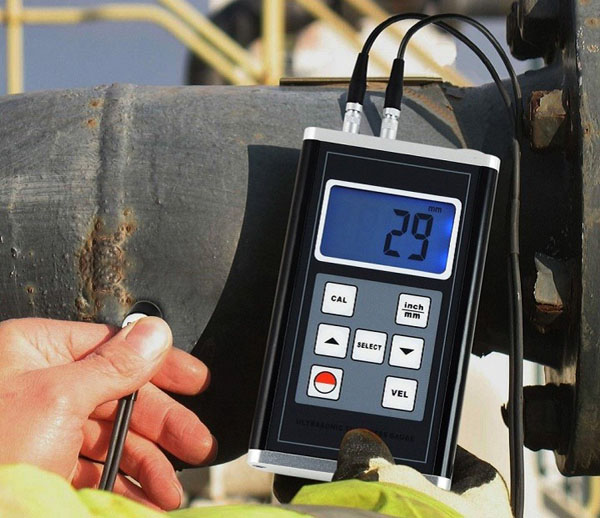
In the actual buying, selling, and construction of steel sheet, thickness is always the top concern. Many disputes between contractors and suppliers begin with a seemingly simple question: “Is this steel sheet the correct thickness?”
There are cases where contractors measure with calipers and find the steel sheet thinner than the number stated on the quotation, claiming they received an incorrect thickness. Meanwhile, the supplier asserts that the steel sheet still meets technical standards.
The root of this conflict often lies not in fraud, but in not correctly understanding the concept of nominal steel sheet thickness.
2. What is nominal steel sheet thickness?
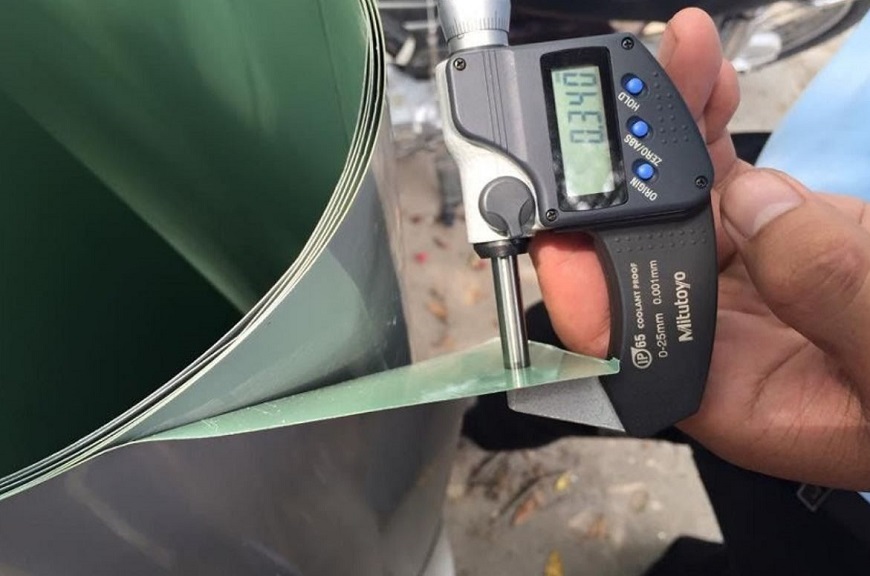
Nominal steel sheet thickness (nominal thickness) is the thickness value published according to technical standards, used for material classification, design, and calculation.
It is important to emphasize: nominal thickness is not the absolute thickness at every point on the steel sheet.
In other words:
- 0.40 mm, 0.45 mm, 0.50 mm… are nominal values
- Actual thickness may vary within an allowable range
- This range is called tolerance
The existence of tolerance is normal in industrial production, not just in the steel sheet industry.
3. Why can't steel sheet achieve absolute thickness?
In steel sheet production, material is rolled thin at high speed on a continuous line. Ensuring that every point on the steel sheet coil has absolute precise thickness is almost impossible.
Some factors affecting actual thickness:
- Stability of the base steel
- Error of the rolling system
- Influence of the coating process (galvanised, electro-galvanised)
- Thermal expansion/contraction during production
Therefore, technical standards always allow a certain tolerance range.
4. What is thickness tolerance and why must it be accepted?
Thickness tolerance is the allowable deviation range between the nominal thickness and the actual thickness of steel sheet.
Example:
- Nominal steel sheet 0.45 mm may allow a variation of ± a certain value
- As long as the actual thickness falls within this range, it is still considered standard
Tolerance is not a “loophole for fraud”, but a technical regulation aimed at:
- Ensuring mass production capability
- Keeping material costs at a reasonable level
- Ensuring consistency in design and construction
5. What are the consequences of misunderstanding nominal thickness?
Misunderstanding the concept of nominal thickness can lead to many consequences:
- Unnecessary disputes with the supplier
- Incorrect assessment of material quality
- Mistakenly buying genuinely under-thickness steel sheet without realizing it
- Impact on progress due to material doubts
The most dangerous case is when the contractor accepts genuinely under-thickness steel sheet because they do not know how to distinguish right from wrong according to standards.
6. What truly constitutes “under-thickness steel sheet”?
Measuring thinner than the nominal number does not automatically mean under-thickness steel sheet. Under-thickness steel sheet only occurs when the actual thickness falls outside the allowable tolerance.
Under-thickness steel sheet usually has the following signs:
- Measured thickness is significantly lower than the tolerance
- Abnormally light steel sheet coil weight
- CQ does not clearly state the tolerance or applicable standards
- Abnormally low selling price compared to the market
This is when contractors need to be highly vigilant.
7. How does nominal thickness affect design and construction?
In structural and cladding design, engineers always use nominal thickness to calculate:
- Load-bearing capacity
- Allowable deflection
- Material lifespan
Design is not based on a random measurement at the construction project, but on published material standards.
Therefore, if the steel sheet meets nominal thickness according to standards, the construction project still ensures technical safety.
8. Why are many contractors still “obsessed” with the measured number?
The common mindset is: “If I paid for 0.45 mm, it must measure exactly 0.45 mm”. However, this understanding is not consistent with industrial production reality.
Professional contractors usually:
- Are concerned with CQ and applicable standards
- Check allowable tolerance
- Cross-reference weight and technical documentation
Instead of relying solely on a single measurement.
9. The correct approach when evaluating steel sheet thickness
To correctly assess steel sheet thickness, contractors should:
- Understand nominal thickness and tolerance
- Carefully read the CQ of the shipment
- Measure at multiple different points
- Combine weight and visual inspection
This is a scientific approach suitable for the steel sheet and steel industry.
10. Supplier's role in thickness transparency
Not all suppliers clearly explain nominal thickness and tolerance to customers. This can easily lead to misunderstandings.
Phu Cuong Steel Sheet and Steel – Partnering with Every Construction ProjectPhu Cuong always provides clear advice on nominal thickness, technical tolerance, and transparent CQ for each batch of galvanised steel sheet and electro-galvanised steel sheet. This helps contractors understand correctly, choose correctly, and avoid the risk of purchasing under-gauge steel sheet.
11. Conclusion
Nominal steel sheet thickness is an important technical concept but easily misunderstood. Correctly understanding its nature, accepting standard tolerances, and knowing how to perform overall checks will help contractors avoid unnecessary disputes and material risks in construction projects.
CONTACT FOR FASTEST QUOTATION
PHU CUONG STEEL SHEET AND STEEL CO., LTD
Hotline/Zalo: 0933.91.98.99 (Ms. Ánh)
Hotline/Zalo: 0933.91.98.98 (Mr. Mạnh)
Website: tonthepphucuong.com
Commitment: Best price – On-time delivery – Standard quality products.