How to check steel sheet for correct thickness upon delivery at the construction project – Avoid discrepancies, avoid unnecessary costs
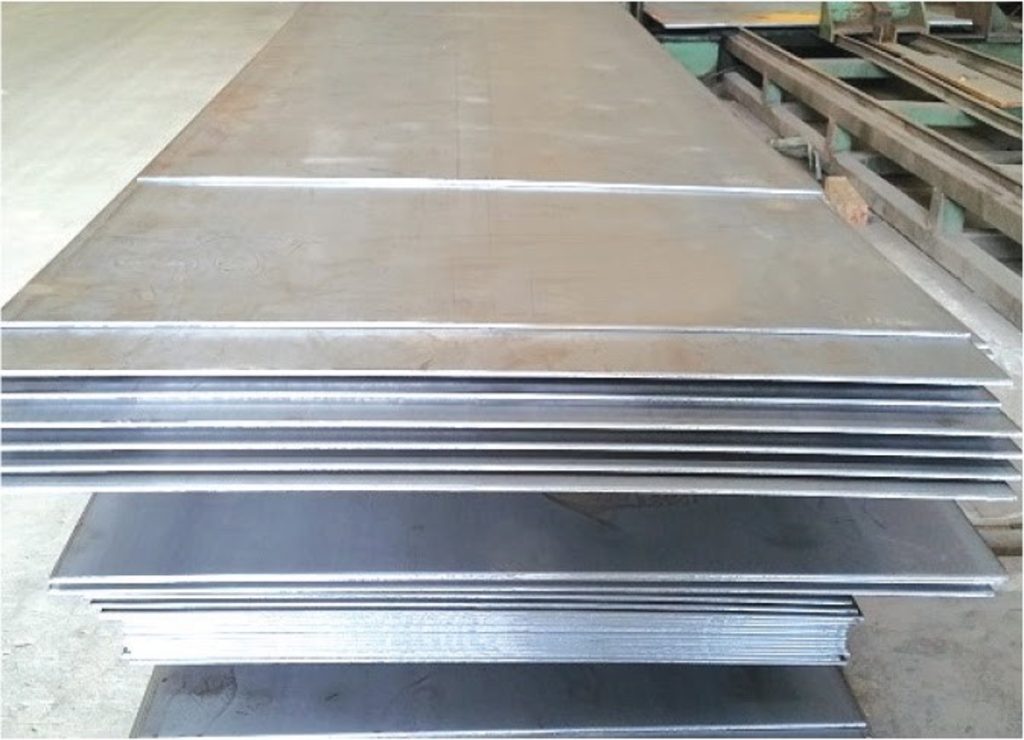
1. Why check steel sheet thickness upon receipt of goods?
In actual construction, steel sheet thickness (commonly called 'steel sheet gauge') is not only a technical specification on the quotation but also a decisive factor:
- Load-bearing capacity of roofs and factory walls
- Deflection, vibration during strong winds
- Lifespan of galvanised or colour coating
- Corrosion resistance in humid, saline, chemical environments
If the steel sheet is 0.02–0.03 mm thinner than standard, the total steel mass is significantly reduced, meaning the construction project is 'hollowed out' which buyers find difficult to detect without thorough inspection.
2. Concepts to understand correctly before measuring steel sheet
2.1. Nominal thickness and actual thickness
Many people confuse:
- Nominal thickness: the figure stated on the quotation, contract (e.g., 0.45 mm)
- Actual thickness: the measured thickness of the steel sheet after coating
According to standards, the declared thickness usually includes the coating layer. However, some places quote based on 'base gauge' or intentionally obscure this concept.
2.2. Base thickness and coating layer
A galvanised or colour-coated steel sheet consists of:
- Base steel core (base metal thickness)
- Galvanised or alloy coating + paint
If measured at the wrong location or with incorrect tools, the result can deviate significantly.
3. Most common and accurate way to check steel sheet thickness
3.1. Using a micrometer
This is the most direct, common, and easy-to-apply method at the construction project.
- Select a micrometer with 0.01 mm accuracy
- Measure at various locations on the steel sheet
- Avoid measuring at strongly pressed steel sheet ribs or bent edges
Note: Do not measure only one point and conclude, as manufacturing and shipping tolerances are real.
3.2. Checking by weight (indirect method)
For large orders, contractors can check by:
- Weighing the coil or bundle of steel sheet
- Comparing with theoretical mass according to steel sheet thickness and width
This method is suitable when receiving full coils or large quantities, helping to quickly detect cases where steel sheets are 'thinned out' in bulk.
3.3. Cross-referencing CO, CQ from the supplier
CO (Certificate of Origin) and CQ (Certificate of Quality) are important documents showing:
- Origin of steel billet
- Manufacturing standards
- Thickness, steel grade, coating layer
However, documents are only valid when accompanied by actual inspection. Never just look at CO, CQ and neglect measurements at the construction project.
4. Common mistakes when checking steel sheet thickness
- Only measure at 1 single point
- Use regular caliper instead of micrometer
- Do not distinguish between base thickness and post-coating thickness
- Too much trust in cheap quotation without checking
These mistakes cause many construction projects to quickly deteriorate after a few years, especially pre-engineered factories.
5. Practical experience from construction projects
In many factory projects, thorough checking of thickness from the beginning helps:
- Reduce later maintenance costs
- Avoid disputes with suppliers
- Ensure correct design and acceptance documents
Professional contractors often require random measurement of 5–10% of the sheets in each shipment.
6. Safe solution: choose a supplier that strictly controls thickness
Instead of just “spot checking” upon receiving goods, a more sustainable solution is to choose a company:
- Committed to correct thickness, correct specifications
- Has on-site fabrication workshop, controls input – output
- Provides full CO, CQ from large factories
Phu Cuong Steel Sheet & Steel – Accompanying Every Construction Project
With the motto “Quality makes the brand”, Phu Cuong Steel Sheet & Steel not only supplies galvanised steel sheet, electro-galvanised steel sheet EG – GA but also brings optimal technical solutions for contractors:
- New technology coil slitting and bending-stamping machine system
- Technical staff knowledgeable about drawings
- Genuine raw material source from large factories
- Commitment to correct thickness, flat and clean cut, minimize scratches
- Large steel sheet width from 1500 mm helps reduce material loss
- Own trucks, fast delivery – optimize costs
7. Conclusion
Checking steel sheet thickness upon receipt is not a formality, but a direct step to protect the quality and cost of the construction project. By investing a few more minutes for measurement and choosing the right reputable supplier, you can avoid risks that could last for decades.
Phu Cuong Steel Sheet and Steel – Leading Reputable Large Width Steel Sheet Distributor
With the advantage of owning a large warehouse and modern machinery system, Phu Cuong Steel Sheet and Steel is committed to providing customers with the highest quality large width galvanised steel sheet, EG steel sheet products on the market.
Main products: Galvanised steel sheet width 1000mm, 1250mm, 1500mm, EG/GA steel sheet, color-coated cold-rolled steel sheet.
Services: Support cutting to customer specifications, on-site delivery.
Contact information:
Address: 2177C - 2177D National Highway 1A, Dong Hung Thuan Ward, District 12, Ho Chi Minh City
Phone: 0933 919 899
E-mail: tonthepphucuong@gmail.com
Website: https://tonthepphucuong.com