Standard Thickness Tolerance for Steel Sheet (Avoid Shortage Upon Delivery)
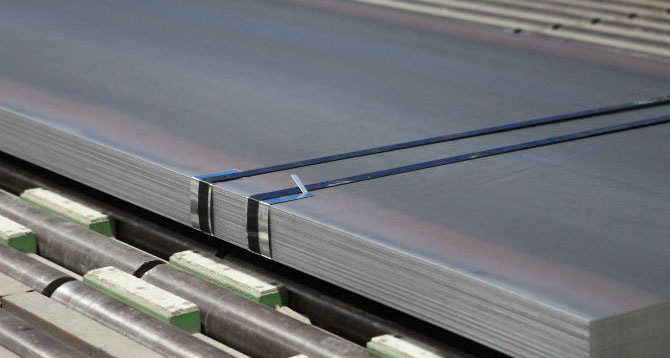
In reality, many contractors receive steel sheet and find it “short on gauge” compared to the quotation. However, this is not always the supplier's fault.
The main reason lies in misunderstanding steel sheet thickness tolerance – a technical concept that directly affects the cost and quality of the construction project.
This article will help you understand tolerance standards, how to read specifications correctly, and most importantly: avoid being short on gauge when receiving goods.
The truth: most cases of “short gauge steel sheet” are not due to fraud, but due to misunderstanding tolerance. If you measure incorrectly, you might mistakenly reject standard compliant goods.
1. What is steel sheet thickness tolerance? Understanding the true technical nature, not just the number
Steel sheet thickness tolerance is the permissible deviation range between nominal thickness (nominal thickness – stated on the quotation, contract) and actual thickness of the product after manufacturing.
However, understanding tolerance merely as “± how many mm” is insufficient. From a technical perspective, tolerance is the result of technological limitations during the steel rolling process, not a manufacturing defect.
1.1. Nominal thickness vs actual thickness
In commercial transactions, the declared thickness is nominal thickness – for example: 1.20 mm, 0.80 mm… This is the target value of the mill.
However, in actual production:
- the steel sheet cannot achieve an exact absolute number over its entire length
- micro-fluctuations always exist during the rolling process
→ Therefore, the standard does not require “exactly 100%”, but specifies a permissible error range.
1.2. Tolerance is not a defect – it is a standard
A very common misunderstanding is: measuring thinner → concluding “short on gauge”.
In reality, if the thickness falls within the tolerance range according to standards (JIS, ASTM, EN…), the material is still considered technically compliant.
Example:
- nominal steel sheet 1.20 mm
- actual measurement ~1.15 mm
→ If within permissible tolerance → completely valid.
1.3. Technological nature: why does tolerance always exist?
The steel sheet production process (hot-rolled, cold-rolled) is a continuous, high-speed process influenced by many factors:
- accuracy of the rolling mill system
- elastic deformation of the material
- temperature and stress during the rolling process
- mechanical fluctuations of the production line
No matter how advanced the technology, these variations cannot be completely eliminated.
→ Therefore, tolerance is a physical – technological limitation that must exist.
1.4. Tolerance along length and width – not absolutely uniform
Steel sheet thickness does not only deviate by a single value, but can also vary:
- along the coil length (longitudinal variation)
- across the width (crown, edge thinning)
Typically:
- the middle area is more stable
- coil edges can be thinner or thicker (edge effect)
→ Therefore, standards always require averaging multiple measurement points, not using a single measurement point to conclude.
1.5. Practical significance in purchasing and acceptance
Understanding tolerance correctly helps you:
- avoid misjudging standard compliant material
- read quotations more accurately
- avoid disputes with suppliers
Conversely, if you do not understand tolerance, you are very likely to:
- mistakenly reject standard compliant goods
- or accept inferior goods due to incorrect inspection methods
1.6. Conclusion
Thickness tolerance is not a random error, but a part of the technical standard.
What is important is not the number measured at a single point, but:
whether the entire material falls within the permissible tolerance limits.
Comparing tolerance according to common standards
- JIS (Japan): strict tolerance, common in Vietnam
- ASTM (USA): more flexible, depends on steel grade
- EN (Europe): strictly controlled by product group
In practice, the same nominal thickness may have different tolerances depending on the applicable standard. Therefore, when reviewing a quotation, the accompanying standard must be clearly identified.
3. Common steel sheet thickness tolerance standards
3.1. Tolerance according to technical standards
Depending on the manufacturing standard (JIS, ASTM, EN…), steel sheet thickness tolerance typically ranges within:
Reference tolerance table by thickness
| Nominal thickness (mm) | Typical tolerance (mm) |
|---|---|
| 0.40 | ±0.02 |
| 0.50 | ±0.02 |
| 0.80 | ±0.03 |
| 1.00 | ±0.03 |
| 1.20 | ±0.04 |
Note: specific values depend on the standard (JIS, ASTM, EN) and the manufacturer.
- ±0.02 mm to ±0.04 mm for thin steel sheet
- Percentage of nominal thickness for thicker steel sheet
It is important that: the tolerance applies to base thickness or post-coating thickness must be clearly defined.
3.2. Permissible tolerance ≠ right to arbitrarily cut thin
Many mistakenly believe that “having tolerance” means steel sheet can be as thin as desired. In reality:
- Tolerance is a technical limit, not an optional range
- Exceeding tolerance is a standard violation
- May be rejected during acceptance
4. How to read steel sheet quotations to avoid being "short-changed"
4.1. Checklist for inspecting steel sheet upon receipt
- Measure thickness with a micrometer at at least 5 points
- Avoid measuring at the sheet edge (edge effect)
- Compare with permissible tolerance
- Check actual weight (kg)
- Compare with CO, CQ if available
4.1.2 Beware of quotations with vague specifications
Some quotations only state:
- “galvanised steel sheet 0.45 mm”
- “Color-coated steel sheet 4.5 zem”
But do not clearly state:
- Base thickness or post-coating thickness
- Applicable manufacturing standard
- Permissible tolerance
4.2. What should a technically correct quotation include?
- Nominal thickness (mm)
- Clearly specify base or post-coating
- Manufacturing standard
- Reference weight (kg/m² or kg/coil)
- Accompanying CO, CQ
5. Relationship between thickness tolerance and steel sheet weight
A point often overlooked: thickness and weight always go hand in hand.
If steel sheet is 0.03 mm thinner over a large area:
- Steel weight significantly decreases
- Material cost decreases
- But load-bearing capacity and lifespan also decrease
Therefore, professional contractors often compare both measured thickness and actual weight.
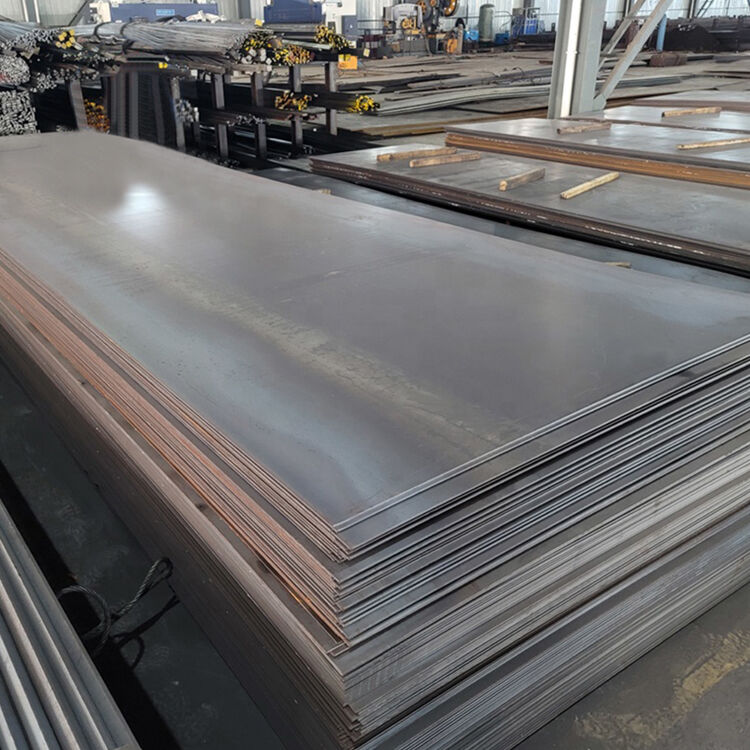
6. Tolerance and legal liability in construction
In construction project acceptance and insurance documents, materials must be:
- Correct type
- According to published standards
- Within permissible tolerance
If steel sheet is found to exceed tolerance:
- The investor has the right to demand replacement
- The contractor is responsible for incurred costs
- Affects reputation and future bidding success
If you don't understand tolerance, you might lose money without realizing it. Conversely, if you understand it correctly, you will control material quality right from the quotation stage.
7. Safe solution: choose a transparent quotation provider from the start
Instead of “reading quotations by feeling”, the most sustainable solution is:
- Choose a supplier with transparent specifications
- Has fabrication workshop and input control
- Ready for random measurement and inspection
Phu Cuong Steel Sheet & Steel – Accompanying Every Construction Project
With the orientation “Quality makes the brand”, Phu Cuong Steel Sheet always:
- Quotation clearly states thickness – standard – tolerance
- Supplies genuine blanks from major factories
- On-site fabrication with modern coil slitting – pressing machinery system
- Commits to correct thickness, correct specifications
- Large steel sheet width from 1500 mm upwards helps reduce waste
- Own trucks, fast delivery in Ho Chi Minh City and surrounding areas
8. Conclusion
Steel sheet thickness tolerance is not a “grey area” to accept risks, but a technical specification that needs to be correctly understood and strictly controlled. When contractors correctly read the quotation and master tolerance standards, the construction project will be protected right from the material foundation.
Phu Cuong Steel Sheet – Leading Reputable Large Width Steel Sheet Distributor
With the advantage of owning a large warehouse and modern machinery systems, Phu Cuong Steel Sheet commits to bringing customers the highest quality large width galvanised steel sheet, EG steel sheet products on the market.
Main products: Galvanised steel sheet width 1000mm, 1250mm, 1500mm, EG/GA steel sheet, color-coated cold steel sheet.
Services: Supports cutting to customer specifications, on-site delivery.
Contact information:
Address: 2177C - 2177D National Highway 1A, Dong Hung Thuan Ward, District 12, Ho Chi Minh City
Phone: 0933 919 899
E-mail: tonthepphucuong@gmail.com
Website: https://tonthepphucuong.com
See more related articles:
- How to Measure Galvanised Coating Layer at Construction Project: Avoid Errors When Checking Z100, Z180, Z275
- How to choose appropriate steel sheet thickness for each prefabricated workshop item
- How to check correct steel sheet thickness upon goods receipt at construction project – Avoid errors, avoid unnecessary loss of money