What is CO in the steel industry? Legal meaning that contractors need to know
1. What is CO in the steel sheet and steel industry?
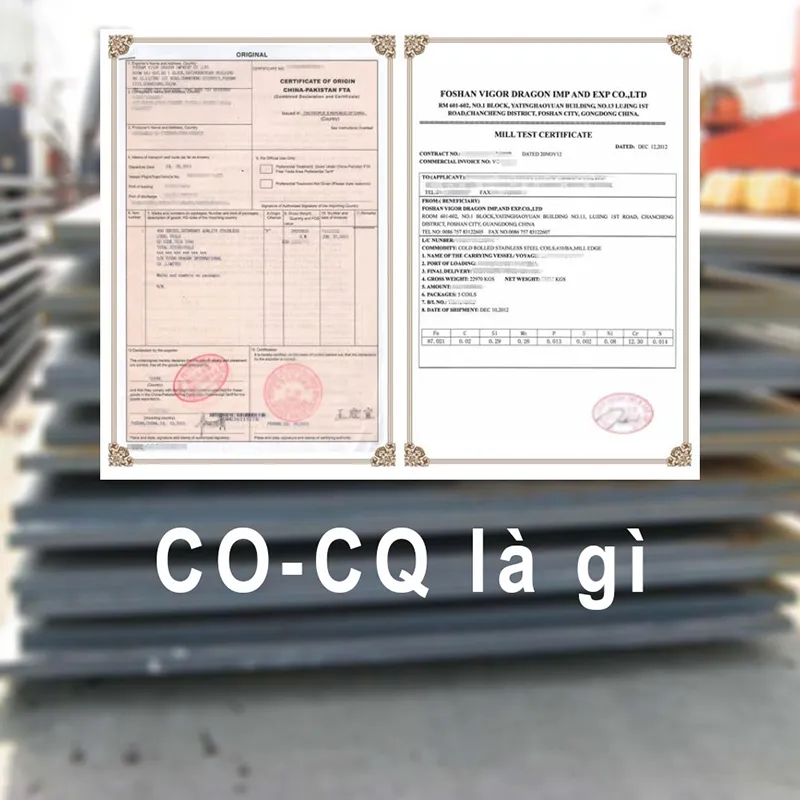
CO stands for Certificate of Origin – Certificate of Origin. In the steel sheet and steel industry, CO is used to confirm that the supplied steel sheet batch has a clear, legal manufacturing origin, consistent with the published information about the factory, country, or region of production.
In other words, CO answers the core question: “Where is this steel sheet manufactured?”. This is a particularly important factor in the context of the steel sheet and steel market, which has a mix of genuine goods, re-fabricated goods, imported goods, and even goods of unknown origin.
CO does not assess the technical quality of the steel sheet, but only confirms origin. However, origin is the basis for:
- Determining the legality of materials
- Serving bidding and acceptance documents
- Meeting the requirements of investors and auditing units
2. Why has CO become important in the steel sheet and steel industry today?
Previously, for small-scale, civil construction projects, CO was often not emphasized. However, in recent years, as industrial projects, factories, logistics areas, and large capital construction projects have strongly developed, CO has become an almost default requirement.
The reasons come from 4 main factors:
2.1. Tightening management of construction materials
Management agencies are increasingly tightening control over material origins to limit commercial fraud, tax evasion, and the use of low-quality materials.
2.2. Increase in projects with state capital and FDI
These projects often require complete legal documents, of which CO is a mandatory component.
2.3. Stricter auditing and settlement of construction projects
Many contractors only realize when entering the settlement phase and are required to supplement CO for materials already used.
2.4. Market risks of unregulated steel sheet and steel
Not a few cases where steel sheet is advertised as “genuine goods” but in fact has no accompanying legal documents.
3. What information does CO in the steel sheet and steel industry include?
A valid CO in the steel sheet and steel industry usually shows the following basic contents:
- Manufacturer's name or country of origin
- Description of goods (type of steel sheet, in coil or sheet form)
- Lot number, bill of lading number, or related invoice number
- Date of CO issuance and issuing unit
It is important that CO must be consistent and unified with other documents such as invoices, warehouse release notes, and CQ (Certificate of Quality).
4. How is CO different from CQ? Why cannot they be substituted for each other?
A common mistake is to assume that “only CQ is sufficient, CO is not needed.” This is a viewpoint very dangerous in large projects.
The core difference:
- CO: proves origin
- CQ: proves technical quality
CQ can indicate thickness, coating layer, manufacturing standards, but does not state where the steel sheet comes from. Meanwhile, CO is the legal basis to determine the legality of the shipment.
5. Cases where construction projects must have CO
Not all construction projects require CO, but the following cases are almost mandatory:
- Construction projects using state budget capital
- Industrial park and export processing zone projects
- Factories for FDI enterprises
- Construction projects with independent audits
- Tender packages requiring detailed material documents
In these cases, the lack of CO can lead to inability to accept materials, or even requiring dismantling or replacement.
6. Actual risks when using steel sheet and steel without CO
In reality, many risks have occurred simply because CO was underestimated:
- Material acceptance rejected
- Payment not made on schedule
- Required to replace the entire installed steel sheet batch
- Incurring large costs and delaying the construction project schedule
Notably, this risk often does not appear immediately, but only manifests at the acceptance or settlement stage, leaving contractors unable to react in time.
7. What influence does CO have on the decision to choose a steel sheet supplier?
For professional contractors, CO is one of the important criteria when choosing a supplier. A unit that cannot provide clear CO often comes with other risks:
- Unstable supply source
- Difficulty in long-term quality control
- Lack of legal responsibility in case of incidents
Conversely, a supplier with complete CO is usually a well-organized, transparent business and capable of long-term partnership with the project.
8. Is CO always needed for all types of steel sheet?
The answer is not always mandatory. For small, civil construction projects, CO may not be required. However, if the construction project has:
- Large scale
- Strict legal requirements
- Audit and settlement plan
then preparing CO from the beginning is the safest option.
9. Solutions to mitigate CO-related risks for contractors
To avoid risks, contractors should:
- Request CO right from the quotation stage
- Cross-reference CO with invoices and CQ
- Keep complete CO records for each shipment
- Prioritize suppliers with transparent documentation
10. Role of suppliers in ensuring CO
In reality, not every contractor has enough time and resources to check each document. Therefore, the role of the supplier is extremely important.
Soft PR: Phu Cuong Steel Sheet and Steel – Partnering with All Construction ProjectsWith the motto "Quality builds the brand", Phu Cuong Steel Sheet and Steel is committed to supplying complete CO for galvanised steel sheet and electro-galvanised steel sheet product lines, especially large width products from 1500mm upwards. The warehouse system, fabrication workshop, and technical team help contractors feel secure about both materials and legal documents.
11. Conclusion
CO in the steel sheet and steel industry is not just a formal document but a core legal factor protecting contractors from acceptance and audit risks. Understanding correctly, requesting correctly, and choosing the right supplier from the start will help construction projects operate smoothly and sustainably.
See more related articles:
- Which construction projects must have CO, CQ when using steel sheet and steel? Contractors need to understand correctly to avoid acceptance risks.
- Green Electro-Galvanised Steel – Durable, Aesthetic Material Solution from Phu Cuong Steel Sheet and Steel
- Common Mistakes When Choosing Steel Sheet for Pre-engineered Workshops (And How to Avoid Them)