What is cold-rolled steel? What is CR oiled steel sheet? Differentiate between hot-rolled steel and cold-rolled steel in steel sheet and steel fabrication.
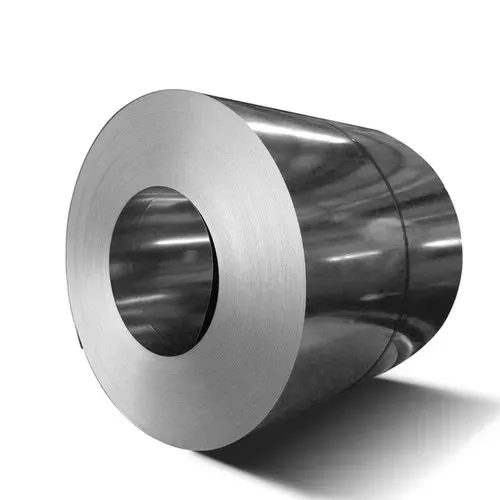
What is cold-rolled steel?
Cold-rolled steel is a type of steel produced by rolling at room temperature, after the steel has undergone the hot-rolled process. In the steel sheet and steel industry, cold-rolled steel is often called CR oil-coated steel sheet (Cold Rolled), this is a high-precision material with a smooth surface and is widely used in mechanical engineering, manufacturing, and metal fabrication.
The production process of cold-rolled steel starts from hot-rolled steel. After the hot-rolled steel is cooled, the steel coil will be fed into the cold-rolling system to continue rolling thinly at room temperature. This process helps better control the thickness, flatness, and hardness of the steel, creating a product of higher quality compared to hot-rolled steel.
Unlike hot-rolled steel which has a rough surface and large errors, cold-rolled steel has a bright, smooth surface, fewer oxide scales, and high uniformity. Thanks to these characteristics, cold-rolled steel is very suitable for tasks requiring high precision, especially in mechanical fabrication, machine part manufacturing, and metal structure production.
In practice, cold-rolled steel is often preserved by coating a layer of anti-rust oil on the surface, therefore, in the industry, it is also called oil-coated steel sheet. This oil layer helps limit the oxidation process during storage, transportation, or fabrication, while not affecting the steel quality during use.
Cold-rolled steel has many outstanding advantages such as precise thickness, beautiful surface, easy fabrication, and high hardness. As a result, this material is often used in tasks such as sheet cutting, steel flat bar cutting, forming, stamping, bending, or fabrication according to technical drawings. For mechanical workshops and construction projects requiring high precision, cold-rolled steel is almost a standard material.
An important point is that cold-rolled steel is often produced in various thicknesses and widths, from thin to thick, from small to large widths. When selecting the correct specifications, fabrication will be easier, reducing material waste and saving construction costs.
Currently, cold-rolled steel is widely used in industries such as construction, mechanical engineering, industrial production, machine manufacturing, structural fabrication, and equipment manufacturing. This is one of the most important materials in the modern steel sheet and steel industry.
- Refer to the cold-rolled steel (oil-coated CR steel sheet) products of Phu Cuong Steel Sheet and Steel here, with preferential prices COLD-ROLLED STEEL - OIL-COATED CR STEEL SHEET

Distinguishing between cold-rolled steel and hot-rolled steel
In the steel sheet and steel industry, cold-rolled steel and hot-rolled steel are two very common but easily confused types of materials. Although both are produced from steel coil, the rolling process, mechanical properties, precision, and intended use of these two types are completely different. Understanding the difference between hot-rolled steel and cold-rolled steel helps select the correct material, reduce costs, and ensure quality during fabrication.
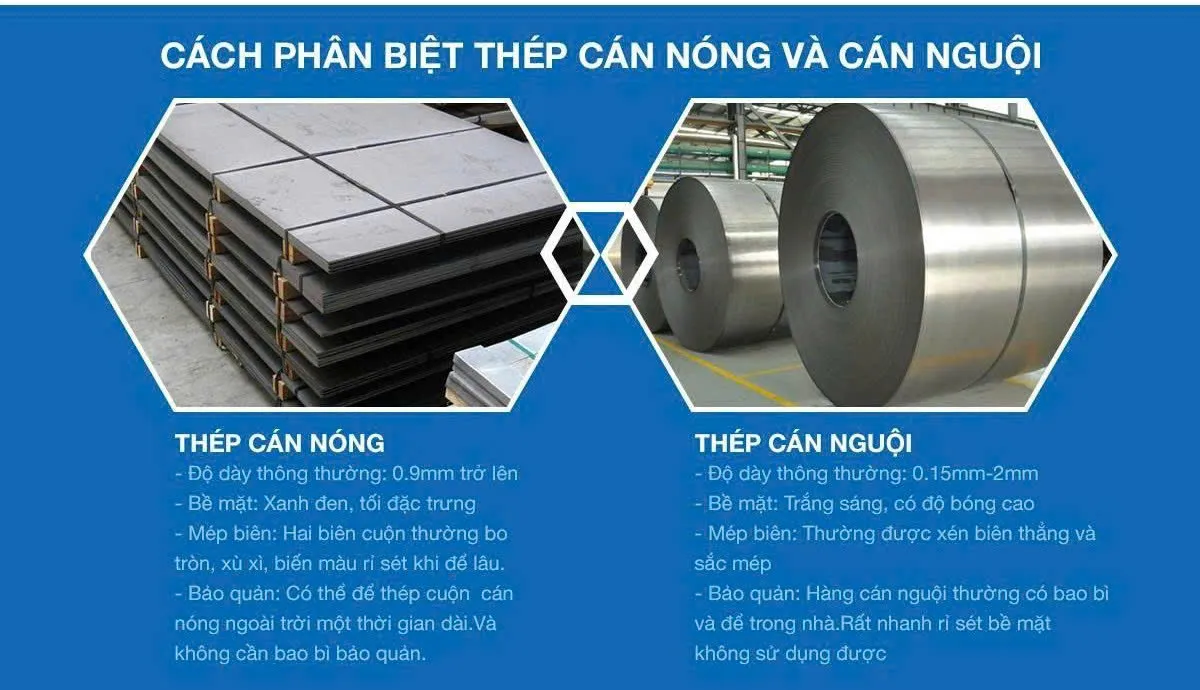
Differences in production process
Hot-rolled steel is produced by rolling steel at high temperatures, usually above 1000°C. When the steel is in a red-hot state, the metal is softer, making it easier to roll into sheets or coils. After rolling, the steel is allowed to cool naturally, so the surface often has a black oxide layer.
Meanwhile, cold-rolled steel is produced from pre-treated hot-rolled steel. After the hot-rolled steel surface is cleaned, the steel coil will be fed into the rolling mill at room temperature to continue rolling thinly. This process helps control the thickness, flatness, and precision of the material well.
Precisely because it is rolled at room temperature, cold-rolled steel has smaller tolerances and higher surface quality compared to hot-rolled steel.
Differences in material surface
Hot-rolled steel usually has a rough, black or bluish-black surface due to the oxide layer formed during the high-temperature rolling process. The steel surface may be uneven and have certain thickness errors.
Conversely, cold-rolled steel has a smoother, brighter, and flatter surface. When coated with anti-rust oil, the steel surface is bright or slightly glossy, with few impurities, and is very suitable for tasks requiring aesthetics or high precision.
This is why cold-rolled steel is often used in mechanical fabrication, while hot-rolled steel is often used in structures.
Differences in precision and tolerance
Due to being rolled at high temperatures, hot-rolled steel has larger errors in thickness and flatness. In many cases, the thickness may differ from the published specifications.
Cold-rolled steel is rolled at room temperature with high-precision machinery systems, therefore, tolerances are much smaller. This is especially important in tasks such as sheet cutting, steel flat bar cutting, forming, stamping, or fabrication according to technical drawings.
When high precision is required, cold-rolled steel is always the more suitable choice.
Differences in mechanical properties and hardness
Hot-rolled steel has higher ductility due to being rolled at high temperatures. This makes the steel easy to bend, easy to weld, and suitable for large structures.
Cold-rolled steel has higher hardness because the cold-rolling process increases the strength of the metal. As a result, the steel has better load-bearing capacity and maintains its precise shape after fabrication.
However, high hardness also makes cold-rolled steel more difficult to fabricate if unsuitable equipment is used. Therefore, it is necessary to use flat bar cutting machines, forming machines, or specialized cutting machines.
Differences in fabrication capability
Hot-rolled steel is often used for tasks not requiring high precision such as making large frames, structures, beams, columns, or load-bearing components.
Cold-rolled steel is suitable for tasks requiring precision and aesthetics such as:
- Steel flat bar cutting
- Sheet cutting
- Forming
- Stamping
- Mechanical fabrication
- Equipment manufacturing
- Making door frames
- Making machine parts
In practice, many mechanical workshops only use cold-rolled steel for parts requiring precise dimensions.
Differences in applications in the steel sheet and steel industry
Hot-rolled steel is often used in:
- Factory structures
- Beams, columns
- Load-bearing structures
- Steel section production
Cold-rolled steel is often used in:
- Mechanical fabrication
- Steel flat bar cutting
- Forming and stamping
- Equipment manufacturing
- Fabrication according to drawings
- Making doors, railings, steel frames
Choosing the correct type of steel helps reduce costs, increase durability, and ensure a smooth construction process.
When should cold-rolled steel be used?
Should use cold-rolled steel when needing:
- High precision
- Beautiful surface
- Mechanical fabrication
- Forming and stamping
- Steel flat bar cutting
- Cutting according to drawings
- Small part fabrication
In tasks requiring high precision, cold-rolled steel is almost a standard material.
Advantages of cold-rolled steel
- Smooth, beautiful surface
- Precise thickness
- Easy to cut, shear, form
- Less warping
- Suitable for mechanical fabrication
- Easy to paint and coat
Thanks to these advantages, cold-rolled steel is widely used in mechanical workshops and construction projects requiring high precision.
Applications of oil-coated CR steel sheet in practice
Oil-coated CR steel sheet is used in many fields:
- Mechanical fabrication
- Machine manufacturing
- Making steel frames
- Making railings
- Making doors
- Making structures
- Steel flat bar cutting fabrication
- Bending and stamping fabrication
This material is very suitable for high-precision tasks.
Custom cold-rolled steel fabrication
Cold-rolled steel is usually fabricated by these methods:
- Decoiling
- Sheet cutting
- Steel flat bar cutting
- Bending
- Stamping
- Cutting according to drawing
On-site fabrication at the warehouse helps save costs and ensures correct specifications.
How to choose cold-rolled steel correctly
- Choose the correct thickness
- Choose the correct width
- Check the surface
- Check the flatness
- Choose a supplier with on-site fabrication
- Choose a supplier with CO CQ
Choosing the correct material helps the construction project be durable and saves costs.
Ton Thep Phu Cuong – Reputable Cold-Rolled Steel Supplier
- Ton Thep Phu Cuong specializes in supplying cold-rolled steel, oiled CR steel sheet, galvanised steel sheet, EG steel sheet, GA, and offers custom fabrication services for steel flat bar cutting, decoiling, bending, and stamping.
- Large warehouse, available in widths up to 1500mm, with on-site fabrication machinery, fast delivery in Ho Chi Minh City.
- Address: 2177C – 2177D National Highway 1A, Dong Hung Thuan Ward, District 12
- Phone: 0933 919 899
- Email: tonthepphucuong@gmail.com
- Website: tonthepphucuong.com
You can refer to related articles:
- What is EG steel sheet? Advantages, applications, and how to choose the correct electro-galvanised steel sheet SECC – GA in construction.
- What Is Steel Flat Bar Cutting? Precise Steel Flat Bar Cutting Fabrication in District 12, Ho Chi Minh City.
- Electro-Galvanised Grey Steel (GA) – High-Quality Material Preferred at Ton Thep Phu Cuong