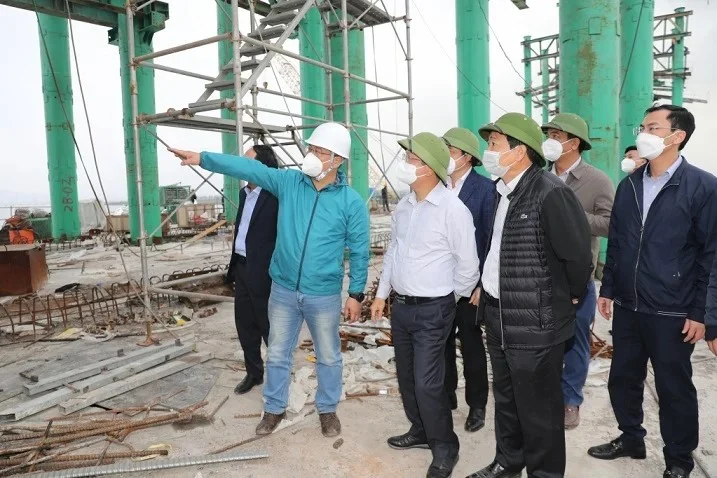
Which construction project must have CO, CQ when using steel sheet and steel? Contractors need to understand correctly to avoid acceptance risks.
1. Why does the question “is CO, CQ mandatory?” always cause debate?
In actual construction, many contractors have asked the question: “Does this construction project require CO, CQ?”. It is worth noting that for the same type of steel sheet material, some construction projects have very strict CO, CQ requirements, while others almost do not mention it.
The reason is: CO and CQ are not a rigid requirement for every construction project, but depend on many factors such as type of construction project, funding source, level of control and acceptance requirements.
Misunderstanding or subjectivity in the initial stage often leads to consequences in the final stage – when the construction project has been completed but the documentation is insufficient for acceptance.
2. General principle: when do CO, CQ become mandatory requirements?
Essentially, CO and CQ become mandatory requirements when the construction project meets one or more of the following conditions:
- There are clear legal requirements regarding material origin and quality
- There is involvement from supervision consultants, auditors or regulatory bodies
- There is a high risk of legal liability if materials do not meet requirements
In these cases, CO and CQ are no longer “reference documents” but become a necessary condition for acceptance.
3. Construction projects that must have CO, CQ when using steel sheet
3.1. Construction projects using state budget funds
This is the group of construction projects with the strictest CO, CQ requirements. Projects using budget funds are subject to strict control from input materials to final settlement.
For this group of construction projects:
- CO proves the legal origin of materials
- CQ proves materials meet technical standards
Missing one of the two documents can lead to non-acceptance or being disallowed during final settlement.
3.2. Industrial park construction projects, large-scale workshops
Workshops in industrial parks are often managed by the industrial park management board and strict internal standards.
In this case, CO, CQ help to:
- Ensure materials meet registered standards
- Serve periodic inspection and audit work
- Reduce dispute risks between the investor and the contractor
In reality, many workshops cannot complete acceptance due to insufficient material documentation, with CO, CQ being a common reason.
3.3. Foreign Direct Investment (FDI) projects
FDI projects often apply material management standards according to international practice. For this group of projects, CO and CQ are almost a default requirement.
Not only for acceptance, CO and CQ are also used for:
- Cross-referencing with the group's internal standards
- Serving internal or independent audits
- Serving as a basis for explanation in case of technical issues
Contractors lacking CO, CQ in FDI projects are often rated low in management capacity.
3.4. Construction projects with supervision consultants and independent auditors
The presence of supervision consultants and independent auditors means that all materials must have clear documentation.
In this context:
- CO helps auditors determine material origin
- CQ helps supervision consultants cross-reference with the design
Many construction projects do not encounter problems during construction but are 'stuck' at the acceptance stage due to lack of CO, CQ documentation.
4. Construction projects may not require CO, CQ (but should still have them)
4.1. Small-scale civil construction projects
For individual houses, small-scale projects, the requirement for CO, CQ is often not mandatory. However, this does not mean they can be completely ignored.
If the investor has high requirements for quality or warranty, CO, CQ are still a great advantage.
4.2. Small-scale renovation and repair projects
Small repair projects are often not strictly controlled for material documentation. However, if using steel sheet and steel in large quantities, preparing CQ still helps control quality better.
5. Why for the same type of construction project are the CO, CQ requirements different?
This difference comes from:
- Different investors
- Different levels of control
- Different internal documentation requirements
Some investors do not require CO, CQ at the initial stage but then request them later during acceptance or final settlement, causing difficulties for the contractor.
6. Actual risks when a construction project requires CO, CQ but the contractor does not prepare them
Common risks include:
- Delayed acceptance
- Delayed payment
- Required to replace materials
- Incurring significant unexpected costs
Notably, these risks often occur at the final stage – when almost all costs have been incurred.
7. How contractors determine from the outset whether a construction project needs CO, CQ
To avoid risks, contractors should:
- Review tender documents and contracts
- Discuss clearly with the investor about documentation requirements
- Consult with supervision consultants from the outset
- Prepare CO, CQ for main items
The safety principle is: if unsure, prepare CO, CQ.
8. Role of suppliers in supporting CO, CQ for construction projects
Not all contractors have experience handling material documentation. Therefore, the role of suppliers is a key factor.
Promotional message: Phu Cuong Steel Sheet and Steel – Accompanying Every Construction Project. Phu Cuong not only supplies galvanised steel sheet, electro-galvanised steel sheet EG – GA but also actively provides full CO, CQ support for each shipment. With experience working on many industrial projects and factories, Phu Cuong helps contractors minimize documentation risks during acceptance.
9. Conclusion
CO and CQ are not always mandatory for every construction project, but for industrial projects, large capital projects, or those with strict control, these are indispensable factors. Understanding the type of your construction project and preparing documents from the beginning will help contractors avoid legal and financial risks later on.
To preserve and optimize the use of materials in construction projects, you can see more Why steel sheets get scratched during transportation and effective solutions to avoid affecting material quality.