Why large contractors always require CO, CQ when purchasing steel sheet and steel? Risk management mindset behind material decisions
1. Where does the biggest difference between large and small contractors lie?
When observing material selection methods, especially steel sheet, a clear difference can be seen between large and small contractors: large contractors almost always require CO, CQ from the beginning, while many small contractors consider this an element “good to have, but not essential”.
This difference does not come from mere financial scale, but stems from risk management mindset. Large contractors do not just look at material purchase prices, but look at the entire project lifecycle – from construction, acceptance, payment to warranty and legal liability.
CO and CQ, in that context, become part of the risk control system, rather than merely formal documents.
2. How do CO, CQ help large contractors control legal risks?
For large contractors, legal risks are always prioritized. A large-scale project can last many years, involving many parties: investors, supervision consultants, auditors, regulatory agencies.
In that context:
- CO helps contractors prove legal material origin
- CQ helps prove materials meet technical requirements
With full CO, CQ, contractors can:
- Be confident in input material acceptance
- Be proactive when inspected or audited
- Reduce the risk of being disallowed or disputed
Large contractors understand that the cost of handling legal risks is always much greater than the cost of preparing documents from the beginning.
3. CO, CQ are a “shield” during the acceptance and payment phase
Acceptance and payment are the most sensitive phase of any project. This is when all documents are thoroughly reviewed, and any shortcomings can cause cash flow to stagnate.
Large contractors require CO, CQ because they understand that:
- Lack of CO, CQ can cause acceptance to be suspended
- Payment can be delayed or withheld
- Financial costs incurred during the waiting period are very large
In many cases, just missing a small document can slow down monthly payment progress, directly affecting the company's cash flow.
4. CO, CQ help large contractors manage consistent quality
For large projects, steel sheet is not just purchased once but is often supplied in multiple batches, multiple shipments. Controlling consistent quality is a major challenge.
CQ helps contractors:
- Compare shipments with the same technical standards
- Early detection of deviations in thickness, coating layer
- Ensure consistent material usage throughout the project
Without CQ, quality assessment is often based on visual inspection or random measurements, posing many risks.
5. Why do large contractors not choose the cheapest steel sheet on the market?
A common mistake is to assume that large contractors can always buy materials at lower prices. In reality, they do not prioritize the cheapest price, but prioritize overall value.
Unusually cheap steel sheet often comes with:
- Lack of CO or unclear CO
- Poor CQ or not matching reality
- Risk of inconsistent quality
Large contractors understand that a small material-related incident can lead to huge remediation costs, far exceeding the initial price difference.
6. CO, CQ and material lifecycle cost mindset
Large contractors do not just calculate the cost of purchasing steel sheet, but calculate lifecycle cost of materials.
Lifecycle costs include:
- Initial purchase cost
- Construction cost
- Maintenance, repair costs
- Incident handling costs
- Legal costs if there are disputes
CO, CQ help minimize risks in most of these stages, thereby optimizing the overall cost for the project.
7. CO, CQ help contractors protect reputation and brand
Reputation is an intangible but extremely important asset for large contractors. A project encountering problems due to materials of unclear origin can seriously affect the company's image.
Requiring CO, CQ demonstrates:
- Professionalism in material management
- Responsibility towards the investor
- Capability to participate in large-scale projects
Therefore, CO, CQ not only protect a project, but also protect the contractor's brand in the long term.
8. How do CO, CQ affect the relationship with the investor?
Investors, especially large investors, often highly value contractors with a well-structured material management system.
When contractors proactively provide CO, CQ:
- Trust with the investor is strengthened
- The acceptance process proceeds smoothly
- The potential for long-term cooperation increases
Many large contractors consider CO, CQ as a “common language” to work effectively with investors.
9. The role of suppliers in the decision to require CO, CQ
Contractors with a good mindset, but if suppliers cannot provide CO, CQ, then risks still exist. Therefore, large contractors often choose suppliers with:
- Clear origin of goods
- Ability to provide full CO, CQ
- Experience working with large projects
- Professional warehousing and fabrication system
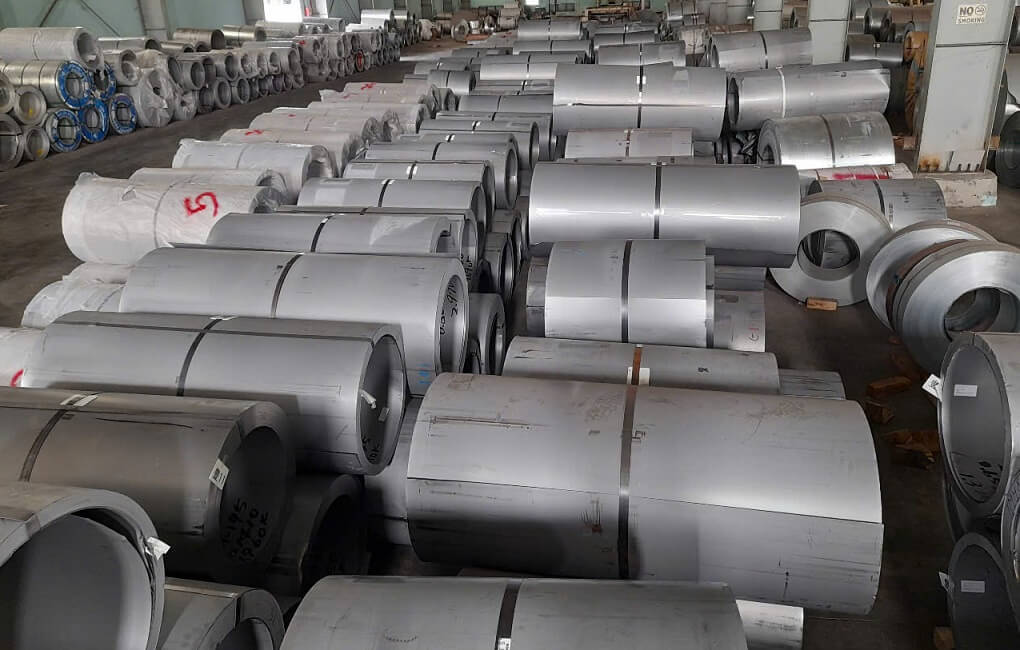
Soft PR: Phu Cuong Steel Sheet – Accompanying Every Construction Project. With the advantage of genuine billet sources, full CO, CQ, along with a modern coil slitting – pressing and stamping machine system and dedicated delivery trucks, Phu Cuong helps contractors control materials from start to finish, minimising risks and optimising project efficiency.
10. Lessons learned from the mindset of large contractors
Looking at the approach of large contractors, a crucial lesson can be drawn: CO, CQ do not increase costs – they help reduce risks.
Professional contractors do not wait until requested to supplement documents, but proactively control from the start. This mindset creates a sustainable difference between long-term developing entities and those facing difficulties as construction projects grow larger.
11. Conclusion
The fact that large contractors always require CO, CQ when purchasing steel sheet and steel is not a mere formality, but is the result of accumulated experience and risk management. For any contractor wishing to develop sustainably, applying this mindset sooner or later is inevitable.