EG steel sheet in mechanical engineering, doors and metal furniture: Why do many workshops prioritize choosing it?
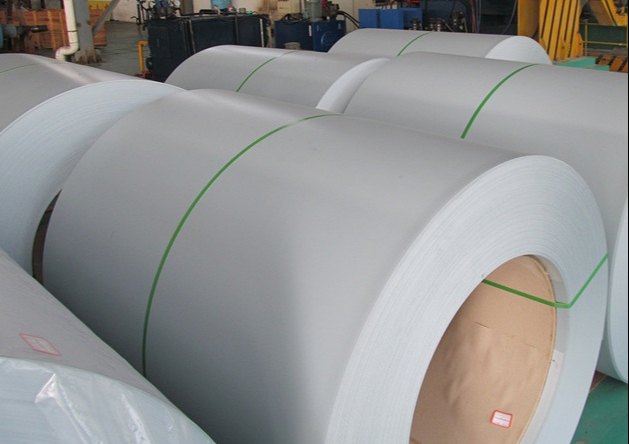
Among sheet metal materials used for mechanical fabrication, door manufacturing, and metal furniture production, EG steel sheet is a name that appears quite frequently in orders requiring a stable surface, easy fabrication, and suitability for various product specifications. In reality, many workshops not only care about the initial purchase price but also evaluate materials based on their cutting, bending, stamping capabilities, surface uniformity, fabrication loss rate, and stability in large-scale production.

That is also why EG steel sheet is widely used in industries such as civil mechanical engineering, steel doors, electrical cabinets, metal shelves, technical partitions, formed folded parts, and many sheet metal furniture products. However, simply choosing the right material name does not guarantee a good finished product. If the wrong thickness, wrong width, wrong surface quality is purchased, or if a batch with unstable tolerance is encountered, the production workshop may face a series of problems such as difficult bending, scratches, defective blanks, scrap generation, or increased fabrication costs.
This article will delve into the practical perspective of B2B customers, especially mechanical workshops, door manufacturers, and metal furniture companies, to explain why EG steel sheet is the preferred choice, common risks when choosing the wrong material, and how to optimize input for more stable production.
1. What is EG steel sheet and why is it suitable for mechanical engineering customers?
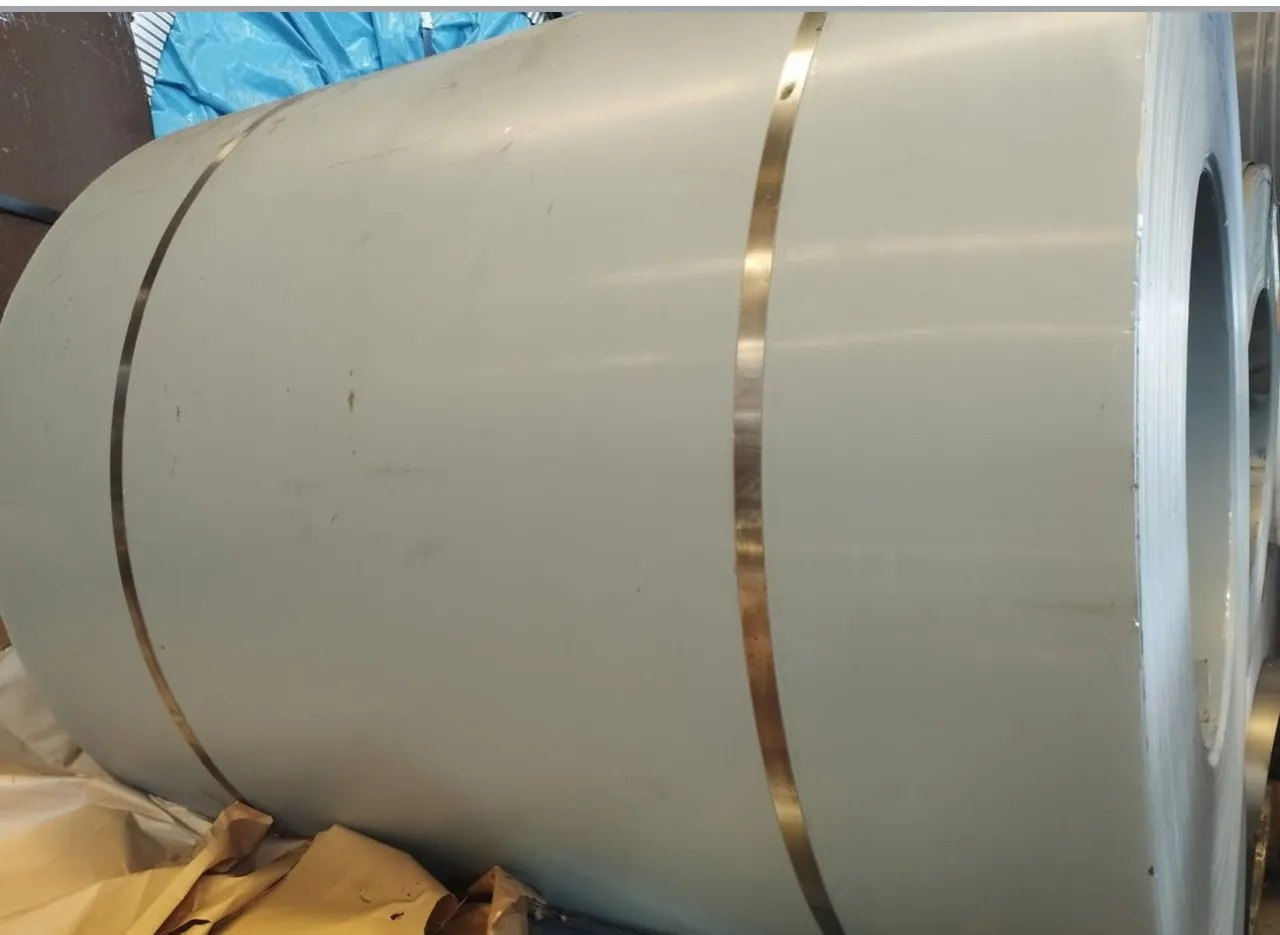
EG steel sheet is a common market term for steel sheet or steel coil with a characteristic bluish electro-galvanised surface. What mechanical workshops are interested in is not merely the trade name, but the fact that this material is often chosen when a relatively good surface, quite stable flatness, and easy integration into cutting, slitting, bending, stamping, and assembly processes are required.
For trading companies supplying materials for mechanical engineering and door manufacturing, EG steel sheet has an advantage because it serves various customer groups. A door manufacturing workshop may need material with stable thickness for bending frames or creating panels. A mechanical engineering unit may need large width blanks for optimal cutting according to drawings. A metal furniture production facility may prioritize a uniform surface to reduce processing effort before painting or finishing. Thus, for the same material type, its use value lies in its ability to flexibly meet various production challenges.
In other words, EG steel sheet is suitable for the mechanical engineering industry not just because it is “easy to buy” or “popular”, but because it is a material that can go through many production stages with a relatively good level of stability if the right supplier, correct specifications, and correct thickness are chosen.
2. Why do mechanical workshops, door manufacturers, and metal furniture companies often choose EG steel sheet?
2.1. Material surface suitable for many product lines
In mechanical production, the material surface directly affects both aesthetics and the fabrication process. For products such as doors, cabinets, frames, technical boxes, shelves, machine casings, or assembly parts, a uniform surface helps workshops reduce time spent rectifying cosmetic defects. When input blanks are stable, workshops can more easily control finished product quality, especially for batch repetitive production orders.
2.2. Easy to integrate into cutting, slitting, bending, stamping processes
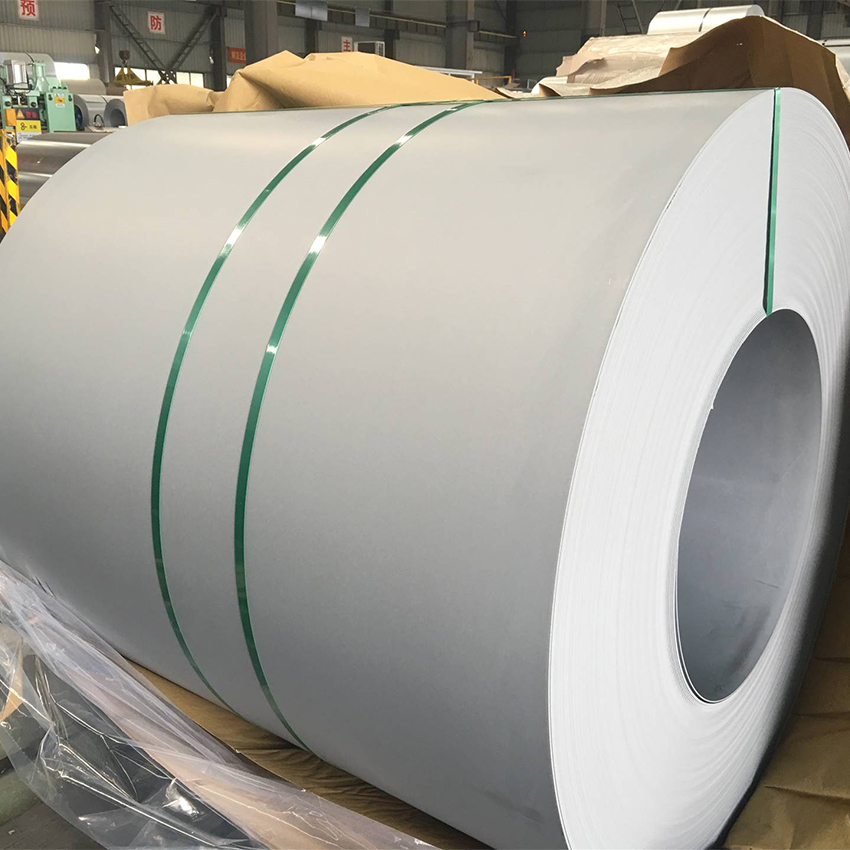
A material is only truly “workshop-friendly” when it can pass through the fabrication chain stably. Many units choose EG steel sheet because it can be slit into coils, cut into sheets, bent, folded, or shaped as needed. This is a very important point for customers who do not buy for mere storage but to put into production immediately. When the material has higher uniformity, workshops will reduce machine adjustment time, reduce mass defects, and limit situations where a batch of products has inconsistent quality.
2.3. Suitable for custom specification production models
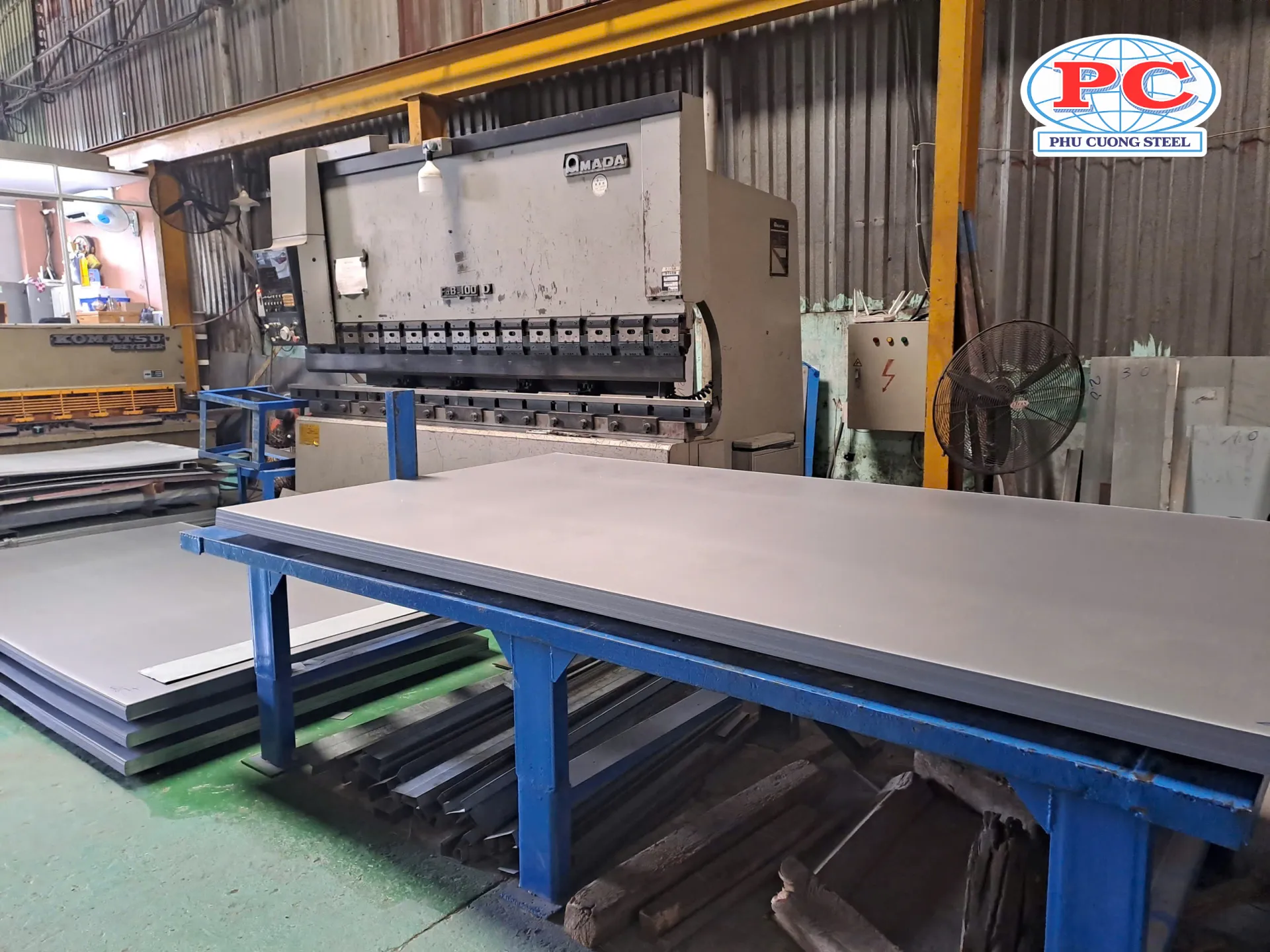
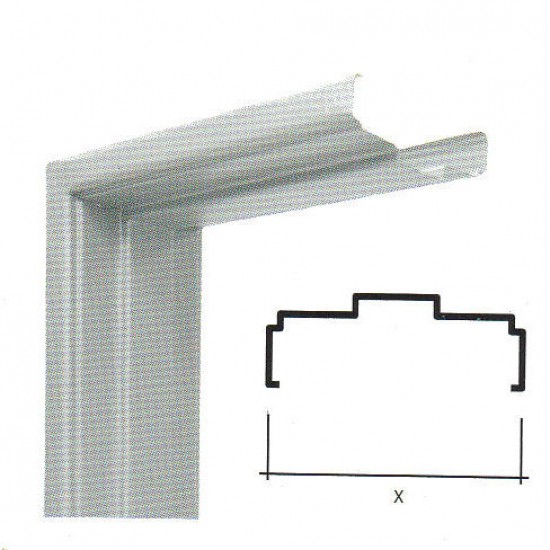
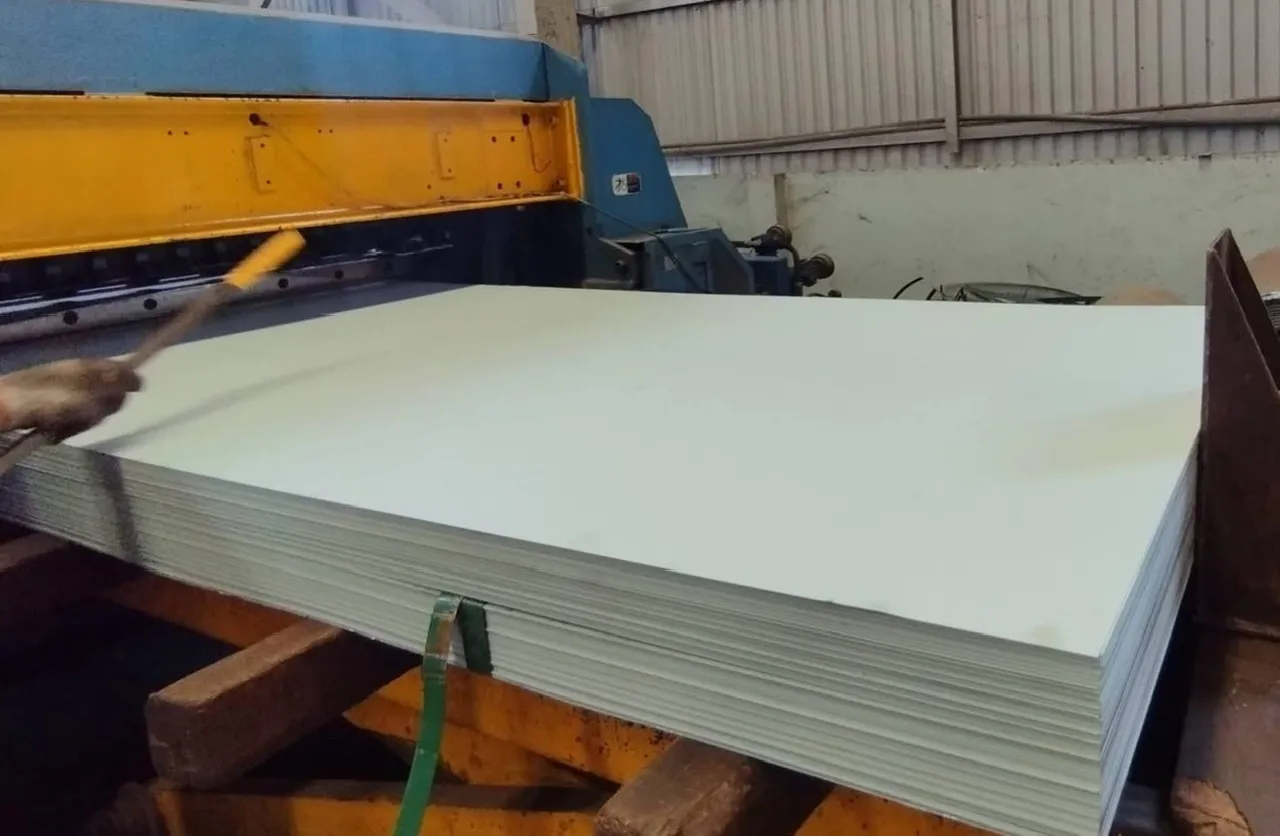
Many mechanical and door manufacturing units currently do not fabricate according to fixed standard products but produce according to actual construction project dimensions or customer drawings. This changes the material requirements: not only the correct thickness is needed, but also the correct width and slitting/cutting specifications to reduce loss. EG steel sheet in coil or sheet form can optimize quite well for this production model if the supplier has on-demand cutting and slitting capabilities.
2.4. Easy to balance cost and usage efficiency
For B2B customers, especially mechanical workshops, the purchase price is not the only factor. More important is the total cost after fabrication. A cheap material with a poor surface, incorrect thickness, or causing significant loss can increase the total production cost. Conversely, a more stable material helps reduce defects, rework, machine downtime, and optimize production efficiency. This is why many customers accept choosing a source of EG steel sheet with well-controlled quality instead of just looking at low quotations.
See more related articles: SECC vs SGCC: Comparing steel door materials & 5 risks of choosing incorrectly (workshops need to know)
3. Practical applications of EG steel sheet in mechanical engineering, door manufacturing, and metal furniture
In actual production, EG steel sheet is not limited to a fixed product group but is used flexibly according to each workshop's fabrication capabilities. Below are the most common application groups.
3.1. Applications in civil mechanical workshops and construction project mechanical workshops
For mechanical workshops, EG steel sheet can be used to make casings, covers, gutters, technical boxes, lids, folded edge parts, electrical cabinets, shelves, auxiliary frames, or sheet metal fabricated parts. A major advantage is that the material can be processed into many different types of finished products without needing to change the entire production process.
Especially for workshops receiving fabrication orders according to drawings, being able to obtain material in the correct cutting width will significantly reduce the scrap rate. If the supplier company can provide large widths and offers slitting and cutting services according to specifications, customers will find it easier to optimize cutting patterns, thereby saving blank costs for each order.

3.2. Applications in the door industry
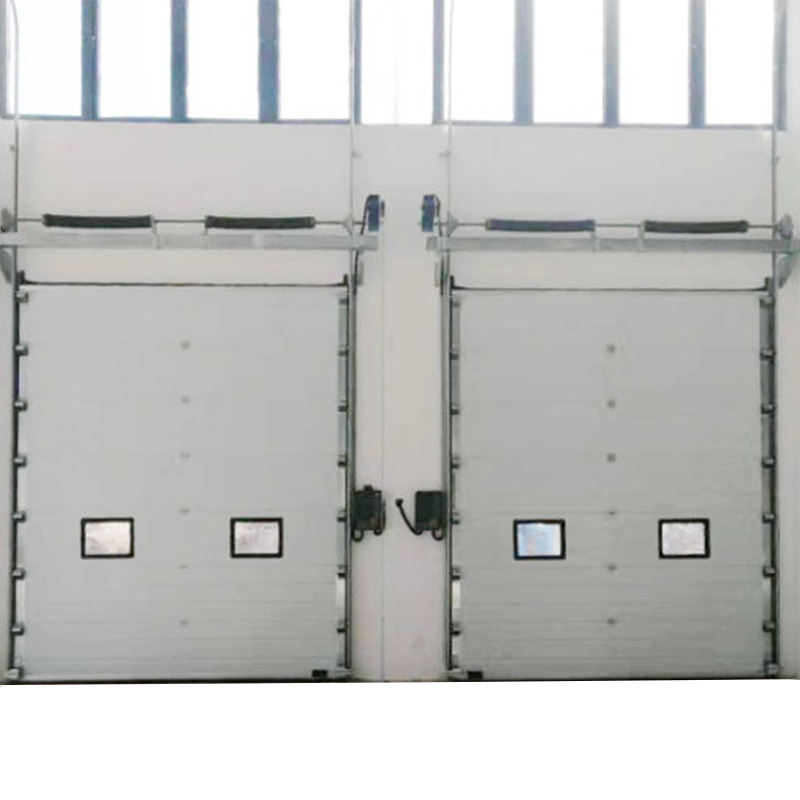
For the door industry, a crucial factor is the material's uniformity when bending and folding for shaping. Steel doors, door frames, panels, shielding accessories, or light structural components all require stable material for uniform, aesthetically pleasing finished products and to limit deviations during assembly. If the steel sheet surface is defective or the thickness is uneven, the bending process can cause edge distortion, difficult assembly, or reduce cosmetic quality after coating.
See more related articles: What is Steel Sheet Flatness Tolerance? Impact on Fabrication and Actual Installation
Steel Sheet Thickness Tolerance Standard (Avoid Shortage Upon Receipt)
Therefore, many door manufacturers prioritize EG steel sheet for items requiring consistent fabrication, batch production, and high repeatability. When input material is stable, quality control among door sets becomes easier, especially for large-quantity construction projects.
3.3. Applications in metal furniture
Metal furniture is no longer limited to simple shelves but has expanded to tables, cabinets, decorative frames, technical partitions, hanging systems, auxiliary frames, and many parts combined with wood, glass, or other finishing materials. In this application group, the material surface is very important because it affects the final finishing quality. A steel sheet with a uniform surface will help subsequent processing steps be more stable, while reducing the risk of cosmetic defects.
Furthermore, for furniture workshops receiving small but diverse orders, the flexible cutting and bending capabilities of EG steel sheet are also an advantage. The easier the material is to follow drawings, the more convenient it is for the workshop to switch between different product lines.
4. Risks of choosing EG steel sheet with incorrect specifications or from the wrong supplier
Many businesses only discover material problems after putting them into production. At that point, incurred costs are no longer related to the input purchase price but shift to fabrication defects, damaged goods, delayed schedules, and loss of customer trust. This is why the material selection and supplier selection stage needs to be viewed from a risk management perspective, not just as mere buying and selling.
4.1. Incorrect thickness affects the entire fabrication process
If the actual thickness does not match the ordered specification, the workshop will face many consequences. For the door industry, formed parts may not achieve the desired geometry. For mechanical engineering, assembled components may have incorrect dimensions or not achieve the required hardness. For metal furniture, products may vibrate, be weak, or lack uniformity between batches. It is worth noting that this error often does not appear immediately at the receiving stage but only becomes apparent during mass production.
4.2. Unstable surface causes aesthetic defects and increases processing effort
A batch of steel sheet with many scratches, discoloration, or unevenness will increase the time for blank selection, preliminary processing, or rejection of defective sheets. For businesses that require high aesthetic quality, this is a significant cost. Instead of focusing on production, the workshop has to spend extra effort on sorting and correcting errors, leading to a decrease in overall productivity.
4.3. Unsuitable steel sheet width increases material waste
This is a very common error in units that have not optimized their cutting diagrams. Many workshops buy by habitual width instead of calculating based on actual product dimensions. As a result, the amount of scrap after cutting increases, especially for large, repetitive orders. If accumulated monthly or quarterly, this waste can become a very large cost.
4.4. Unstable supply disrupts production rhythm
For B2B customers, consistent supply is as important as quality. A workshop running an order that lacks material, or has to switch to another batch with inconsistent specifications, will find it very difficult to control quality. Therefore, choosing the right trading unit with available stock, understanding mechanical needs, and having in-warehouse fabrication capabilities will help businesses reduce many operational risks.
5. How to choose the right EG steel sheet for mechanical workshops, door manufacturers, and metal furniture companies
5.1. Choose by end product, not by habit
Many customers order materials by habit, such as “get the same type as last time,” but that is not always optimal. Each product line will have different requirements for thickness, width, load-bearing capacity, and surface finish. Therefore, the correct way to choose is to start from the final product, fabrication drawing, and production method to deduce the appropriate material specification.
5.2. Check the thickness, width, and uniformity of the batch
These three factors directly affect fabrication quality. Thickness determines the hardness, forming capability, and sturdiness of the finished product. Steel sheet width determines the level of waste. Uniformity determines stability during mass production. Therefore, businesses should work with suppliers capable of clearly advising on specifications, controlling input, and supporting slitting and cutting close to actual usage needs.
5.3. Prioritize suppliers who understand the customer's production challenges
A trading company that only sells goods with quick quotations may not be the best choice for a mechanical workshop. More importantly, does the supplier understand what the customer is doing, what width is needed, how to cut it, and how to deliver it to meet the schedule? When the supplier understands the production challenge, they can propose more reasonable specifications and help customers significantly reduce waste.
5.4. Optimize by combining material and fabrication at the source
Instead of buying coils and self-slitting under limited machinery conditions, many workshops now prefer to obtain materials that have been slit from coils, cut to size, or pre-fabricated at the supplier's warehouse. This approach helps reduce internal stages, shorten blank preparation time, and limit errors arising from manual cutting or incompatible equipment.
6. Optimal solutions for businesses needing to purchase EG steel sheet for mechanical engineering, doors, and metal furniture
For trading businesses serving mechanical engineering, door, and metal furniture customers, the competitive advantage lies not only in having stock but also in the ability to accompany customers from material selection to blank delivery according to production needs. This is the factor that helps create sustainable B2B relationships.
If a customer only needs one steel sheet, they can buy it from many places. But if the customer needs a supplier who understands cutting width, understands the waste problem, understands the properties of each specification, and can deliver quickly to avoid disrupting the workshop's schedule, then the role of the material supplier becomes very different. In that case, the trading business is not just a seller, but a technical link in the customer's production chain.
6.1. Tôn Thép Phú Cường – accompanying mechanical workshops, door manufacturers, and metal furniture companies
For customer groups such as mechanical workshops, door manufacturers, metal furniture producers, and fabrication according to drawings, what is most needed is not a fragmented quotation but a stable material source, correct specifications, and the ability to support quick processing according to actual needs. This is also the supply direction that Tôn Thép Phú Cường is focusing on developing.

Tôn Thép Phú Cường supplies key materials such as EG steel sheet, GA steel sheet, and galvanised steel sheet, suitable for various production needs in mechanical engineering, doors, and metal structures. Besides a diverse product range, the company also has the advantage of large steel sheet widths, especially widths of 1500mm and above, helping many customers optimize cutting diagrams and reduce material waste compared to using only standard widths.
Beyond material supply, Phú Cường also has a system of machinery for coil slitting, custom cutting, bending, and in-warehouse fabrication. This is particularly suitable for workshops that need to receive goods for immediate production, without wanting to spend extra time processing input blanks. When materials are prepared closely to drawings and usage specifications, businesses can shorten production time, reduce operational errors, and control costs more effectively.
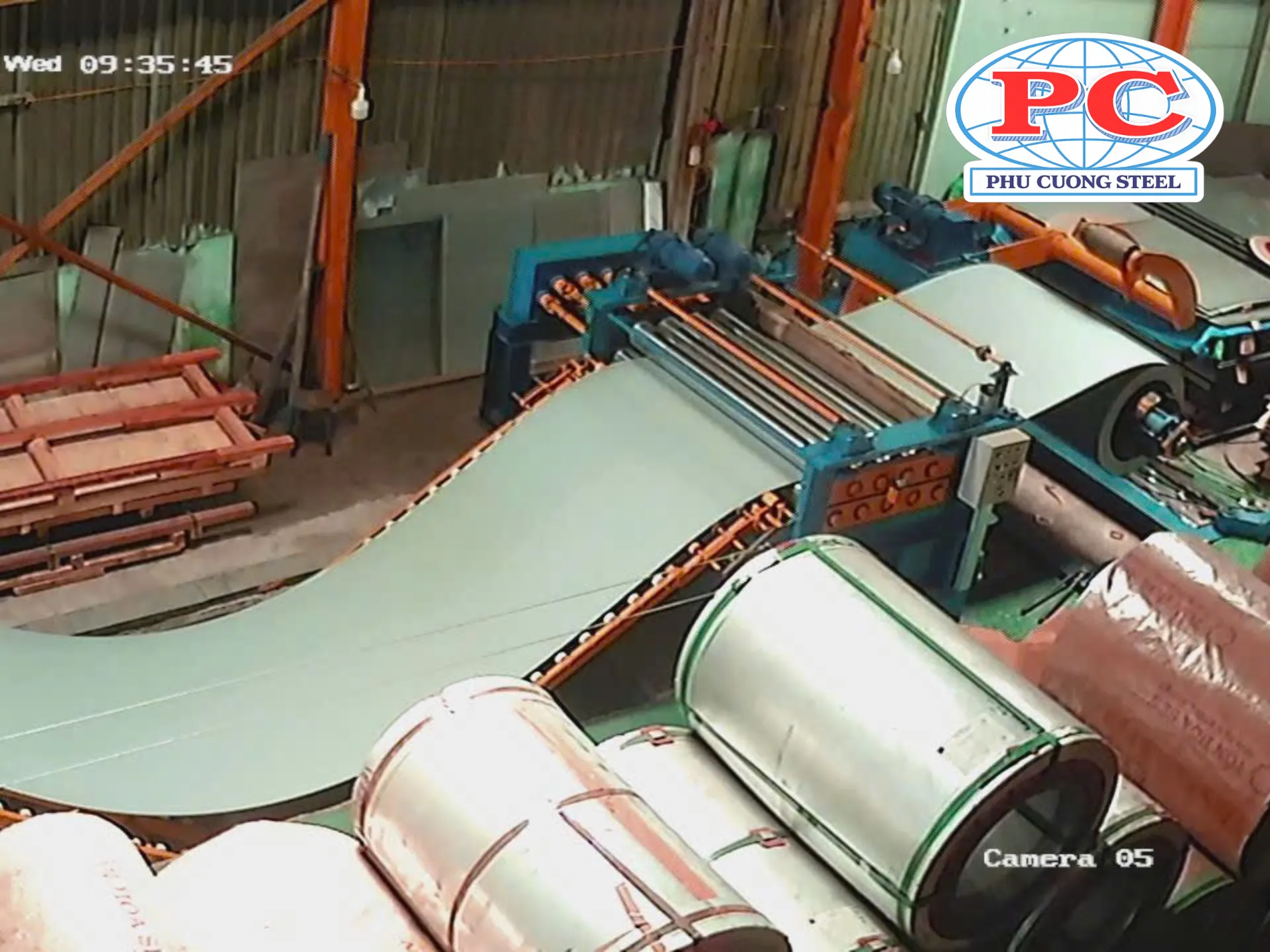
Another strength is that Phú Cường has its own delivery trucks, allowing for more proactive transportation, especially for orders requiring fast delivery or delivery according to construction project schedules. For B2B customers, this advantage lies not only in speed but also in the ability to optimize logistics costs, reducing reliance on external transport companies.
7. Conclusion
EG steel sheet is a very noteworthy choice for mechanical workshops, door manufacturers, and metal furniture companies because it effectively addresses fabrication challenges, flexibility, and practical usage efficiency. However, the value of the material lies not only in its name but in choosing the correct thickness, width, surface, and supplier.
In a context where many businesses need to optimize costs while maintaining product quality, working with a supplier who understands the industry, has stable stock, offers on-site fabrication services, and has proactive delivery capabilities will make a huge difference. This is the factor that helps workshops achieve more stable production, better waste reduction, and increased operational efficiency in the long term.
Tôn Thép Phú Cường – Leading Reputable Large Width Steel Sheet Distributor
Tôn Thép Phú Cường currently supplies key products including EG steel sheet, GA steel sheet, galvanised steel sheet along with many specifications serving mechanical engineering, door manufacturing, metal furniture, and industrial construction projects. In addition to material supply, Phú Cường also offers coil slitting, custom cutting, bending, steel sheet fabrication at the warehouse, helping customers optimize production time and costs.
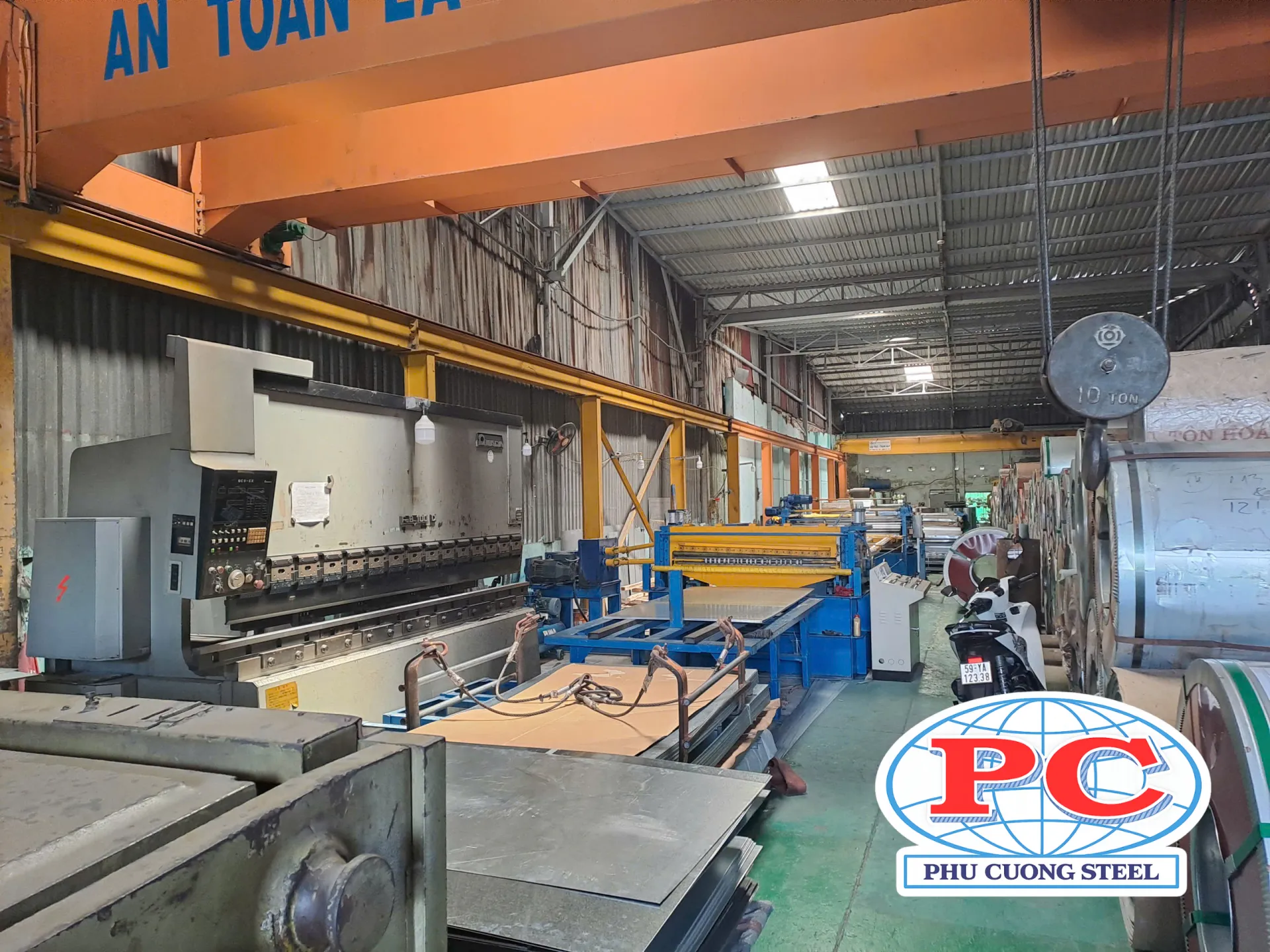
With the advantage of large warehouse, modern machinery, on-site fabrication services, and dedicated delivery trucks, Phú Cường is suitable for businesses needing a stable material source, fast delivery, and good technical support.
Address: 2177C–2177D National Highway 1A, Dong Hung Thuan Ward, District 12, HCMC
Phone: 0933 919 899
Email: tonthepphucuong@gmail.com
Website: tonthepphucuong.com