Steel Sheet Width Tolerance After Slitting: Why Mechanical Workshops, Doors, and Facades Need Careful Inspection?
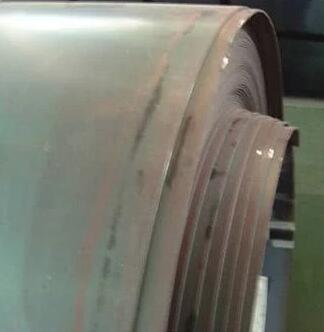
In the mechanical engineering industry, iron doors, steel doors, facades, metal interior and exterior, and industrial component manufacturing, choosing the right type of steel sheet is just the first step. An equally important factor is whether the steel sheet width after uncoiling or custom cutting meets the required dimensions. Many seemingly simple orders, such as galvanised steel sheet, EG steel sheet, GA steel sheet, or large 1500mm width steel sheet, can be affected by a deviation of a few millimeters, impacting the fabrication, assembly, and product acceptance process.

For mechanical workshops working from drawings, steel sheet width tolerance is a factor that needs to be controlled right from the material procurement stage. If the steel sheet is undersized, has misaligned edges, uneven cuts, or incorrect specifications compared to the order, the worker may have to rework it, cut off the faulty part, increase material waste, and delay production. Therefore, understanding steel sheet width tolerance after uncoiling helps workshops be more proactive when ordering, inspecting goods, and choosing suitable suppliers.
What is steel sheet width tolerance?
Steel sheet width tolerance is the permissible deviation between the actual dimensions of the steel sheet and the ordered dimensions. For example, a customer orders steel sheet cut to 1250mm width, but the actual measurement may fluctuate slightly around this dimension depending on the material type, fabrication machinery, stability of the steel sheet coil, and technical requirements of each order. In actual production, dimensions are not always 100% precise, but the deviation must be within an acceptable range and not affect the subsequent fabrication stage.
See more related articles: Steel Sheet Thickness Tolerance Standard (Avoid Shortage Upon Receipt)
The concept of tolerance is often applied to many parameters such as thickness, width, length, flatness, perpendicularity of the cut edge, and warpage of the sheet after fabrication. Among these, steel sheet width tolerance is particularly important for workshops that need to cut sheets according to drawings, bend, stamp, or assemble modules. For parts requiring precise connections, even if the material is undersized or has misaligned edges, the finished product may not meet requirements.
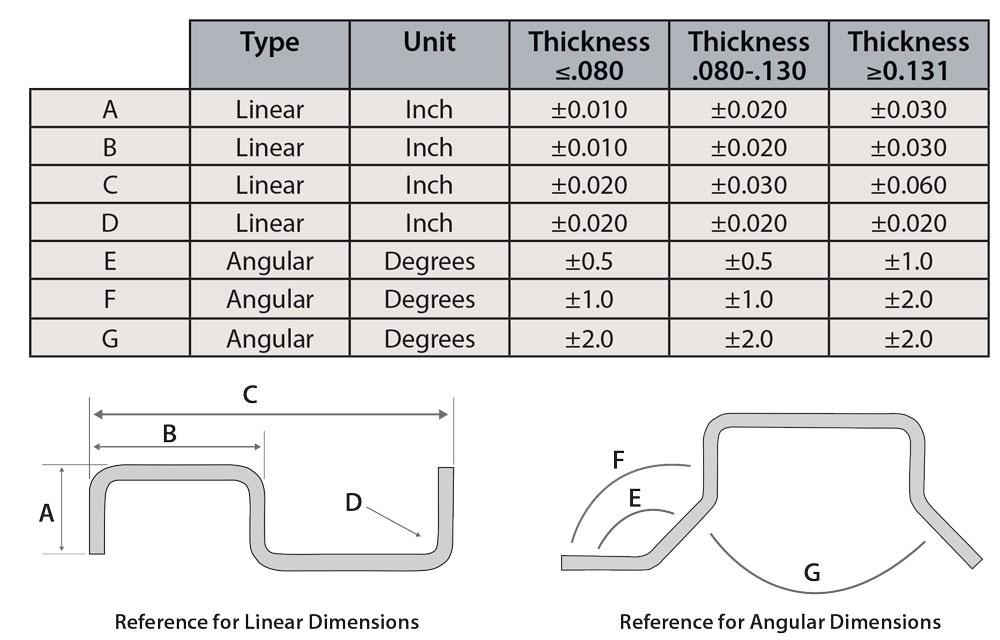
For common types of steel sheet such as galvanised steel sheet, EG steel sheet, GA steel sheet, pre-painted galvanised steel sheet, or plated steel sheet, steel sheet width tolerance depends not only on the blank manufacturing plant but also on the uncoiling, cutting, and delivery unit. Therefore, when ordering materials, customers should not only ask for prices by kilogram or by sheet, but also clearly inquire about specifications, steel sheet width, thickness, length, quantity, packaging requirements, and the ability to cut to specific dimensions.
Why can steel sheet after uncoiling have width deviation?
There are many reasons why steel sheet after uncoiling or cutting can have dimensional deviations. The first reason comes from the steel sheet coil itself. If the steel sheet coil has unstable tension, uneven edges, or the material is slightly deformed during transport, feeding it into the slitting machine can create deviations in the edge or sheet width. For large width coils, especially 1500mm or more, controlling straightness and stability during the uncoiling process is even more critical.
The second reason comes from the uncoiling machine system and cutting blades. If machinery is not properly calibrated, it can create uneven cuts, skewed edges, or inconsistent lengths for each sheet. Worn cutting blades, blade gaps unsuitable for the material thickness, or unstable machine speed can also affect the quality of the cut edge. This is why material suppliers with modern, regularly inspected machinery often produce more consistent products.
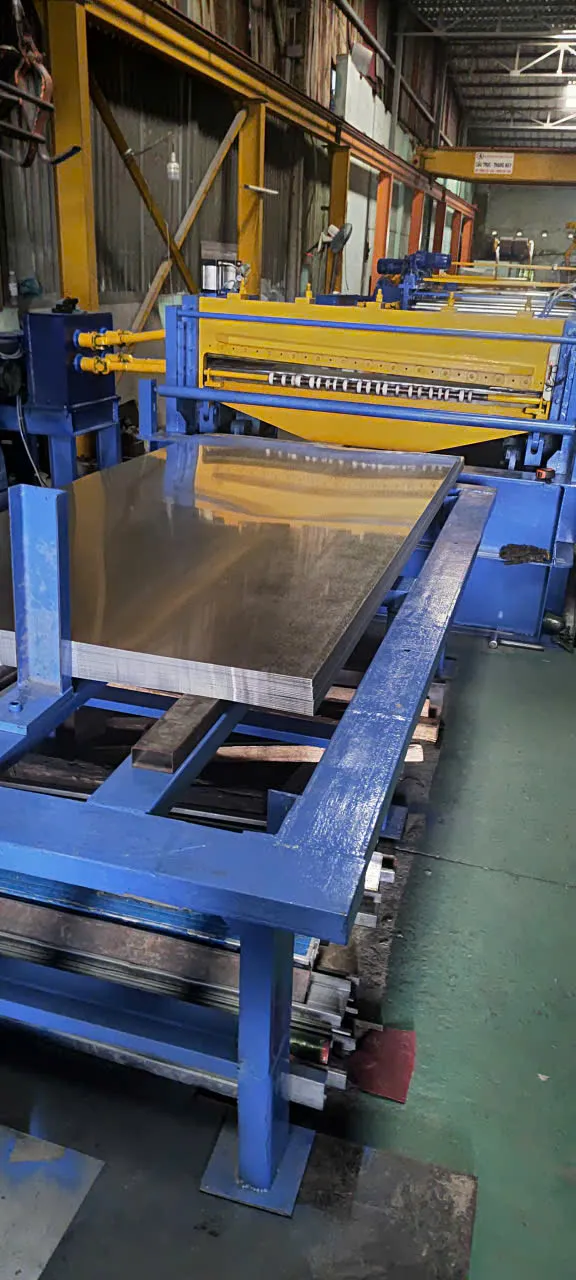
The third reason is due to insufficient clarity in recording requirements between the customer and the supplier. Some customers only say “cut 1.2m sheet” or “slit to 1.25m width” but do not specify acceptable tolerance, individual sheet length, intended use, or surface requirements. For fabrication orders serving doors, facades, electrical cabinets, machine casings, railings, or decorative components, thoroughly discussing parameters from the outset will help limit misunderstandings.
The fourth reason is due to loading and unloading and transportation. After being cut to specification, if the steel sheet is dragged, heavily impacted, improperly stacked, or not adequately supported, the sheet edge may be dented, bent, or deformed. For steel sheets with sensitive surfaces such as EG steel sheet, GA, or materials used for exposed components, proper storage and transportation are crucial to prevent scratches, warping, and aesthetic damage.
Risks of not checking steel sheet width tolerance before fabrication
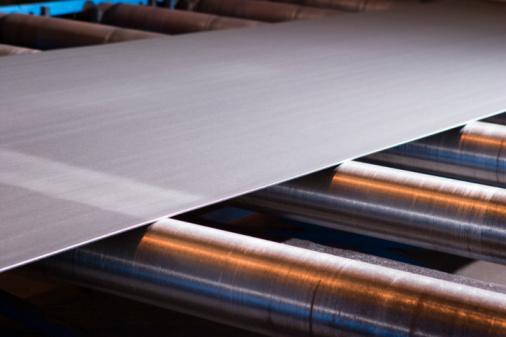
The most obvious risk is increased material waste. When the steel sheet is undersized or incorrectly dimensioned, the mechanical workshop often has to cut off the faulty part, adjust the cutting plan, or change the blanking method. This increases the amount of scrap and makes the actual cost higher than initial calculations. For large quantity orders, small deviations on each sheet can accumulate into significant waste.
The second risk is an impact on production schedule. If the incoming material is not to specification, the workshop may have to stop machines, call the supplier, exchange goods, or order additional materials. For construction projects requiring urgent delivery, especially orders for doors, partitions, frames, cabinets, gutters, trims, or assembly components at the construction project, material delays can lead to construction delays and affect the contractor's reputation.
The third risk is assembly deviation. In mechanical products, the dimensions of the input material directly affect the dimensions of the finished product. If the steel sheet is not to width, the component after bending, stamping, or joining may be gapped, misaligned, not square, or not match the drawing. For products requiring aesthetic appeal such as steel doors, facades, decorative cladding, metal partitions, or metal furniture, this deviation is easily detected during acceptance.
The fourth risk is disputes arising upon receipt of goods. If both parties do not clearly agree on specifications, tolerances, and measurement methods from the outset, upon delivery, the customer may claim the goods are undersized, while the supplier may argue that the deviation is within acceptable limits. Therefore, the best approach is to clearly state the information on the order: material type, thickness, width, length, quantity, surface requirements, and intended use.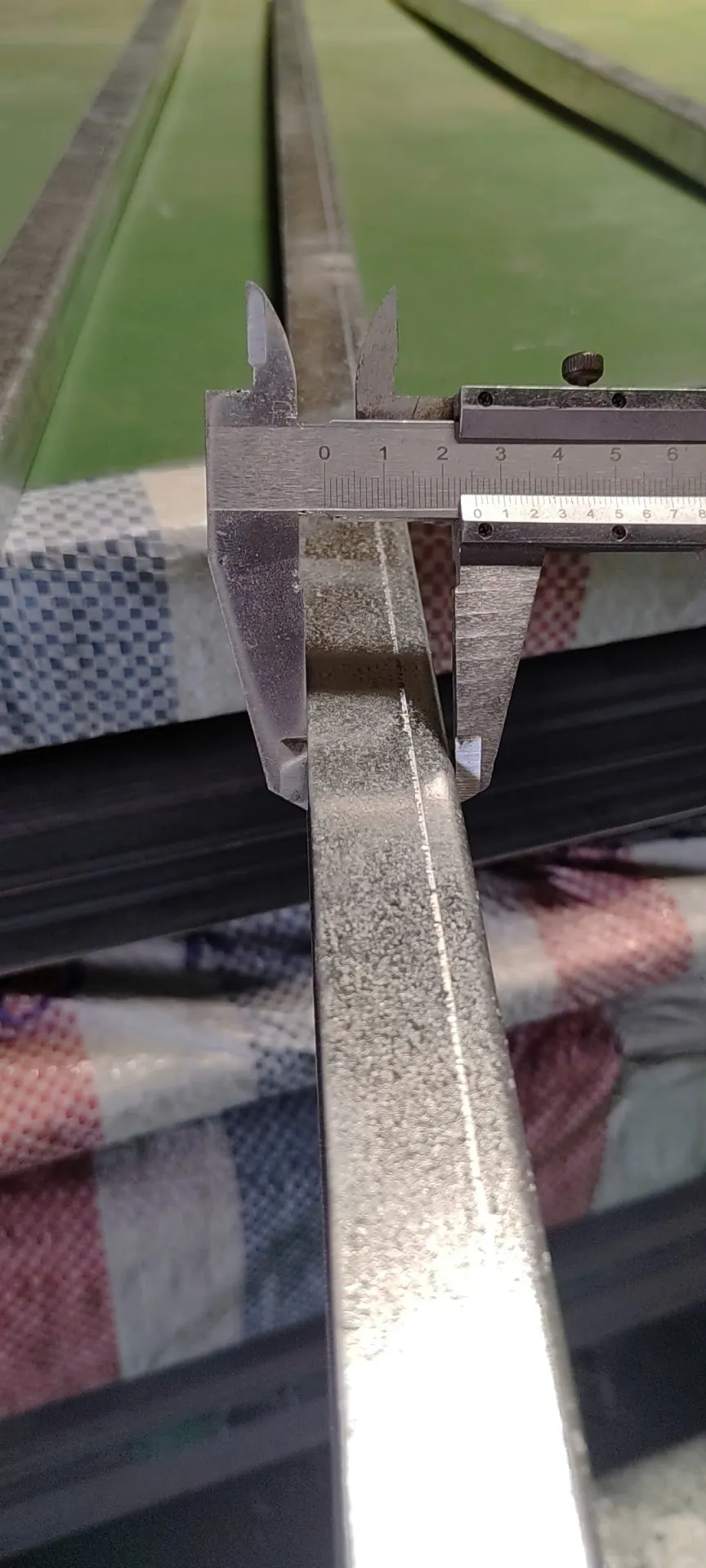
How to check steel sheet width upon receipt at the workshop
When receiving custom-cut steel sheet, the workshop should randomly inspect several sheets in the bundle before mass production. For orders with high technical requirements, measurements should be taken at multiple points on the same sheet, including the beginning, middle, and end of the sheet. Measuring at multiple points helps detect skewed cut edges, sheets with width deviation, or uneven width.
A tape measure, steel ruler, or measuring tape suitable for the sheet length should be used. When measuring, the ruler should be placed straight, close to the edge, and avoid measuring when the sheet is curved or placed on an uneven surface. If higher precision is required, the workshop can use specialized gauges or check with templates according to the drawing. In addition to width dimensions, the cut edge, flatness, curvature, and surface of the sheet should also be observed.
For EG steel sheet, GA, or materials requiring a fine surface, in addition to dimensions, scratches, marks, oil stains, oxidation marks, or signs of surface layer peeling should also be checked. For galvanised steel sheet used for mechanical engineering, workshops, or components exposed to humid environments, the plating layer should be checked for uniformity, the surface for unusual discoloration, and whether the sheet was wet during transportation.
If deviations are found, the workshop should immediately document them with images, videos, and specific measurements. Early feedback helps the supplier re-check the cutting process, cross-reference the order, and propose appropriate solutions. For professional businesses, this feedback also helps improve the fabrication process and reduce recurring errors in subsequent orders.
When should custom-cut steel sheet be ordered instead of cutting it in-house?
Not every workshop needs to cut all materials in-house. For large quantity orders, repetitive dimensions, or when optimizing waste is needed, ordering custom-cut steel sheet from a supplier can save time and labor. Instead of importing full coils or large sheets and cutting them down, the workshop can receive materials that have been uncoiled, cut into sheets, or prepared to near production size.
This solution is particularly suitable for small and medium-sized mechanical workshops, door workshops, frame workshops, facade manufacturers, electrical cabinet manufacturers, cable trays, machine casings, or civil metal components. When the input material is already to specification, workers only need to proceed with subsequent stages such as bending, stamping, welding, punching, or assembly. This helps reduce blank preparation time and limits errors in the initial cutting stage.
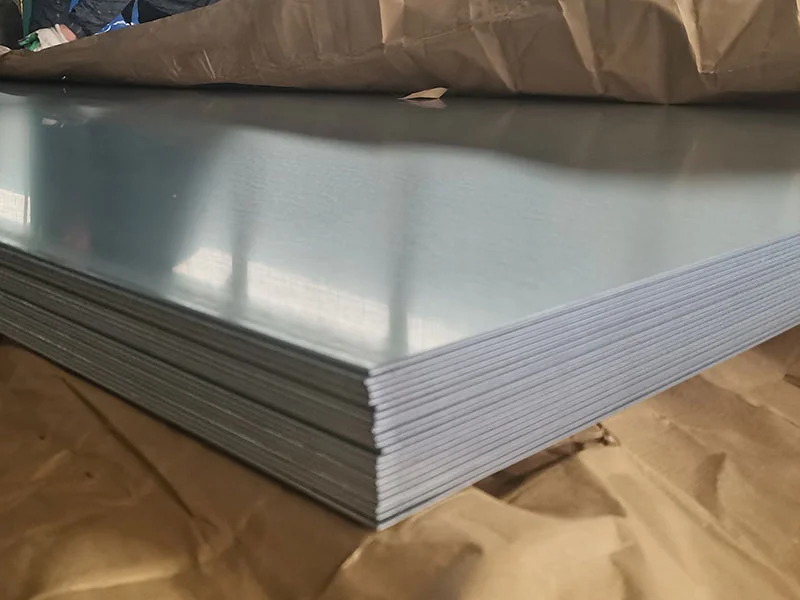
However, to effectively order custom-cut steel sheet, customers need to choose a supplier with available materials, uncoiling machines, the ability to process various steel sheet widths, and experience working with mechanical customers. Especially for large widths of 1500mm or more, not every warehouse has stock or stable fabrication capabilities. This is a point to note when a workshop needs large width materials to reduce joints, minimize waste, and increase production efficiency.
How to order to limit specification deviations
To limit deviations, customers should provide as clear information as possible when ordering. Basic information includes material type, thickness, steel sheet width, sheet length, quantity, surface requirements, and intended use. For example, instead of just saying “cut 1.2mm galvanised steel sheet”, it should be clearly stated as “galvanised steel sheet, 1.2mm thickness, 1250mm width, custom-cut length, for mechanical workshop producing frames and bent components”.
If the product requires bending, stamping, or assembly according to drawings, the drawings or finished product dimensions should be sent to the supplier for advice on suitable material width. In many cases, choosing the appropriate steel sheet width from the outset can significantly reduce waste. For example, instead of using a small width and having to join many pieces, the workshop can use 1500mm or wider steel sheet to optimize cutting paths and reduce joints.
Additionally, customers should discuss packaging and delivery methods in advance. For steel sheets, especially long or large width sheets, proper support is needed to prevent sagging during transportation. If the supplier has its own trucks and is accustomed to delivering to construction projects, mechanical workshops, industrial parks, or factories, the delivery process is usually more proactive and limits potential risks.
Phu Cuong Steel Sheet – Leading Reputable Large Width Steel Sheet Distributor
For mechanical workshops, doors, facades, metal interior and exterior, and construction projects requiring materials to specification, choosing a steel sheet supplier with available stock, fabrication machinery, and an understanding of actual production needs is a very important factor. Phu Cuong Steel Sheet currently supplies many material lines for production and construction, such as galvanised steel sheet in 1000mm, 1250mm, 1500mm widths, EG steel sheet, GA steel sheet, pre-painted galvanised steel sheet, and many other steel sheet specifications.

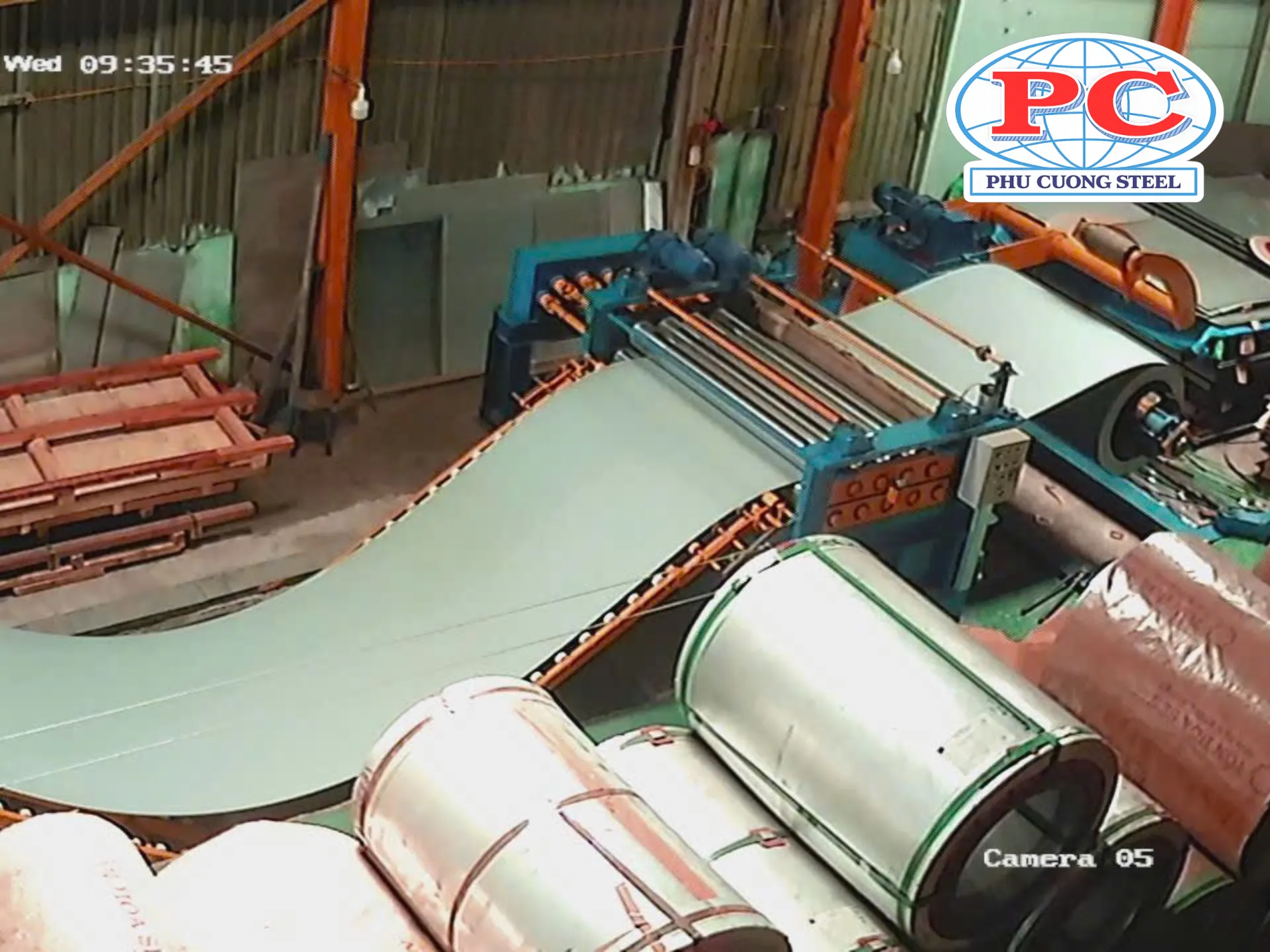
In addition to supplying materials, Phu Cuong Steel Sheet also has a system for uncoiling, custom cutting, bending, stamping, and steel sheet fabrication at its warehouse. As a result, customers can order materials according to actual needs, reducing blank preparation time, limiting waste, and optimizing production costs. This is an advantage suitable for workshops that need quick delivery, correct thickness, correct specifications, and can support processing according to drawing requirements.
In addition, Ton Thep Phu Cuong owns a large warehouse, genuine billet sources from major factories, a team of technicians knowledgeable about materials, and a proactive delivery truck system. Having private trucks helps optimize transportation costs, supporting fast delivery in District 12, Ho Chi Minh City and surrounding areas. With the motto “Quality makes the brand”, Ton Thep Phu Cuong aims to accompany all construction projects with practical material and fabrication solutions, suitable for each production need.
If customers need galvanised steel sheet, EG steel sheet, GA steel sheet, large width steel sheet, or custom cutting, coil slitting, bending and stamping, on-site fabrication services, they can contact Ton Thep Phu Cuong for consultation on suitable specifications, to check stock availability, and for doorstep delivery support.
Contact Information
Ton Thep Phu Cuong
Address: 2177C – 2177D Quoc lo 1A, phuong Dong Hung Thuan, Quan 12, TP.HCM
Phone: 0933 919 899
Email: tonthepphucuong@gmail.com
Website: tonthepphucuong.com
See more related articles:
- Buying Steel Sheet and Steel In District 12 and Southern Region: How to Choose the Right Supplier for Mechanical Workshops, Construction Projects
- How to Read Material Symbols on Steel Sheet and Steel Delivery Notes: What Do SGCC, SECC, EG, GA, Z100, Z180, Z275 Mean?
- Why Are Cut Steel Sheets Skewed? How to Correctly Understand Diagonal Tolerance in Steel Sheet Fabrication