What is Burr (Bavia) When Cutting Steel Sheet? Why Does It Cause Errors in Fabrication of Doors, Furniture, and Mechanical Engineering?
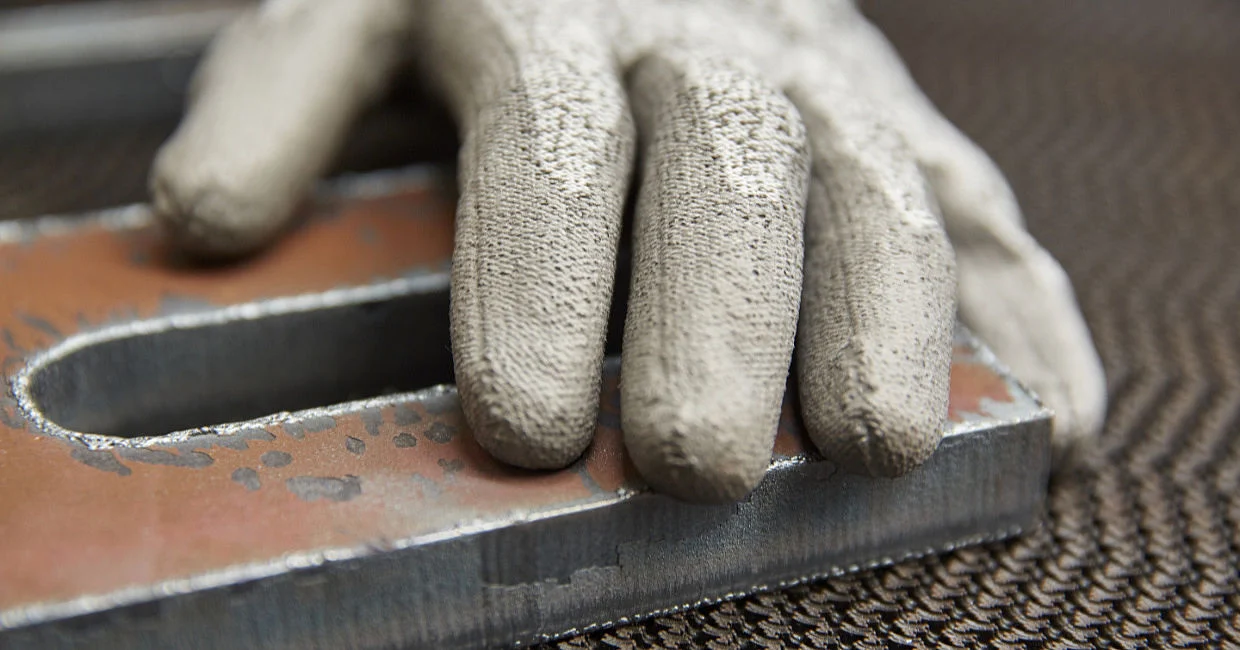
What is burr (bavia) in steel sheet fabrication?
Burr (bavia) is excess metal appearing at the cut edge of steel sheet after fabrication steps such as cutting, slitting, or punching. This phenomenon occurs when the material is not completely separated along the ideal plane but is stretched, creating a sharp ridge protruding from the surface.
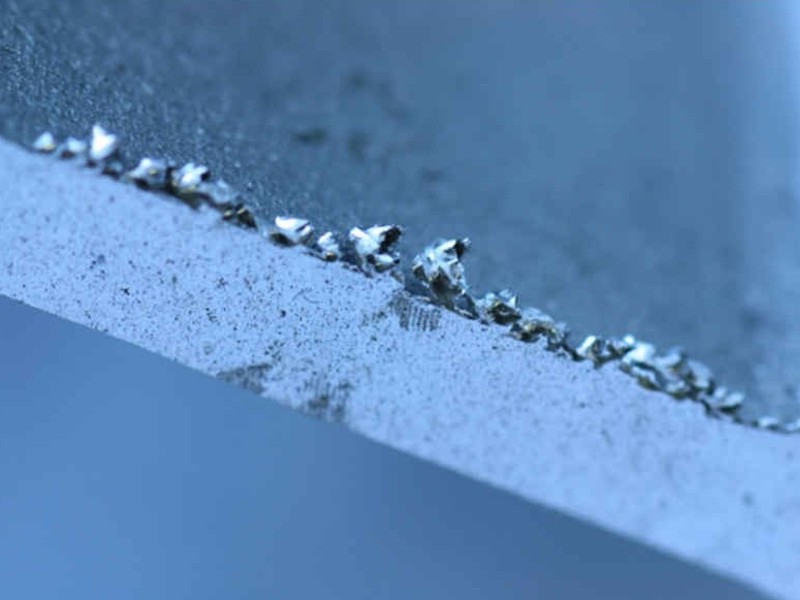
In the sheet metal industry, burr is not only an aesthetic issue but also an indicator that the fabrication process is not optimized. Especially for products requiring high precision such as steel doors, electrical cabinets, or metal furniture components, burr can cause significant deviations during assembly.
Although burr can be small and difficult to detect with the naked eye, in mass production, it directly affects output quality and post-fabrication processing costs.
Mechanism of burr formation during steel sheet cutting
To understand burr, one needs to look at the metal cutting mechanism. When the blade acts on the steel sheet, the material undergoes two stages: plastic deformation and fracture. If this process does not occur uniformly, the incompletely fractured metal part will be stretched and form a burr.
Factors affecting this mechanism include cutting force, blade sharpness, clearance between the two cutting blades, and material properties. If one of these factors is not optimal, the cut line will not be clean, and burr will appear.
Burr often appears when the cutting process does not adequately control material tolerances, especially related to steel sheet thickness tolerance in each production batch.
Especially, with galvanised steel sheet or electro-galvanised steel sheet (SECC, EG), the surface coating can alter cutting behavior, making burr control more difficult if machinery is not properly adjusted. Therefore, checking the galvanised coating before fabrication is necessary to limit burr defects.
Main causes of burr
Worn or substandard cutting blades
When the blade is no longer sharp, the cutting process is no longer “cutting” but shifts to “tearing,” causing the material to stretch instead of cleanly fracturing. This is the most common cause of large burrs.
Incorrect clearance between upper and lower blades
Excessive clearance will increase burr, while insufficient clearance causes deformation and increases cutting force. Adjusting the clearance according to material thickness and type is a key factor in fabrication.
Unstable cutting speed and force
Unstable machine operation or inappropriate speed settings will result in uneven cut lines, leading to uncontrolled burr appearance.
Mechanical properties of the material
Steel sheet with high hardness or special alloy composition will be more difficult to cut, prone to burr if machinery of sufficient capacity is not used. Especially with types of galvanised steel sheet Z100, Z180, Z275, the coating properties and material hardness will affect burr formation during cutting.
For wide steel sheet 1500mm, controlling cutting force and machine stability is even more important to limit burr and edge deformation.
Lack of post-cutting processing step
Many fabrication workshops skip the edge processing (deburring) step to save costs, resulting in products retaining burr when leaving the factory.
Practical applications and impact of burr
In steel door production, burr can cause ill-fitting joint edges, making welding or assembly difficult. In electrical cabinets, burr can scratch wires or cause a risk of short circuits. For metal furniture, burr directly affects user experience and aesthetics.
Furthermore, in subsequent steps such as powder coating, burr causes the paint layer not to adhere evenly, easily peeling off at the edges. This reduces product lifespan and increases the defect rate.
In mass production, even a small defect like burr can increase processing costs, reduce productivity, and affect business reputation.
Risks if burr is not controlled
- Endangers workers during operation
- Reduces finished product quality
- Increases rework or defect correction costs
- Affects delivery schedule
- Reduces assembly accuracy
Especially in large construction projects, using materials with burrs can lead to rejection during acceptance, causing significant damage.
Effective burr control and removal solutions
Optimise cutting system
Regularly changing blades, precisely adjusting gaps according to each type of steel sheet, and ensuring stable machine operation are the first steps to reduce burrs.
Use modern machinery
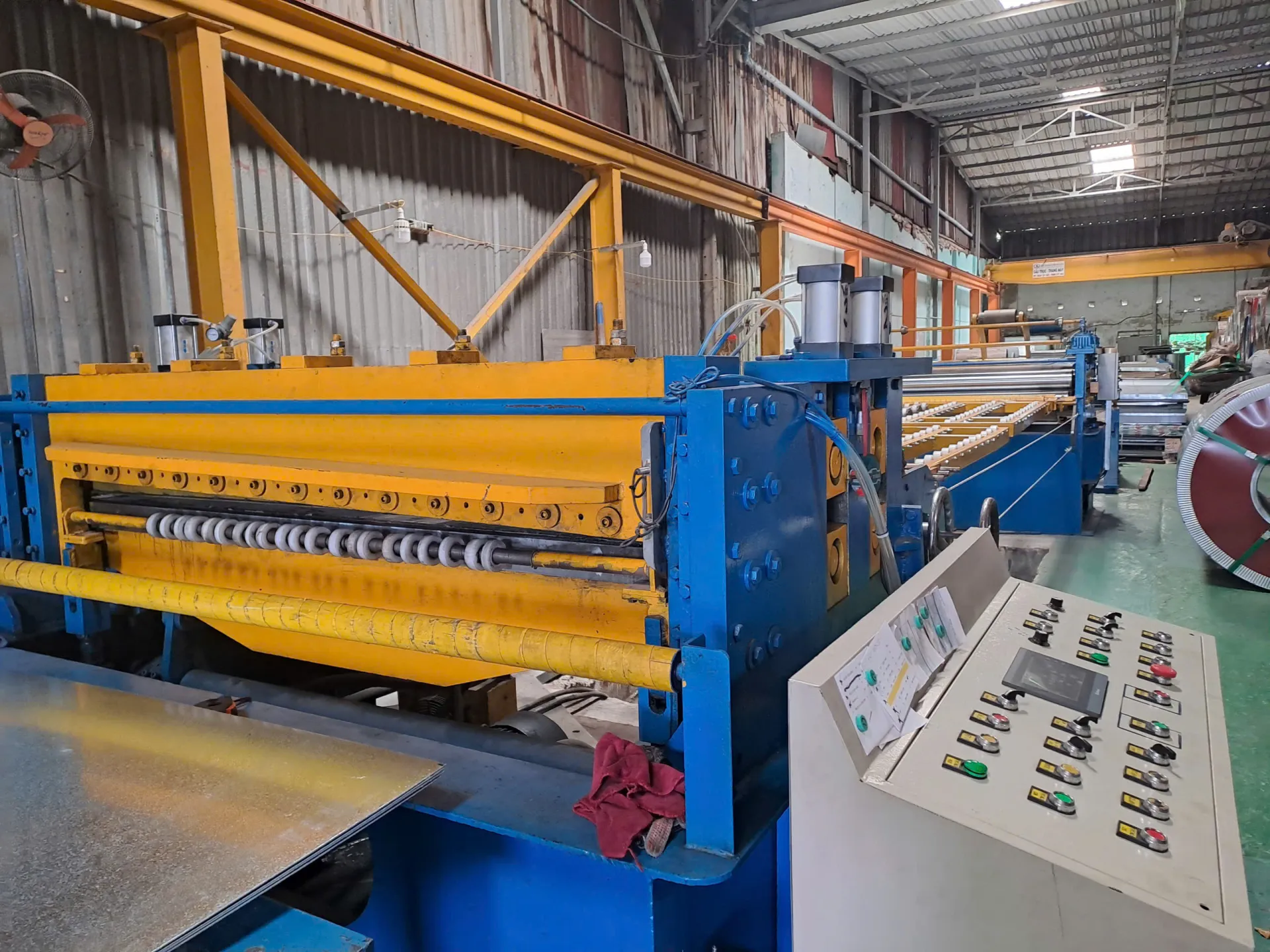
To limit burrs from the outset, choosing a unit steel sheet fabrication on demand with modern machinery is a key factor.
Modern CNC cutting systems or slitting lines can control cutting force and high accuracy, significantly reducing burrs.
Apply deburring process
Use grinding machines, edge finishing machines, or specialised deburring equipment to remove burrs after cutting.
Control overall process
From material selection, slitting, cutting to bending, all must be synchronously controlled to limit errors.
Choose a fabrication unit with proven capability
In reality, most burr errors do not come from the material but from the fabrication capability of the supplier. Workshops without synchronous machinery systems or those that do not properly control the slitting – cutting – bending process often produce large burrs, unstable cut edges, and require multiple reworks.
Therefore, when choosing a supplier, prioritise units capable of direct fabrication at the workshop, using modern machinery and having a technical team that understands drawings. This helps control cutting force, blade gaps, and minimises burr errors from the outset.
Currently, some units such as Tôn Thép Phú Cường have invested in new technology slitting – bending machine systems, allowing for high-precision steel sheet fabrication according to specifications, limiting burrs, warping, and technical errors. Direct fabrication at the workshop also helps control quality better than through multiple intermediaries.
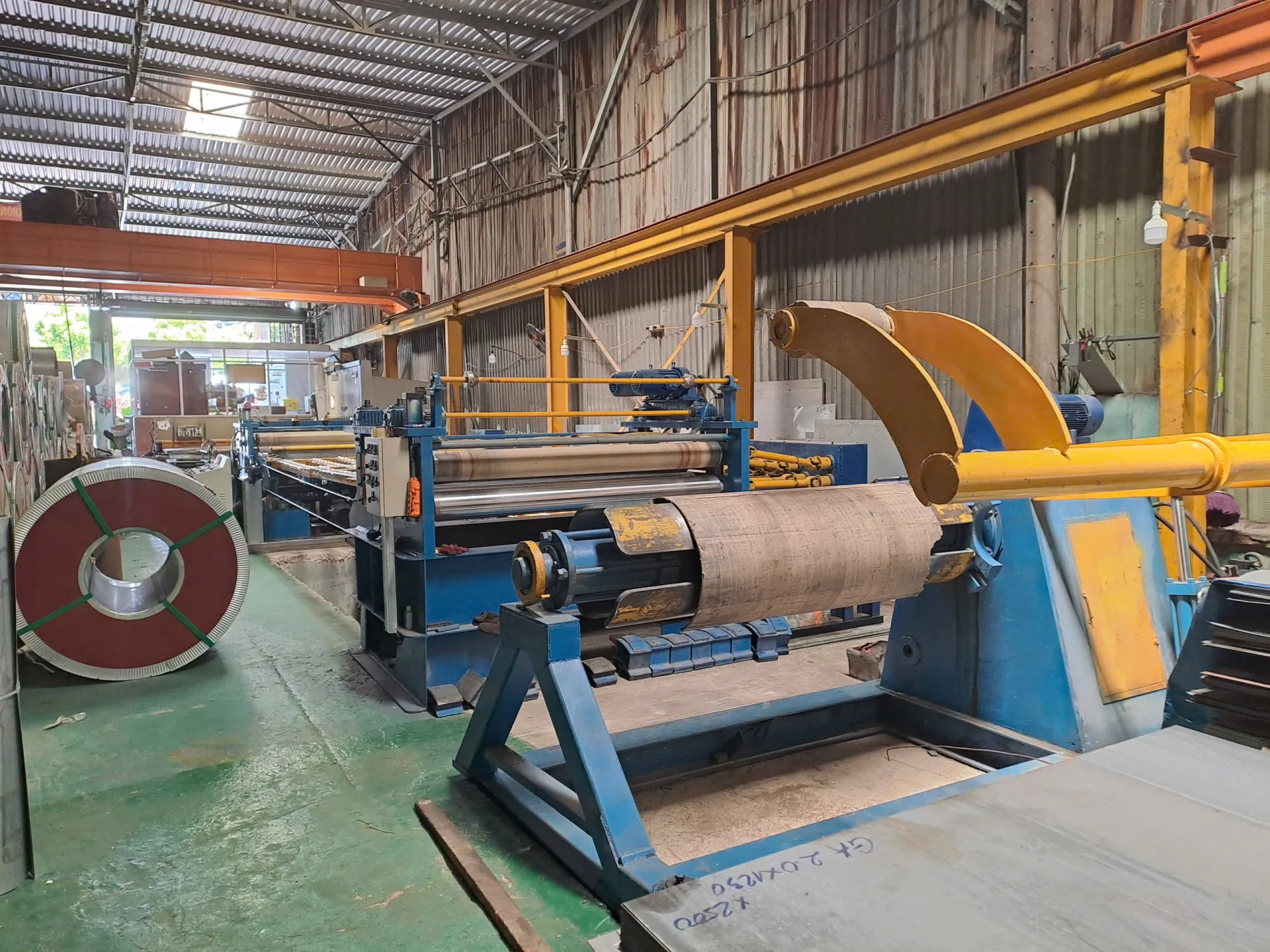
Additionally, with the advantage of readily available transport trucks, materials are delivered directly from the workshop to the construction project, reducing the risk of scratches or errors during transit – an indirect factor but one that greatly affects the actual cut edge quality.
Conclusion
Burrs are a minor error but have a major impact on the entire production chain and product quality. Understanding the causes and applying appropriate technical solutions will help businesses reduce costs, improve quality, and increase competitiveness.
In the context of the mechanical engineering industry increasingly demanding high precision and aesthetics, burr control is no longer an option but a mandatory standard.
Tôn Thép Phú Cường – Leading Reputable Large-Width Steel Sheet Distributor
Tôn Thép Phú Cường supplies a diverse range of galvanised steel sheet, EG steel sheet, GA steel sheet with standard specifications and large widths up to 1500mm, optimising materials for mechanical and construction projects.
With modern slitting – bending machine systems, products are fabricated directly at the workshop, strictly controlling burr errors, warping, and technical deviations.

A technical team knowledgeable in drawings, along with a dedicated truck fleet, ensures fast delivery, guarantees progress, and optimises costs for customers.
Contact information:
Address: 2177C–2177D QL1A, P. Đông Hưng Thuận, Q.12, TP.HCM
Phone: 0933 919 899
Email: tonthepphucuong@gmail.com
Website: tonthepphucuong.com
See more related articles:
- How to Measure Galvanised Coating Thickness at Construction Projects: Avoid Errors When Checking Z100, Z180, Z275
- EG Steel Sheet in District 12 – Reputable Electro-Galvanised Steel Sheet Seller, Available in Large Widths up to 1500mm
- What is Electro-Galvanised Steel? Why the Door, Powder Coating, Metal Furniture Industries Use It Extensively
- Why is actual steel sheet often thinner than the announced figure? Technical facts and what contractors need to understand