Why Are Cut Steel Sheets Skewed? Correct Understanding of Diagonal Tolerance in Steel Sheet Fabrication
In the buying, selling, and fabrication of steel sheets, most users primarily focus on factors such as thickness, width, cut length as required, surface type, and coating. However, there is a very important technical criterion that is often overlooked during the receiving or acceptance phase: diagonal error. Simply put, a steel sheet can have the correct length and width, but still not be truly “square.” In such cases, the cut sheet may not show the problem clearly to the naked eye, but errors will begin to arise during bending, welding, or assembly.
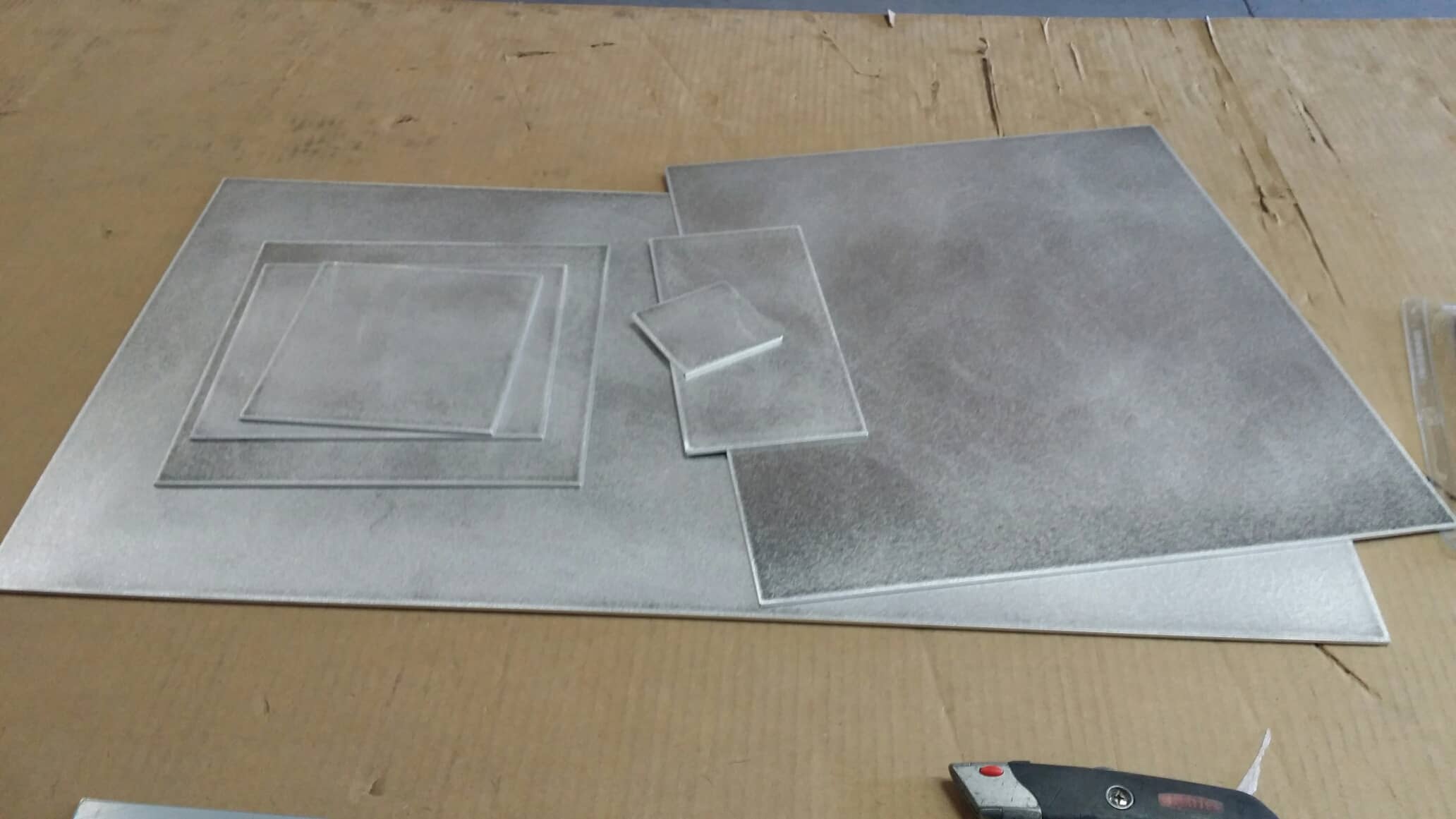
For mechanical workshops, door manufacturers, electrical cabinets, cable trays, panel walls, metal furniture components, or auxiliary structures, a diagonally skewed steel sheet is an annoying error because it doesn't cause obvious damage from the outset, but subtly reduces the accuracy of the entire process. A slightly skewed sheet can result in non-parallel bent edges, misaligned assembly holes, gaps in assembled components, or a finished frame that is not perpendicular. When errors appear in a series of parts, the consequences are not only aesthetic defects but also increased time for cold repair, increased labor for adjustment, and reduced productivity.
Understanding diagonal error correctly not only helps businesses purchase more accurately but also helps select fabrication units with actual quality control capabilities. This article will delve into the concept, formation mechanism, practical applications, and solutions to minimize diagonal skew errors when cutting steel sheets to specification.
1. What is diagonal error? Why is it more important than many people think?
When a steel sheet is described as “square,” it doesn't just mean the sheet has the correct length and width according to the order. Geometrically, a rectangular sheet that meets requirements must also have four right angles and two equal diagonals. If the two diagonals are not equal, it indicates that the sheet is diagonally skewed, meaning its actual shape is no longer a standard rectangle but has been tilted or shifted at an angle to some extent.
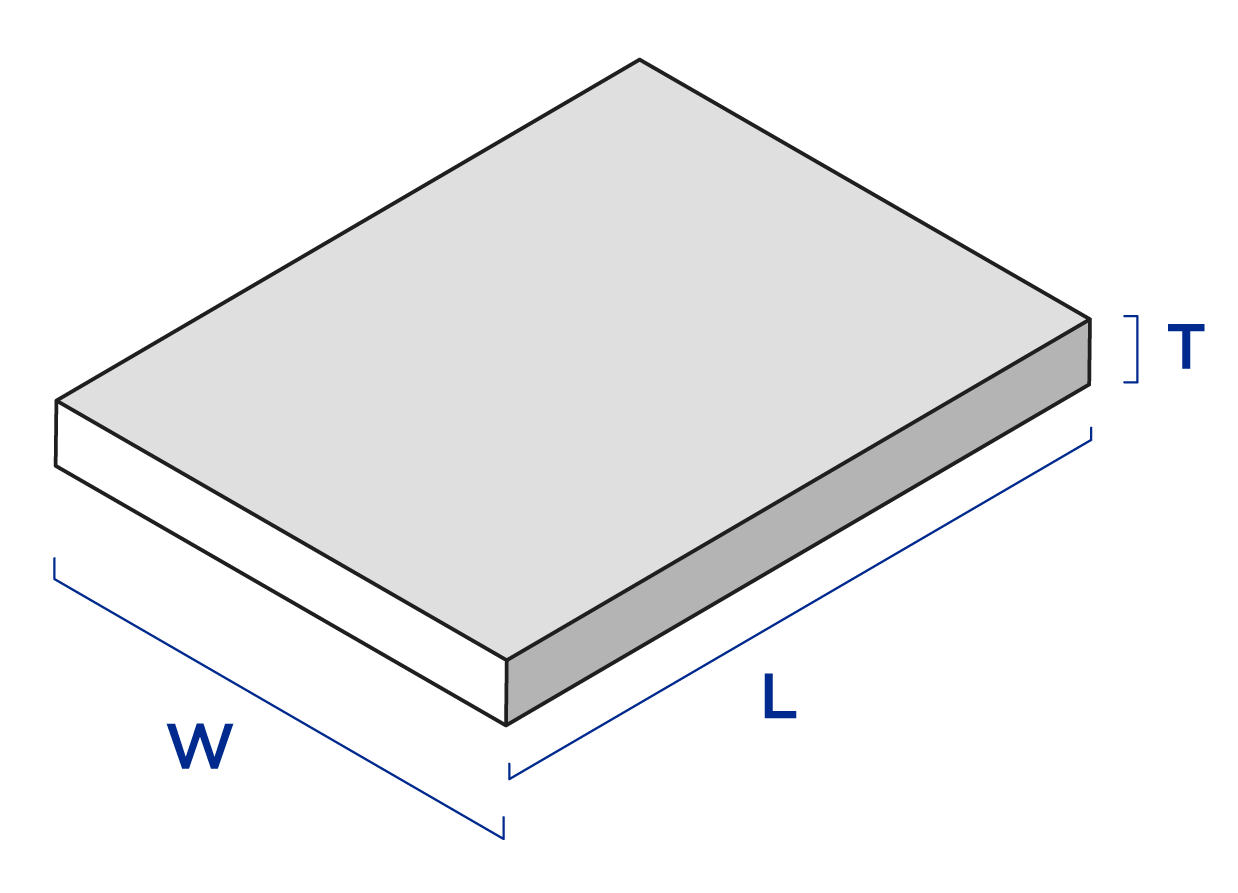
In actual production, diagonal error is a quick check to assess the overall perpendicularity of the cut sheet. This is a very useful indicator because it simultaneously reflects multiple factors: the straightness of the cut line, the stability of the feeding system, the accuracy of the length stop mechanism, and the alignment status of the machine. If only length and width are measured, you might miss that one edge is slightly angled relative to the other. But if both diagonals are measured, the geometric deviation will immediately become apparent.
Therefore, in many medium-precision mechanical applications and civil mechanical applications requiring good assembly, checking the diagonal is a very worthwhile step. It is especially important for sheets that will be used for box bending, making doors, frames, panels, technical partitions, or components with multiple punched holes at precise locations. A small diagonal skew might not cause an impact if used only as a simple cover plate, but it will become a major problem if used for assembly or further fabrication according to drawings.
See more related articles:
- What Materials Are Used to Produce Steel Doors, Fire Doors, Metal Doors?
- Steel Sheet Materials Used in the Mechanical Manufacturing Industry – Which Type to Choose for Precision Fabrication
- Steel Sheet Thickness Tolerance Standard (Avoid Shortage When Receiving Goods)
2. Why do cut steel sheets become diagonally skewed?
Diagonal skew does not occur randomly. It is often the result of a combination of machinery, parameter settings, material condition, and operational procedures. Understanding the root cause will help address the problem fundamentally rather than just fixing errors at the final stage.
2.1. Feeding system not running straight
During the coil slitting and flattening process, if the material does not enter the machine perfectly centered, the cut sheet may be slightly shifted horizontally. This deviation can be very small at the input, but when extended over several meters of feeding, it will turn into a more obvious geometric error in the finished sheet. This situation often occurs when the guide assembly is not accurate, the pull rollers are misaligned, or the material coil is not placed coaxially with the production line.

2.2. Cutting blades or cutting mechanism not perfectly parallel
If the cutting blade assembly is not parallel to the sheet's direction of movement, the cut line will not be perfectly perpendicular to the material's longitudinal edge. In this case, even if the length measured at some positions is correct, the entire sheet can still be diagonally skewed. This is a machine-mechanical error and is often difficult to detect with only a cursory visual inspection.
2.3. Length stop or travel sensor unstable
In some cutting lines, sheet length is controlled by sensors, encoders, or length stops. If this system has errors, slips, or inconsistent feedback, the cutting point may vary slightly between operations. When combined with feeding path errors, the sheet may no longer be square as desired. This problem is more pronounced in large batch orders or when machine speeds are high.
2.4. Material with residual stress or unstable flatness
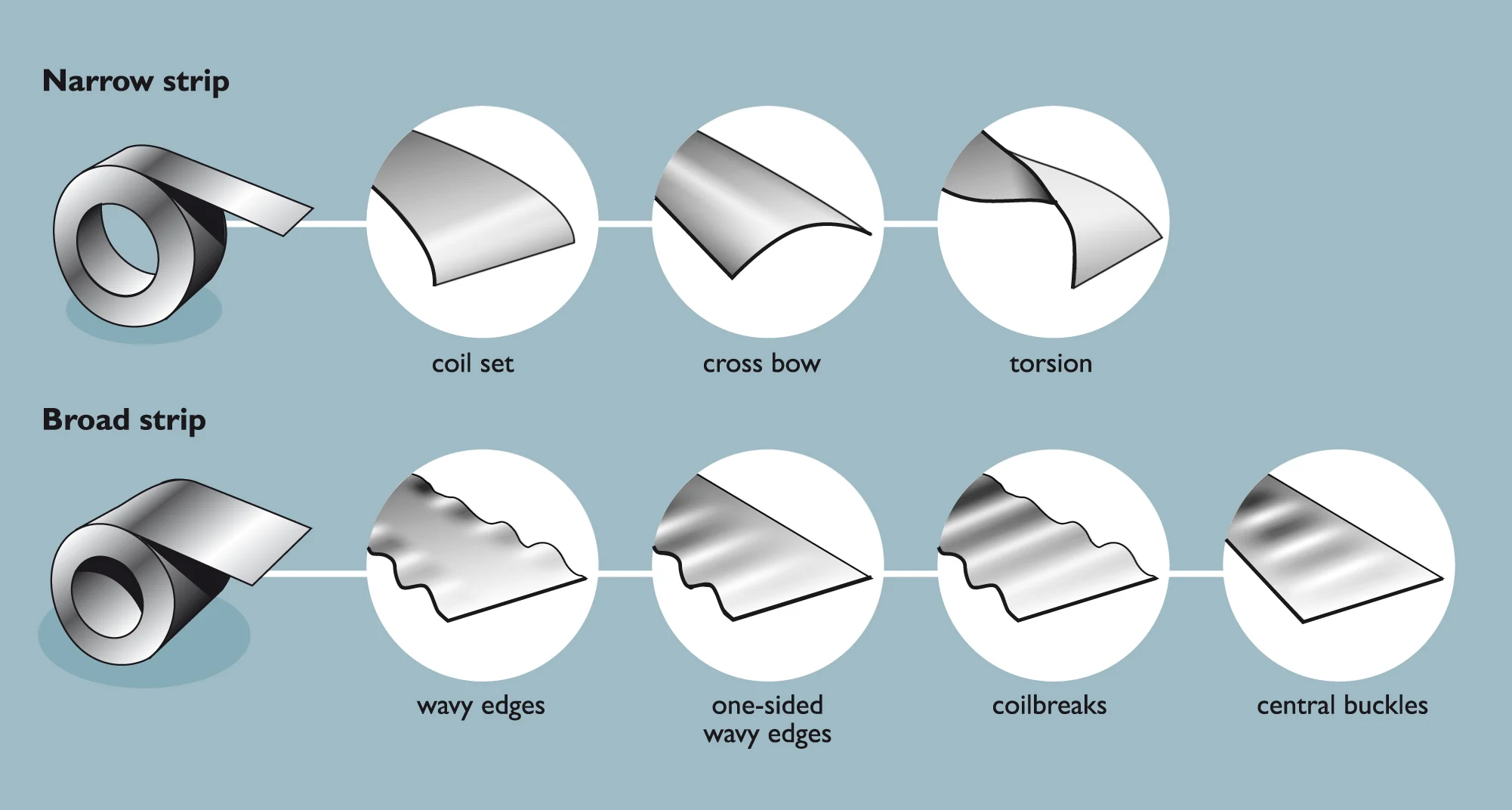
Not all diagonal skew errors are due to the machine. In many cases, the steel coil itself has internal stress, slight curvature, or uneven coil edges. When uncoiled, the material tends to release stress and undergo geometric shifts. If the flattening system is not good enough or the material has variations between the two edges, the cut sheet may exhibit relative loss of squareness.
2.5. Operating speed too high but lacking control
Many units run production lines with the goal of increasing productivity, but when the speed is too high while the guiding and clamping systems are not stable, the sheet can shift before the cutting point. The result is that each sheet is slightly off, and this error accumulates into an entire batch that is inconsistent. This is a very frustrating type of error because it looks “acceptable” overall, but then a series of problems arise during assembly.
3. How to quickly check if a steel sheet is diagonally skewed
In actual warehouses and mechanical workshops, specialized geometric inspection tools are not always available. However, there are some very practical ways to identify and control diagonal skew errors.
3.1. Measure both diagonals
This is the most basic and effective method. Use a tape measure from one corner to the opposite corner, then measure the other diagonal. If the two measurements differ, the sheet is no longer perfectly square. The greater the difference, the more significant the diagonal skew. In practice, it is not always necessary for them to be absolutely equal, but the difference must be within an acceptable range for the intended use.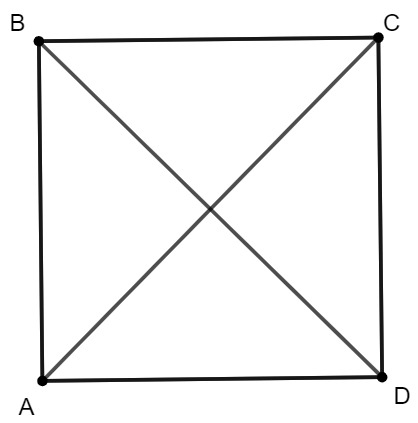
3.2. Check with a large square or square gauge
For sheets that are not too large, one edge of the sheet can be placed against a standard stop or a large square can be used to check the angle. This method is suitable for quickly detecting errors where angles are open or closed. However, for long and wide sheets, measuring both diagonals is still more reliable.
3.3. Stack multiple sheets together
If a batch contains many sheets of the same specification, stacking them is a very quick way to identify deviations. If the corners do not align evenly, the edges are shifted, or the ends do not fit together, it is very likely that the batch has diagonal errors or cutting line errors.
3.4. Test check at the bending or sample assembly stage
In a production environment, sometimes the most effective way to detect errors is to run a sample test. If, after bending, the two opposite edges are not parallel as designed, or if, when joined with a mating part, corner interference, corner gaps, or edge misalignment occurs, it is a sign that the diagonal of the input blank should be rechecked.
4. How does diagonal skew affect actual fabrication and assembly?
Many people think that diagonal error is just a minor geometric flaw. But in sheet metal work, this is an error with a cascading effect.
For the bending stage, if the blank is not square, the edge used as the bending reference will no longer be correctly correlated with the other edge. The result is that after multiple bends, the box or folded part is prone to twisting, losing parallelism, or having actual size deviations at the opening of the part.
For the frame welding stage, a diagonally skewed sheet or part requires the welder to make more adjustments. If ignored, the frame can be distorted, the weld line unsightly, and the joint gaps uneven. For parts requiring aesthetics or tightness, this problem is even more apparent.
For the punching and assembly stage, diagonal error causes a misalignment between the sheet edge and the hole position. While the drawing may reference the edge, the actual edge is not square. When installing screws, attaching hinges, assembling covers, or mounting module assemblies, parts will be difficult to fit as expected.
For finished products requiring a good appearance, a diagonally skewed sheet easily creates the impression that the product is tilted, the gaps on both sides are uneven, and the edges look unbalanced. This is an error that customers can easily see even without deep technical understanding.
For production productivity, diagonal error forces workers to perform cold repairs, re-cut, or select blanks before fabrication. These operations do not add value but consume labor, time, and reduce the stability of the production line.
5. When does diagonal error become a major risk?
Not all applications are equally sensitive to this error. But there are cases where diagonal error needs to be controlled more strictly.
First is box-bent or multi-edge bent parts. The more edges, the more easily geometric errors accumulate. A non-square input blank will make the finished product difficult to square.
Second is parts with holes, slots, or assembly positions according to the drawing. When the sheet edge is the positioning reference for subsequent stages, any geometric error of the edge will lead to functional errors.
Third is sheets used for doors, lids, panels, partitions, cabinet doors. These are applications where the naked eye can easily detect uneven gaps or non-standard angles.
Fourth is mass production orders. A small error, if repeated on hundreds or thousands of sheets, will no longer be a small matter. In such cases, the cost of correction can be much greater than the cost of control from the outset.
Fifth is large width or long length materials. The larger the sheet, the harder it is to maintain a stable material path. Therefore, the requirements for equipment, alignment, and operational experience are also higher.
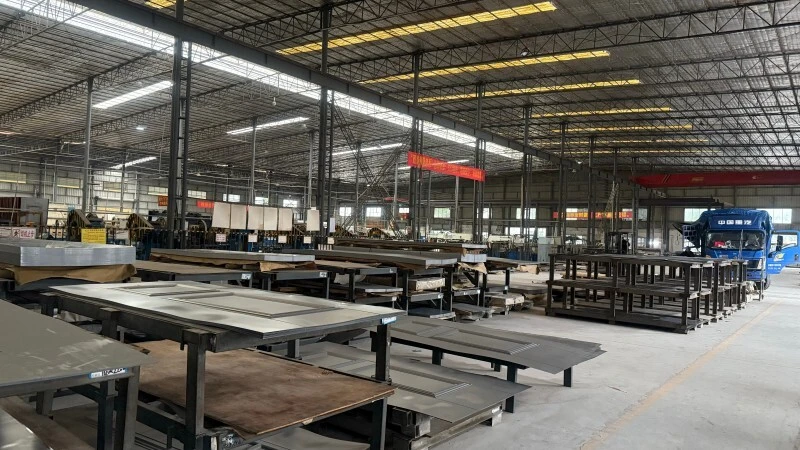
6. Solutions for controlling diagonal error when slitting and flattening coils
To limit diagonally skewed sheets, the problem needs to be viewed as a continuous technical chain, not just a simple cutting operation.
6.1. Inspect from the incoming material source
Steel coils need to have stable surface quality, thickness, flatness, and coil edges. If the coil already has geometric errors or uneven stress, the subsequent cutting stage will find it very difficult to achieve stable squareness. Selecting the right material source is the first step to reduce risk.
See more articles: What is Steel Sheet Flatness Tolerance? Its Impact on Fabrication and Actual Installation
6.2. Align the guiding and feeding system
This is a very important factor. The material must run straight, without edge flipping or eccentricity. The roller system, guide tables, and stop assembly must be maintained and checked regularly. Even a small deviation at this stage is enough to make an entire batch out of square.
6.3. Periodically check cutting blades and cutting mechanism
Cutting blades not only need to be sharp but also correctly installed, parallel, and operate stably. A cutting mechanism with slight play or misalignment will directly affect the geometric quality of the sheet.
6.4. Run initial batch samples before mass cutting
This is a very practical step but often overlooked. Just measuring the length, width, and two diagonals of the first few sheets can help detect errors early. Performing this step well helps avoid mass cutting only to find the entire batch needs rework.
6.5. Synchronization between material supplier and subsequent fabrication party
If the supplier understands what the sheet will be used for, they can proactively control the criteria more appropriately. For example, sheets used for panels, box bending, cabinet casings, or precision assembly parts will require a higher level of control compared to sheets used for general shielding. Clear technical communication from the outset helps save significant costs later.
6.6. Don't just look at the price, but also at quality stability
In the material market, unit price differences sometimes lead buyers to prioritize price first. However, for orders requiring further fabrication, the true cost is not just the purchase price of the steel sheet but also in error handling time, scrap rates, and delivery delays due to rework. A stable supply in terms of specifications and geometric quality often results in lower overall operating costs.
7. Conclusion: A sheet cut to the correct dimensions is not necessarily a sheet that meets requirements
Diagonal deviation is a simple but very valuable technical indicator in practice. It helps reflect whether the cut sheet is truly square, thereby predicting the ease of subsequent bending, welding, punching, and assembly stages. In many cases, diagonal misalignment errors go unnoticed during goods receipt, but become the cause of slow production, costly rework, and reduced finished product quality.
For mechanical enterprises, door manufacturers, metal furniture companies, electrical cabinet manufacturers, or auxiliary structure providers, checking and controlling diagonals should be considered part of input quality management, not an auxiliary step. A steel sheet cut to the correct length, width, and maintaining stable squareness will help the entire subsequent process run smoother, reduce issues, and increase professionalism when delivering to customers.
8. Phu Cuong Steel Sheet and Steel – Leading Reputable Large-Width Steel Sheet Distributor
For entities needing to purchase steel sheet for further bending, stamping, welding, or assembly according to drawings, choosing a supplier is not just about availability, but also about the ability to meet stable specifications and provide practical fabrication support. Phu Cuong Steel Sheet and Steel currently supplies key material lines such as EG steel sheet, GA steel sheet, galvanised steel sheet along with various specifications serving mechanical engineering, doors, metal interior/exterior, and auxiliary structures.

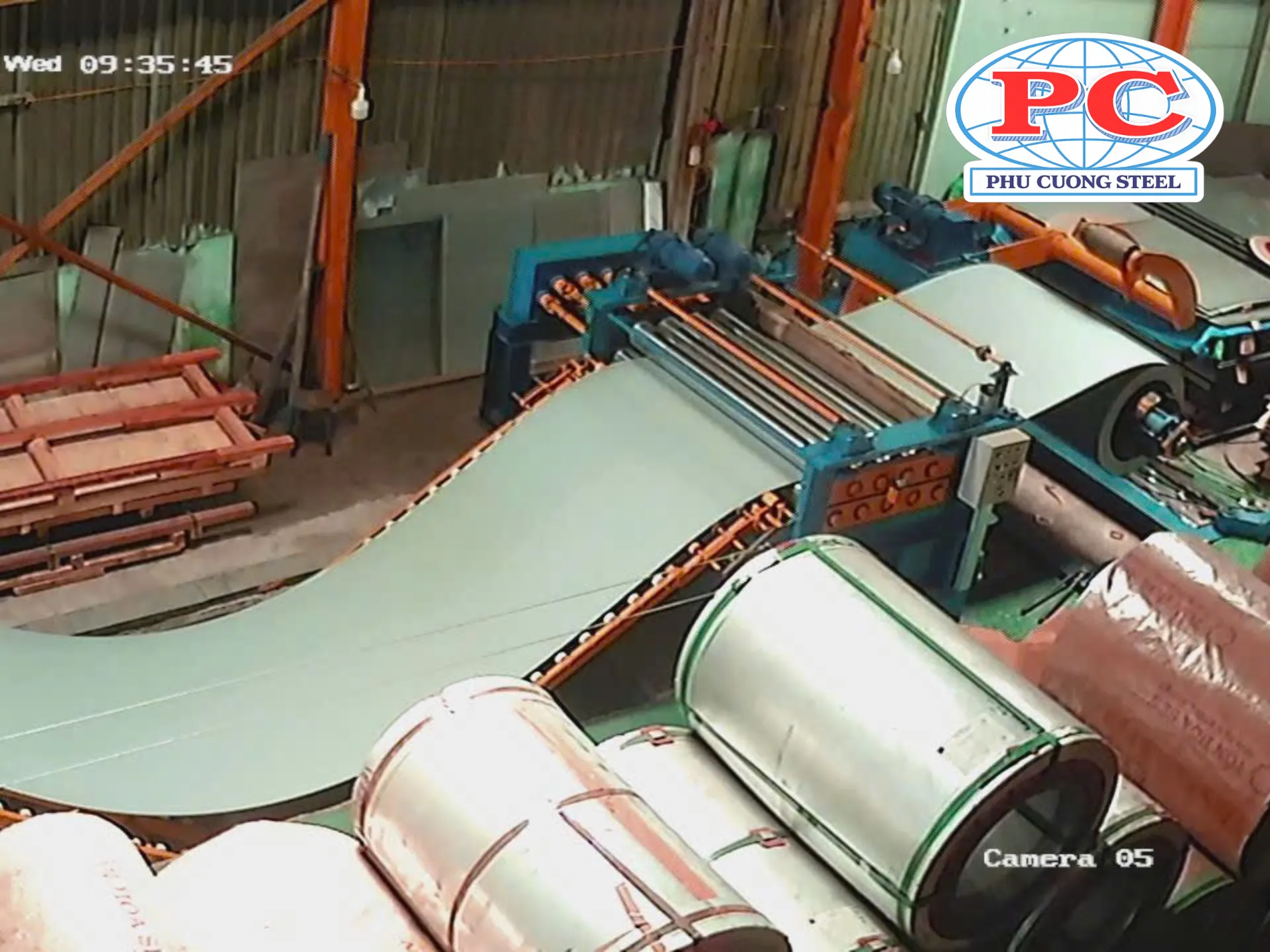
Phu Cuong's advantage lies in its ability to supply steel sheet widths of 1000mm, 1250mm, 1500mm, suitable for various practical fabrication needs, especially for orders requiring optimized material loss. Additionally, the company has coil slitting machines, custom cutting, bending and stamping, and in-warehouse fabrication, making it more convenient for customers to process materials according to production needs. Owning private delivery trucks is also a significant advantage, helping to proactively manage delivery schedules, optimize logistics costs, and support fast orders in District 12, Ho Chi Minh City, and surrounding areas.
With a commitment to accompanying customers with technical and practical application support, Phu Cuong Steel Sheet and Steel is suitable for mechanical workshops, construction companies, and manufacturing enterprises that require a stable material source, clear specifications, and in-warehouse fabrication support services.
Contact Information:
2177C–2177D National Highway 1A, Dong Hung Thuan Ward, District 12, Ho Chi Minh City
Hotline: 0933 919 899
Email: tonthepphucuong@gmail.com
Website: tonthepphucuong.com
See more articles on the same topic:
- What is Protective Oil on Steel Sheet and Steel? When is it Needed, When Must Oil Be Removed Before Fabrication?
- EG steel sheet in mechanical engineering, doors, and metal furniture: Why do many workshops prioritize it?
- What is steel sheet bending fabrication? Process, advantages, and practical applications
- How to Measure Galvanised Coating Thickness at Construction Projects: Avoid Errors When Checking Z100, Z180, Z275\
- Where to Buy Reputable EG Steel Sheet in Ho Chi Minh City? Quotation & Experience in Choosing the Right Standard
- Steel Sheet Width Tolerance After Slitting: Why Do Mechanical Workshops, Door Manufacturers, and Facade Companies Need to Check Carefully?