Tin Tức & Sự Kiện
Latest
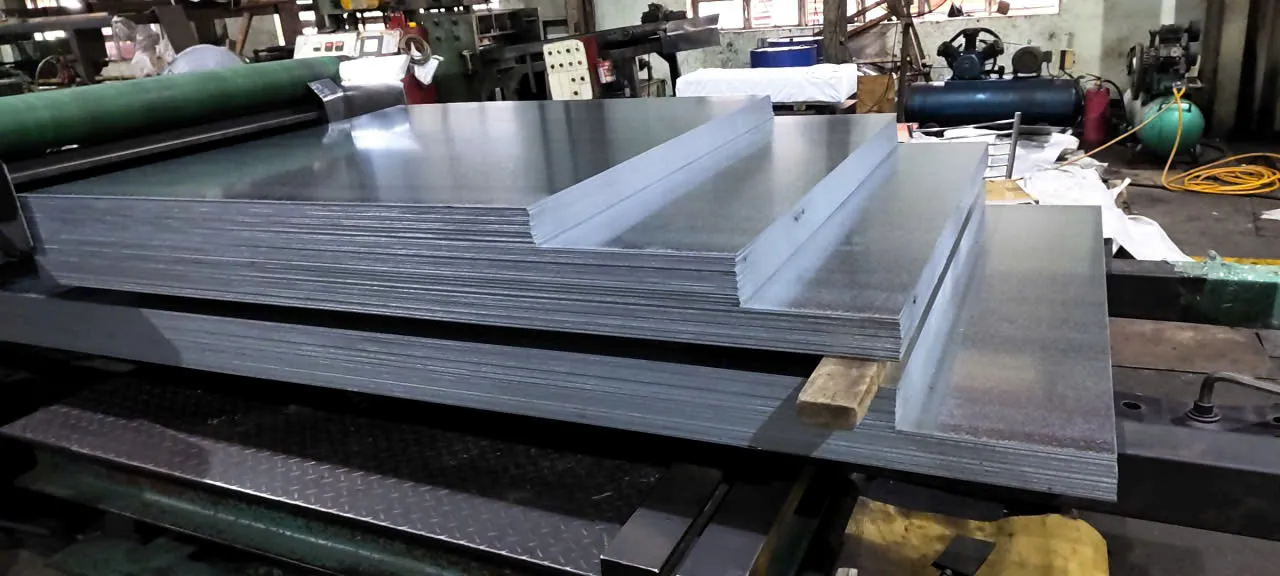
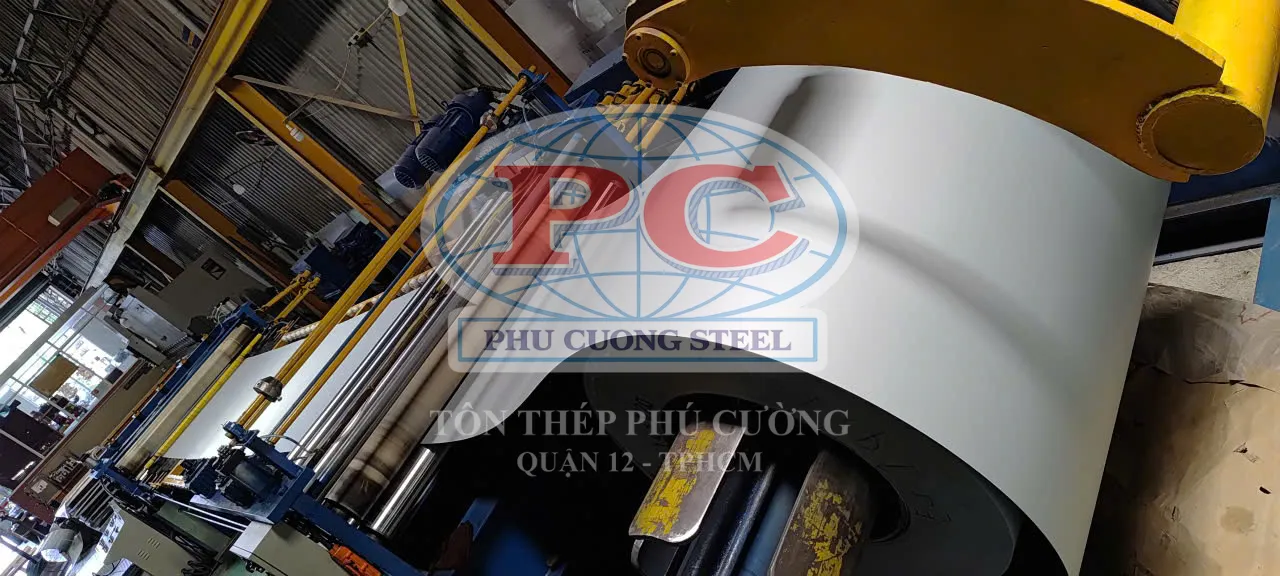
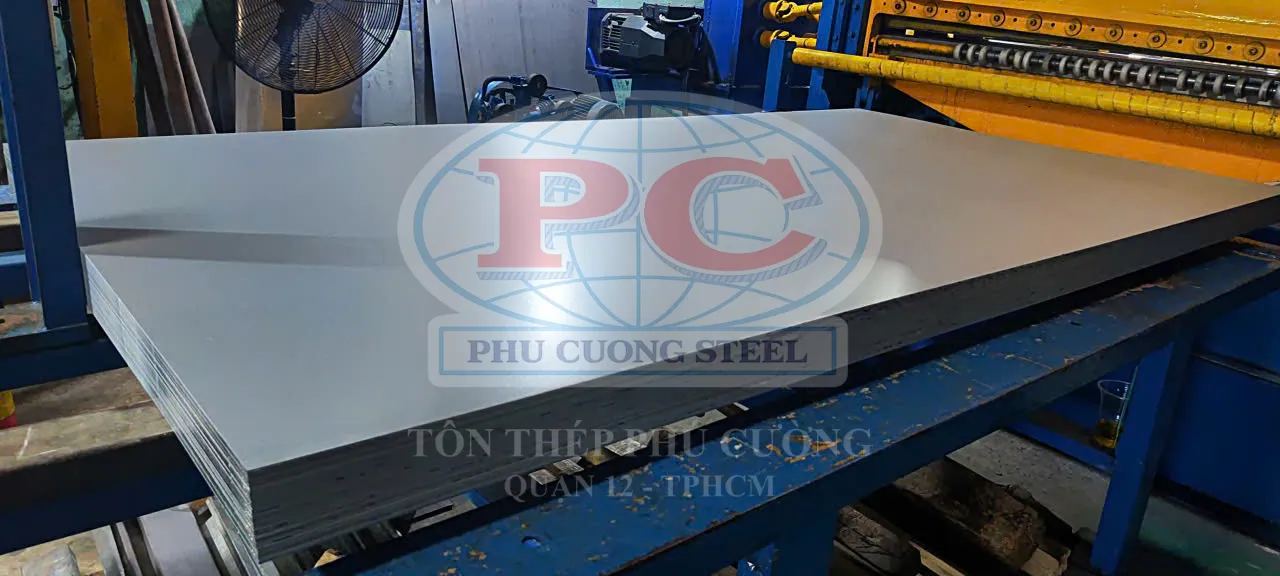
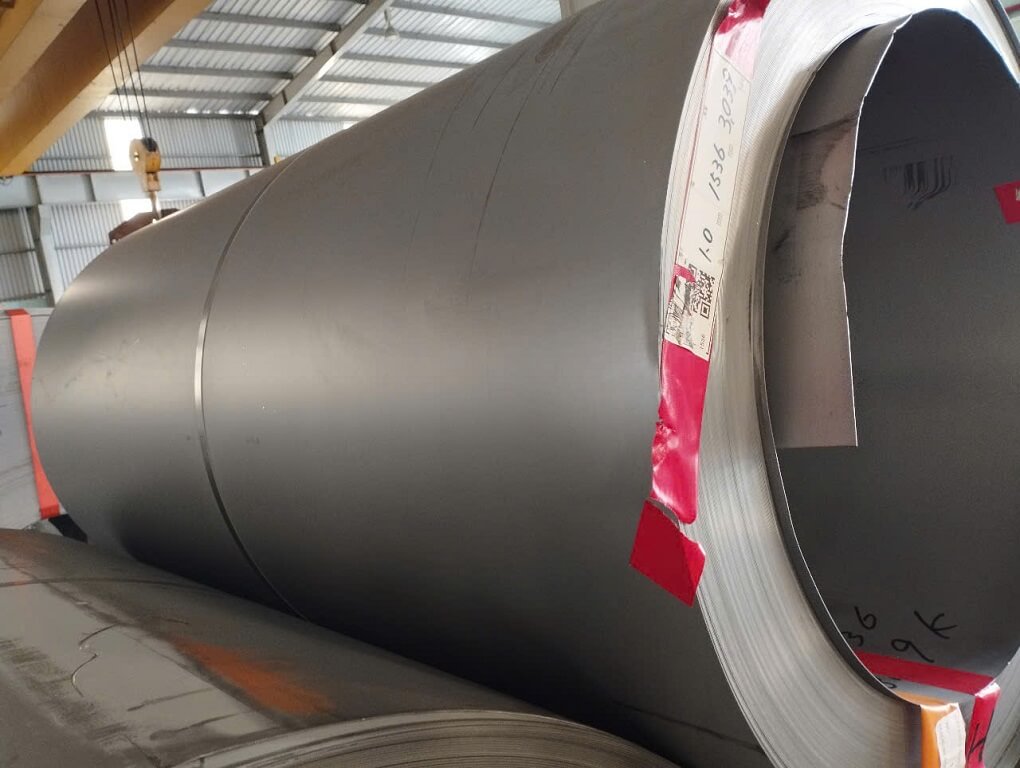
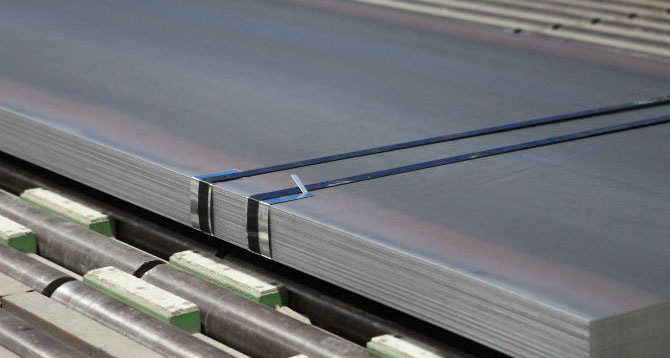
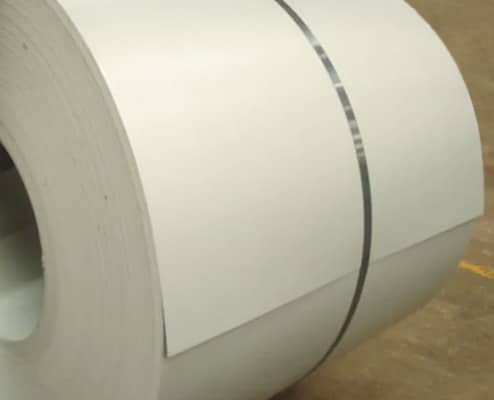
Buying EG steel sheet just by looking at the beautiful color can result in losses: 7 Points to Check Before Finalizing the Order
EG steel sheet is a material line chosen by many customers due to its prominent color, beautiful shimmering surface effect, easy to create highlights for construction projects and mechanical products....
More news
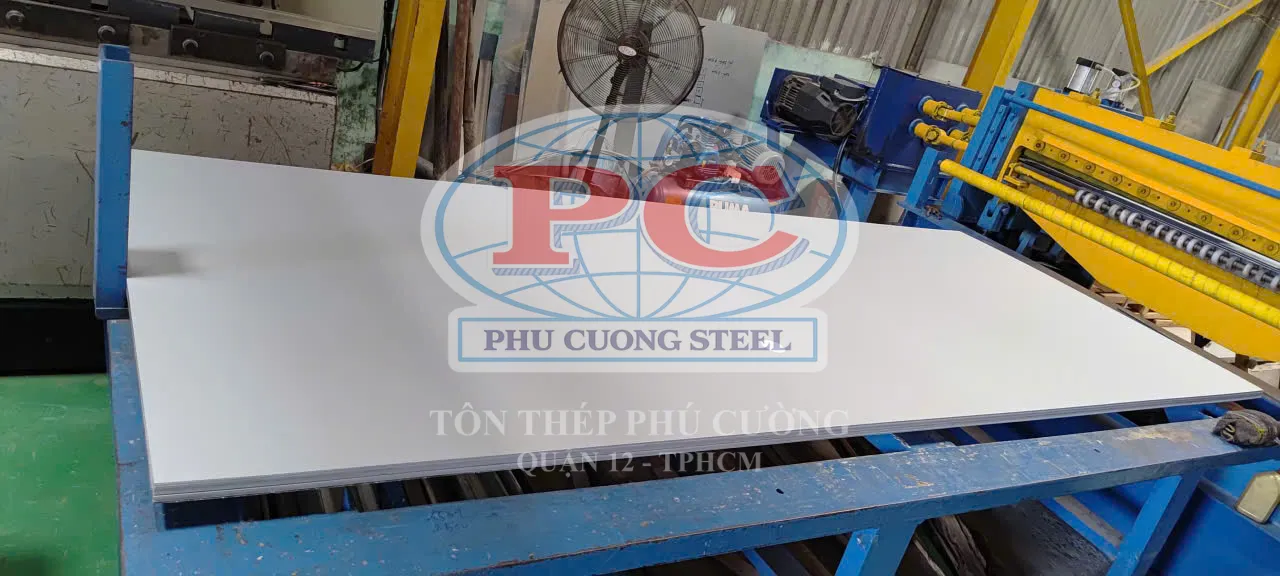
EG steel sheet for Mechanical Applications: Why is it Preferred by Workshops Making Doors, Cabinets, Frames, and Metal Furniture?
Among steel sheet and steel materials serving civil mechanics and light industrial production, EG steel sheet is one of the material lines chosen by many workshops due to its clean surface, easily identifiable color, good fabrication capability, and suitability for many types of products requiring high aesthetics. Unlike steel sheets used only for covering or auxiliary structures, EG steel sheet often appears in directly visible products such as doors, cabinets, frames, machine casings, technical boxes, signboards, shelves, metal interior details, and many mechanical products according to drawings.The reason EG steel sheet is of interest is not only its surface color. This material also has advantages in flatness, relatively stable cutting and bending capabilities, and high applicability in mass production. For mechanical workshops, choosing the right type of steel sheet from the start helps reduce surface treatment time, limit product defects, and optimize fabrication costs. Therefore, understanding the characteristics of EG steel sheet is essential before ordering according to specifications.This article will analyze in detail what EG steel sheet is, why this material is suitable for mechanical workshops, its practical applications in making doors, cabinets, frames, metal interior, and how to choose the right EG steel sheet supplier in Ho Chi Minh City.1. What is EG steel sheet?EG steel sheet is a common market term referring to steel or steel sheet with a characteristic blue-tinted surface. In actual material transactions, many mechanical customers quickly refer to it as EG steel sheet to distinguish it from GA steel sheet, galvanised steel sheet, cold steel sheet, color steel sheet, or untreated black steel. This name often comes from the surface characteristic of a light blue tint, appearing clean, uniform, and easily identifiable in the material warehouse.The most easily recognizable feature of EG steel sheet is its light blue or slightly blue-tinted surface, creating a cleaner and more professional feel compared to some raw materials. Therefore, EG steel sheet is often used for products that require a relatively good surface from the start, or need to reduce processing steps before painting, assembly, or finishing.In mechanical production, EG steel sheet is evaluated not only by its color but also by factors such as thickness, flatness, hardness, cutting capability, bending capability, surface scratch level, and consistency between batches. A workshop making doors, cabinets, or frames that chooses inconsistent material may encounter errors when cutting, bending, or assembling products in series.See more related articles: EG steel sheet in mechanics, doors, and metal interior: Why do many workshops prioritize it?Therefore, when purchasing EG steel sheet, customers should clearly define the purpose of use: for aesthetic products, light load-bearing parts, casings, auxiliary frames, doors, cabinets, or fabrication according to drawings. Each need will correspond to different thicknesses and specifications.2. Why is EG steel sheet favored by mechanical workshops?The first reason EG steel sheet is widely used in mechanics is its good aesthetic surface. For products such as iron doors, electrical cabinets, machine casings, shelves, decorative frames, or metal interior details, the cleaner and more uniform the initial surface, the smoother the finishing process. Workers have less need for extensive re-processing before painting or assembly.The second reason is that EG steel sheet is suitable for many common fabrication operations such as sheet cutting, coil slitting, bending, stamping, drilling, spot welding, or simple shaping. For workshops that receive orders according to drawings, easily fabricated material helps save time, reduce errors, and maintain more stable production progress.The third reason is that EG steel sheet has high flexibility. One type of material can be used for many different product groups, from small parts to large sheets, from civil goods to light industrial goods. This helps workshops manage inventory more easily, especially for units that frequently receive various types of orders.Additionally, EG steel sheet also creates a cleaner and more professional product feel during production. For unpainted or unfinished parts, the EG surface makes it easy to check for defects, classify materials, and identify them compared to other steel sheet lines in the warehouse.3. Applications of EG steel sheet in door makingOne of the common applications of EG steel sheet is in making doors, door frames, door panels, cladding details, or auxiliary parts in the metal door industry. For door making workshops, the material needs to have flatness, suitable thickness, and a relatively good surface so that after cutting and bending, it is not excessively deformed.EG steel sheet can be used for parts such as door faces, trims, auxiliary frames, cladding panels, covers, or components that need to be shaped according to drawings. When the correct thickness is chosen, the product after fabrication will have sufficient rigidity, not too heavy, but still maintain good form.For indoor doors, technical doors, warehouse doors, workshop doors, or parts not directly exposed to overly harsh environments, EG steel sheet is a worthwhile consideration. If the product needs to be used outdoors or frequently exposed to rainwater, the workshop should consider additional painting or choose a material with more suitable corrosion resistance depending on actual conditions.The important point when using EG steel sheet for doors is to choose the correct specifications. Steel sheet that is too thin can easily vibrate, dent, or lack rigidity. Steel sheet that is too thick increases weight, is difficult to fabricate, and increases costs. Therefore, manufacturers need to balance durability, weight, aesthetic requirements, and budget.4. Applications of EG steel sheet in making cabinets, machine casings, and technical boxesEG steel sheet is also widely used in the production of cabinets, equipment casings, technical boxes, covers, troughs, trays, and shell-shaped mechanical parts. This group of products requires a relatively good surface, precise dimensions, and stable bending capabilities.When making cabinets or machine casings, an important requirement is that the steel sheet must have good flatness. If the material is bent, warped, or uneven, the product after bending may be difficult to assemble, have open edges, or not achieve squareness. For orders producing many identical sets, small deviations in the input material can create batch errors.EG steel sheet has the advantage of easily identifiable surfaces, easy scratch inspection, and suitability for the cutting and bending process. After fabrication, the product can be painted, coated, or assembled depending on the purpose of use. For parts located inside workshops, technical rooms, or areas with little direct exposure to weather, EG steel sheet can perform well if the correct thickness is chosen and appropriate finishing treatment is applied.In the product group of cabinets and machine casings, buyers should pay special attention to the cut edges and dimensional tolerances. If ordering pre-cut steel sheet according to specifications, it is necessary to choose a supplier with stable cutting machines to ensure flat cut edges, minimal burrs and limited errors. This helps workshops reduce grinding time, reduce waste, and increase assembly speed.See more related articles: Steel Sheet Thickness Tolerance Standards (Avoid Shortages Upon Receipt)5. Applications of EG steel sheet in metal interiorMetal interior is a product group increasingly using EG steel sheet, especially in parts such as shelves, cladding panels, decorative cabinets, auxiliary frames, covers, light metal partitions, or parts requiring a clean surface before finishing. For interior, aesthetics are prioritized higher than typical technical items.EG steel sheet helps workshops have clean-looking, less rough input material, making it easy to check for surface defects. When painting or finishing is required, a stable surface facilitates the processing. Interior parts usually do not require heavy load-bearing, but need sharpness at folded edges, flatness, and uniformity between panels.For metal interior products, minor defects such as scratches, dented corners, poor cut edges, or uneven surfaces can reduce the value of the finished product. Therefore, workshops need to choose well-preserved material, cut to the correct specifications, and transported carefully. If steel sheet is purchased from one place and then sent for fabrication elsewhere, the risk of scratches during transit will be higher.This is why many workshops prioritize choosing a supplier that can both sell materials and support cutting, slitting, and bending as required. A centralized process helps reduce the number of loading and unloading operations, reduce surface risks, and speed up order fulfillment.6. What thickness of EG steel sheet should be chosen?The thickness of EG steel sheet should be chosen according to the actual purpose of use. For small parts, cladding details, covers, or products not requiring high load-bearing capacity, workshops can choose a thinner thickness to save costs and facilitate fabrication. For doors, frames, machine casings, cabinets, or products requiring better rigidity, a greater thickness should be chosen to maintain form and limit dents.What should be avoided is choosing thickness based solely on price. Cheaper but overly thin material can make the product weak, prone to vibration, denting, and require additional reinforcement. Conversely, choosing overly thick steel sheet increases weight, increases costs, is harder to bend, and may not be necessary for the actual application.Besides thickness, steel sheet width is also very important. Common widths such as 1000mm, 1250mm, 1500mm, or larger widths can directly affect blanking. If the appropriate width is chosen, workshops can reduce cutting lines, reduce waste, and optimize material costs. For large-sized products, steel sheet width of 1500mm or more is an advantage as it helps limit panel joints and reduce waste.When ordering, detailed dimensions or preliminary drawings should be sent to the supplier for advice on suitable steel sheet width. Choosing the correct width from the start sometimes saves more than just comparing the unit price per kilogram or per sheet.7. Common mistakes when purchasing EG steel sheetThe first mistake is only asking for the price without clearly stating the purpose of use. Even if it's EG steel sheet, using it for doors, cabinets, machine casings, or hidden parts will have different requirements. If the supplier does not understand the application, advice on thickness and specifications may not match the needs.The second mistake is not inspecting the surface upon receipt. EG steel sheet has an easily observable surface, but if the goods are received hastily, buyers might overlook scratches, dents, bent edges, or incorrect specifications. For products requiring aesthetics, it should be inspected immediately upon receipt for timely resolution.The third mistake is choosing a non-optimal steel sheet width. Many workshops are accustomed to using a fixed width, whereas if they switch to a larger width or cut according to specifications from the start, waste can be significantly reduced. Especially for repetitive production orders, optimizing steel sheet width helps save long-term costs.The fourth mistake is purchasing material from one place and having it fabricated in multiple different places. This method is sometimes flexible, but it also increases the risk of delayed progress, errors, scratches, and additional transportation costs. If an order needs quick delivery or requires a beautiful surface, it is advisable to prioritize a unit that can support multiple stages at the warehouse.8. Why should you buy EG steel sheet from Ton Thep Phu Cuong?For mechanical workshops, door making workshops, metal interior contractors, or construction projects requiring stable materials, choosing the right place to buy EG steel sheet is as important as choosing the correct thickness. If only buying based on low price without considering the surface, specifications, cutting and bending capabilities, and delivery methods, customers are very likely to encounter issues such as scratched steel sheet, incorrect dimensions, poor cut edges, delayed delivery, or additional transportation costs through multiple fabrication locations.Ton Thep Phu Cuong is a unit specializing in supplying steel sheet and steel directly to mechanical customers, door manufacturers, workshops, construction projects, and custom production in Ho Chi Minh City. With the advantage of a large warehouse, diverse material sources, and experience working with many actual production workshops, Phu Cuong can help customers choose the right type of EG steel sheet according to usage needs: for doors, cabinets, frames, machine casings, metal interior details, or fabrication according to drawings.One of Ton Thep Phu Cuong's strengths is the availability of many material lines such as EG steel sheet, GA steel sheet, galvanised steel sheet, pre-painted cold steel sheet with various thicknesses and steel sheet widths. In particular, Phu Cuong has an advantage in large width steel sheet from 1500mm or more, suitable for orders requiring optimized blanking, reduced joints, minimized waste, and limited need for joining multiple panels during production.In addition to material supply, Phu Cuong also supports in-warehouse fabrication services such as coil slitting, cutting to specifications, bending and stamping, and custom steel sheet fabrication. This helps customers avoid buying steel sheet from one place and then transporting it elsewhere for cutting or bending. A centralized process helps reduce the number of loading and unloading operations, limit scratches on the EG surface, save time, and better control specifications.For EG steel sheet, the surface factor is very important because this material is often used for products requiring high cleanliness and aesthetics. When cut, bent, and processed at a warehouse with suitable machinery, the steel sheet will minimize bent edges, surface scratches, or dimensional deviations. This is a significant advantage for workshops making doors, cabinets, frames, equipment casings, and metal interior that require consistent output products.Additionally, Ton Thep Phu Cuong owns its delivery trucks, allowing for greater control over delivery schedules, loading methods, and transportation costs. For urgent orders, multi-specification orders, or orders needing delivery in District 12, Ho Chi Minh City, and neighboring provinces, having dedicated vehicles helps shorten waiting times, reduce reliance on external transporters, and provide customers with more flexibility in production schedules.With the motto “Quality makes the brand”, Ton Thep Phu Cuong not only sells materials but also aims to provide suitable solutions for each actual need. Customers can discuss in advance about thickness, steel sheet width, cutting drawings, surface requirements, and delivery options to receive advice on the appropriate EG steel sheet, avoiding incorrect material selection or unnecessary waste.If you need to buy EG steel sheet in Ho Chi Minh City for mechanical workshops, door making, cabinet making, frame fabrication, machine casings, or metal interior, Ton Thep Phu Cuong is a worthwhile choice due to its diverse stock, in-warehouse fabrication, support for cutting to specifications, and proactive on-site delivery.9. ConclusionEG steel sheet is a suitable material for many applications in mechanics, door making, cabinet making, frames, machine casings, and metal interior. Thanks to its clean surface, good aesthetics, flexible fabrication capabilities, and many specification options, this steel sheet type is used by many workshops in daily production.However, to use EG steel sheet effectively, buyers need to choose the correct thickness, width, surface, and supplier. One should not only compare prices but also consider fabrication, transportation, flatness, cut edges, and technical support capabilities. For orders requiring beautiful, stable products with minimal waste, choosing a supplier with its own warehouse, machinery, and delivery vehicles will optimize the process significantly.Contact Information Ton Thep Phu CuongSteel Sheet Steel Phu Cuong – Accompanying Every Construction ProjectAddress: 2177C – 2177D National Highway 1A, Dong Hung Thuan Ward, District 12, Ho Chi Minh CityPhone: 0933 919 899Email: tonthepphucuong@gmail.comWebsite: tonthepphucuong.comSee more related articles:Buying Steel Sheet Steel In District 12 And Southern Region: How to Choose the Right Supplier For Mechanical Workshops, Construction ProjectWhat Is Protective Oil On Steel Sheet Steel? When Is It Needed, When Must Oil Be Removed Before Fabrication?Why even if it's the same electro-galvanised steel sheet but paint adhesion differs? Perspective from surface, coating and fabrication processWhat Is Residual Stress In Steel? Why When Cut Does Steel Sheet Warp?STEEL SHEET STEEL PHU CUONG Home About Us Products News Services Projects Contact 0 0 Hoa Sen Galvanised Z120: Characteristics, Applications And Notes When Using
Read article →
Steel Sheet Width Tolerance After Slitting: Why Mechanical Workshops, Doors, and Facades Need Careful Inspection?
In the mechanical engineering industry, iron doors, steel doors, facades, metal interior and exterior, and industrial component manufacturing, choosing the right type of steel sheet is just the first step. An equally important factor is whether the steel sheet width after uncoiling or custom cutting meets the required dimensions. Many seemingly simple orders, such as galvanised steel sheet, EG steel sheet, GA steel sheet, or large 1500mm width steel sheet, can be affected by a deviation of a few millimeters, impacting the fabrication, assembly, and product acceptance process.For mechanical workshops working from drawings, steel sheet width tolerance is a factor that needs to be controlled right from the material procurement stage. If the steel sheet is undersized, has misaligned edges, uneven cuts, or incorrect specifications compared to the order, the worker may have to rework it, cut off the faulty part, increase material waste, and delay production. Therefore, understanding steel sheet width tolerance after uncoiling helps workshops be more proactive when ordering, inspecting goods, and choosing suitable suppliers.What is steel sheet width tolerance?Steel sheet width tolerance is the permissible deviation between the actual dimensions of the steel sheet and the ordered dimensions. For example, a customer orders steel sheet cut to 1250mm width, but the actual measurement may fluctuate slightly around this dimension depending on the material type, fabrication machinery, stability of the steel sheet coil, and technical requirements of each order. In actual production, dimensions are not always 100% precise, but the deviation must be within an acceptable range and not affect the subsequent fabrication stage.See more related articles: Steel Sheet Thickness Tolerance Standard (Avoid Shortage Upon Receipt)The concept of tolerance is often applied to many parameters such as thickness, width, length, flatness, perpendicularity of the cut edge, and warpage of the sheet after fabrication. Among these, steel sheet width tolerance is particularly important for workshops that need to cut sheets according to drawings, bend, stamp, or assemble modules. For parts requiring precise connections, even if the material is undersized or has misaligned edges, the finished product may not meet requirements.For common types of steel sheet such as galvanised steel sheet, EG steel sheet, GA steel sheet, pre-painted galvanised steel sheet, or plated steel sheet, steel sheet width tolerance depends not only on the blank manufacturing plant but also on the uncoiling, cutting, and delivery unit. Therefore, when ordering materials, customers should not only ask for prices by kilogram or by sheet, but also clearly inquire about specifications, steel sheet width, thickness, length, quantity, packaging requirements, and the ability to cut to specific dimensions.Why can steel sheet after uncoiling have width deviation?There are many reasons why steel sheet after uncoiling or cutting can have dimensional deviations. The first reason comes from the steel sheet coil itself. If the steel sheet coil has unstable tension, uneven edges, or the material is slightly deformed during transport, feeding it into the slitting machine can create deviations in the edge or sheet width. For large width coils, especially 1500mm or more, controlling straightness and stability during the uncoiling process is even more critical.The second reason comes from the uncoiling machine system and cutting blades. If machinery is not properly calibrated, it can create uneven cuts, skewed edges, or inconsistent lengths for each sheet. Worn cutting blades, blade gaps unsuitable for the material thickness, or unstable machine speed can also affect the quality of the cut edge. This is why material suppliers with modern, regularly inspected machinery often produce more consistent products.The third reason is due to insufficient clarity in recording requirements between the customer and the supplier. Some customers only say “cut 1.2m sheet” or “slit to 1.25m width” but do not specify acceptable tolerance, individual sheet length, intended use, or surface requirements. For fabrication orders serving doors, facades, electrical cabinets, machine casings, railings, or decorative components, thoroughly discussing parameters from the outset will help limit misunderstandings.The fourth reason is due to loading and unloading and transportation. After being cut to specification, if the steel sheet is dragged, heavily impacted, improperly stacked, or not adequately supported, the sheet edge may be dented, bent, or deformed. For steel sheets with sensitive surfaces such as EG steel sheet, GA, or materials used for exposed components, proper storage and transportation are crucial to prevent scratches, warping, and aesthetic damage.Risks of not checking steel sheet width tolerance before fabricationThe most obvious risk is increased material waste. When the steel sheet is undersized or incorrectly dimensioned, the mechanical workshop often has to cut off the faulty part, adjust the cutting plan, or change the blanking method. This increases the amount of scrap and makes the actual cost higher than initial calculations. For large quantity orders, small deviations on each sheet can accumulate into significant waste.The second risk is an impact on production schedule. If the incoming material is not to specification, the workshop may have to stop machines, call the supplier, exchange goods, or order additional materials. For construction projects requiring urgent delivery, especially orders for doors, partitions, frames, cabinets, gutters, trims, or assembly components at the construction project, material delays can lead to construction delays and affect the contractor's reputation.The third risk is assembly deviation. In mechanical products, the dimensions of the input material directly affect the dimensions of the finished product. If the steel sheet is not to width, the component after bending, stamping, or joining may be gapped, misaligned, not square, or not match the drawing. For products requiring aesthetic appeal such as steel doors, facades, decorative cladding, metal partitions, or metal furniture, this deviation is easily detected during acceptance.The fourth risk is disputes arising upon receipt of goods. If both parties do not clearly agree on specifications, tolerances, and measurement methods from the outset, upon delivery, the customer may claim the goods are undersized, while the supplier may argue that the deviation is within acceptable limits. Therefore, the best approach is to clearly state the information on the order: material type, thickness, width, length, quantity, surface requirements, and intended use.How to check steel sheet width upon receipt at the workshopWhen receiving custom-cut steel sheet, the workshop should randomly inspect several sheets in the bundle before mass production. For orders with high technical requirements, measurements should be taken at multiple points on the same sheet, including the beginning, middle, and end of the sheet. Measuring at multiple points helps detect skewed cut edges, sheets with width deviation, or uneven width.A tape measure, steel ruler, or measuring tape suitable for the sheet length should be used. When measuring, the ruler should be placed straight, close to the edge, and avoid measuring when the sheet is curved or placed on an uneven surface. If higher precision is required, the workshop can use specialized gauges or check with templates according to the drawing. In addition to width dimensions, the cut edge, flatness, curvature, and surface of the sheet should also be observed.For EG steel sheet, GA, or materials requiring a fine surface, in addition to dimensions, scratches, marks, oil stains, oxidation marks, or signs of surface layer peeling should also be checked. For galvanised steel sheet used for mechanical engineering, workshops, or components exposed to humid environments, the plating layer should be checked for uniformity, the surface for unusual discoloration, and whether the sheet was wet during transportation.If deviations are found, the workshop should immediately document them with images, videos, and specific measurements. Early feedback helps the supplier re-check the cutting process, cross-reference the order, and propose appropriate solutions. For professional businesses, this feedback also helps improve the fabrication process and reduce recurring errors in subsequent orders.When should custom-cut steel sheet be ordered instead of cutting it in-house?Not every workshop needs to cut all materials in-house. For large quantity orders, repetitive dimensions, or when optimizing waste is needed, ordering custom-cut steel sheet from a supplier can save time and labor. Instead of importing full coils or large sheets and cutting them down, the workshop can receive materials that have been uncoiled, cut into sheets, or prepared to near production size.This solution is particularly suitable for small and medium-sized mechanical workshops, door workshops, frame workshops, facade manufacturers, electrical cabinet manufacturers, cable trays, machine casings, or civil metal components. When the input material is already to specification, workers only need to proceed with subsequent stages such as bending, stamping, welding, punching, or assembly. This helps reduce blank preparation time and limits errors in the initial cutting stage.However, to effectively order custom-cut steel sheet, customers need to choose a supplier with available materials, uncoiling machines, the ability to process various steel sheet widths, and experience working with mechanical customers. Especially for large widths of 1500mm or more, not every warehouse has stock or stable fabrication capabilities. This is a point to note when a workshop needs large width materials to reduce joints, minimize waste, and increase production efficiency.How to order to limit specification deviationsTo limit deviations, customers should provide as clear information as possible when ordering. Basic information includes material type, thickness, steel sheet width, sheet length, quantity, surface requirements, and intended use. For example, instead of just saying “cut 1.2mm galvanised steel sheet”, it should be clearly stated as “galvanised steel sheet, 1.2mm thickness, 1250mm width, custom-cut length, for mechanical workshop producing frames and bent components”.If the product requires bending, stamping, or assembly according to drawings, the drawings or finished product dimensions should be sent to the supplier for advice on suitable material width. In many cases, choosing the appropriate steel sheet width from the outset can significantly reduce waste. For example, instead of using a small width and having to join many pieces, the workshop can use 1500mm or wider steel sheet to optimize cutting paths and reduce joints.Additionally, customers should discuss packaging and delivery methods in advance. For steel sheets, especially long or large width sheets, proper support is needed to prevent sagging during transportation. If the supplier has its own trucks and is accustomed to delivering to construction projects, mechanical workshops, industrial parks, or factories, the delivery process is usually more proactive and limits potential risks.Phu Cuong Steel Sheet – Leading Reputable Large Width Steel Sheet DistributorFor mechanical workshops, doors, facades, metal interior and exterior, and construction projects requiring materials to specification, choosing a steel sheet supplier with available stock, fabrication machinery, and an understanding of actual production needs is a very important factor. Phu Cuong Steel Sheet currently supplies many material lines for production and construction, such as galvanised steel sheet in 1000mm, 1250mm, 1500mm widths, EG steel sheet, GA steel sheet, pre-painted galvanised steel sheet, and many other steel sheet specifications.In addition to supplying materials, Phu Cuong Steel Sheet also has a system for uncoiling, custom cutting, bending, stamping, and steel sheet fabrication at its warehouse. As a result, customers can order materials according to actual needs, reducing blank preparation time, limiting waste, and optimizing production costs. This is an advantage suitable for workshops that need quick delivery, correct thickness, correct specifications, and can support processing according to drawing requirements.In addition, Ton Thep Phu Cuong owns a large warehouse, genuine billet sources from major factories, a team of technicians knowledgeable about materials, and a proactive delivery truck system. Having private trucks helps optimize transportation costs, supporting fast delivery in District 12, Ho Chi Minh City and surrounding areas. With the motto “Quality makes the brand”, Ton Thep Phu Cuong aims to accompany all construction projects with practical material and fabrication solutions, suitable for each production need.If customers need galvanised steel sheet, EG steel sheet, GA steel sheet, large width steel sheet, or custom cutting, coil slitting, bending and stamping, on-site fabrication services, they can contact Ton Thep Phu Cuong for consultation on suitable specifications, to check stock availability, and for doorstep delivery support.Contact InformationTon Thep Phu CuongAddress: 2177C – 2177D Quoc lo 1A, phuong Dong Hung Thuan, Quan 12, TP.HCMPhone: 0933 919 899Email: tonthepphucuong@gmail.comWebsite: tonthepphucuong.comSee more related articles:Buying Steel Sheet and Steel In District 12 and Southern Region: How to Choose the Right Supplier for Mechanical Workshops, Construction ProjectsHow to Read Material Symbols on Steel Sheet and Steel Delivery Notes: What Do SGCC, SECC, EG, GA, Z100, Z180, Z275 Mean?Why Are Cut Steel Sheets Skewed? How to Correctly Understand Diagonal Tolerance in Steel Sheet Fabrication
Read article →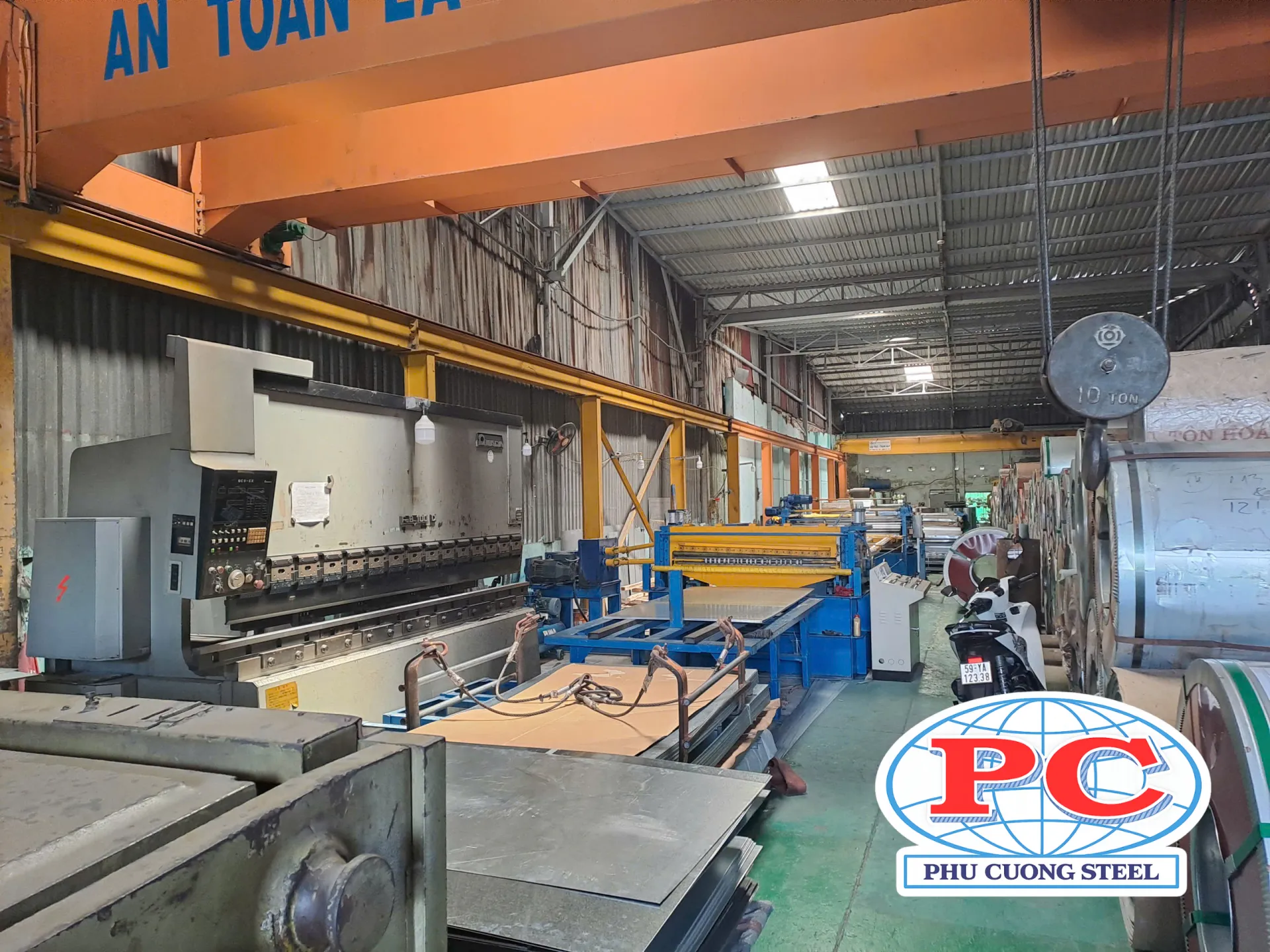
Buy Steel Sheet and Steel in District 12 and Southern Region: How to Choose the Right Supplier for Mechanical Workshops, Construction Projects
When looking to buy steel sheet and steel in District 12 or the Southern region, many customers often prioritize price. This is understandable because steel sheet and steel are materials purchased in large quantities, and even a small difference can affect the total cost of the entire order. However, in reality, price is not the only factor determining whether an order is optimal. For mechanical workshops, door manufacturers, contractors, factory construction projects, facades, railings, metal structures, or metal interior and exterior, choosing the right supplier also involves material specifications, actual thickness, steel sheet width, surface quality, fabrication capability, and delivery schedule.District 12 has a significant advantage in terms of location. From District 12, it is possible to quickly connect to many production areas, warehouses, and construction projects in Ho Chi Minh City as well as neighboring provinces such as Binh Duong, Dong Nai, Long An, Tay Ninh. This is why many mechanical and construction customers prioritize finding steel sheet and steel suppliers in District 12 instead of ordering from too far away. When the warehouse is near the workshop or construction project, customers can reduce waiting times, easily handle urgent orders, and limit incurred transportation costs.However, not every steel sheet and steel supplier is suitable for actual production needs. Some customers only need to buy a few common galvanised steel sheets, but there are also customers who need large width steel sheet 1500mm or more, EG steel sheet for mechanical use, GA steel sheet for doors, custom cut steel sheet or steel sheet requiring bending/stamping according to drawing. In these cases, the supplier needs to have a diverse warehouse, on-site fabrication machinery, and a team that understands the material to provide correct advice from the start.1. Why choose a steel sheet and steel supplier near District 12?In the steel sheet and steel industry, delivery distance directly affects cost and schedule. If customers in District 12, Hoc Mon, Go Vap, Binh Tan, Tan Phu, Thu Duc, or surrounding areas have to order from a distant warehouse, transportation costs can significantly increase. Additionally, if an urgent order needs to be delivered within the day, relying on external transport units can delay the construction or production schedule.For mechanical workshops, material delivery time is very important. A late steel sheet delivery can cause bending machines, cutting machines, welding machines, or workers to wait. For construction projects, materials arriving at the wrong time can affect the construction schedule, installation schedule, and handover schedule. Therefore, choosing a steel sheet and steel supplier near District 12 helps customers be more proactive, especially when needing to add unforeseen items or urgently change specifications.Another advantage of a nearby supplier is that customers can discuss materials directly. When buying steel sheet and steel, just looking at the quotation is sometimes not enough. Customers need to know if the steel sheet is galvanised steel sheet, EG electro-galvanised steel sheet, GA, or color-coated steel sheet; what the actual thickness is; whether the steel sheet width is suitable for the drawing; whether the surface needs to be aesthetically pleasing or just for auxiliary structures. Working with a supplier that has a clear warehouse will help customers inspect and choose more easily.2. Customer groups that often need to buy steel sheet and steel in District 12 and the Southern regionThe demand for steel sheet and steel in District 12 and the Southern region is quite diverse. The first common customer group is mechanical workshops. These workshops often need galvanised steel sheet, EG steel sheet, GA steel sheet, or thin steel plate for details, casings, cabinets, gutters, frames, covers, facades, or metal products according to drawings. For this customer group, important factors are not only price but also flatness, thickness, cut edge, and fabrication capability according to specifications.The second group is door, gate, railing, canopy, partition, and metal interior and exterior manufacturers. These products often require a beautiful steel sheet surface, limited scratches, easy painting, or easy finishing. If the wrong material is chosen, the product after fabrication may warp, be difficult to paint, fade quickly, or not meet aesthetic standards upon handover to the end customer.The third group is construction contractors, factory construction teams, and industrial construction projects. This group is often concerned with schedule, quantity, documentation, stability of supply, and ability to deliver to the construction project. For large construction projects, choosing a supplier with readily available warehouse stock, its own trucks, and the ability to process orders quickly will help limit the risk of material shortages during the construction process.The fourth group is manufacturing units in the Southern region, especially in Binh Duong, Dong Nai, Long An, and Ho Chi Minh City. These units often need a stable supply rather than buying individually each time. They may need the same type of steel sheet, the same thickness, and the same steel sheet width for a long time to ensure consistent output products. For this group, the supplier needs to provide detailed advice on specifications and support quality monitoring between batches.3. Types of steel sheet and steel commonly sought in District 123.1. Galvanised steel sheetGalvanised steel sheet is one of the most popular materials in mechanical engineering and construction. The galvanised coating helps increase rust resistance, protect the steel base, and extend material lifespan in various usage environments. Galvanised steel sheet is often used for auxiliary structures, cable trays, technical boxes, covers, partitions, cabinets, mechanical parts, and many factory items.When buying galvanised steel sheet, customers should pay attention to thickness, steel sheet width, surface, galvanised coating, and intended use. Not every item requires an excessively high galvanised coating, but if used in humid, near-water, outdoor, or corrosive environments, a more suitable material should be chosen to prevent premature degradation.See the article on galvanised steel sheet: What is galvanised steel sheet? Structure, classification, advantages, and applications in modern construction3.2. EG steel sheetEG steel sheet, often understood as electro-galvanised steel with a bluish surface, is chosen by many mechanical workshops and door manufacturers because its surface is relatively aesthetic, easy to fabricate, and suitable for many metal products. This type of material is often used in the production of doors, casings, mechanical parts, metal interior, products requiring a clean surface and easy finishing.With EG steel sheet, customers should pay attention to the surface condition upon receipt. If the surface is heavily scratched, oxidized, unevenly oiled, or has strange marks, the subsequent painting and finishing process may be affected. Therefore, it is advisable to choose a supplier with good warehouse storage and careful handling during transportation.See EG steel sheet products at Ton Thep Phu Cuong: EG ELECTRO-GALVANISED STEEL3.3. GA steel sheetGA steel sheet is also a material line of interest to many mechanical customers. Depending on usage needs, GA steel sheet can be suitable for products requiring a stable surface, easy fabrication, easy cutting, easy bending, and easy integration into the production process. When choosing GA steel sheet, customers need to check the thickness, flatness, sheet edge, and ability to meet correct specifications.See GA steel sheet products at Ton Thep Phu Cuong: GA ELECTRO-GALVANISED STEEL3.4. Large width steel sheet 1250mm, 1500mm and above 1500mmLarge width steel sheet is an important choice for orders that need to optimize cutting diagrams, reduce joints, and minimize waste. In many cases, using steel sheet with a width of 1500mm or more can help mechanical workshops divide blanks more efficiently than smaller widths. This is especially useful when producing long details, large panels, casings, gutters, doors, cladding panels, or products that need to limit joining.However, large width steel sheet also needs to be handled with suitable machinery. If the slitting machine, cutting machine, or lifting process is not good, the steel sheet may have bent edges, scratched surfaces, or be difficult to maintain flatness. Therefore, customers should prioritize suppliers experienced with large width steel sheet, with sufficiently large warehouses, and appropriate delivery vehicles.See more related articles: Large Width EG Steel Sheet 1500mm – High Aesthetic Material Solution for Modern Construction Projects4. When buying steel sheet and steel, do not just look at the unit priceA common mistake when buying steel sheet and steel is only comparing unit prices between sellers without thoroughly checking specifications. Two quotations may not differ much at first glance, but the material quality, actual thickness, steel sheet width, surface condition, and transportation costs can be entirely different. If cheaper material is purchased but then needs to be recut, results in much waste, is delivered late, or does not meet specifications, the actual total cost can be higher.For manufacturing customers, substandard material also affects productivity. Bent steel sheet, bad edges, wrong width, or scratched surfaces can slow down the cutting, bending, welding, painting, and assembly processes. If the wrong material is discovered after the product has been fabricated, the cost of correction will be much greater than choosing correctly from the start.Therefore, when buying steel sheet and steel in District 12 or the Southern region, customers should ask clearly: what type of steel sheet it is, what is the thickness, what is the steel sheet width, is custom cutting available, is delivery available, is bending/stamping support available, what is the delivery time, and whether the material is suitable for the intended use.5. Benefits of choosing a supplier that provides both materials and on-site fabrication at the warehouseIn reality, many customers buy steel sheet in one place, then have to transport it to another for cutting, slitting, or bending. This approach may be suitable for some small orders, but for orders requiring fast schedules or clear specifications, multiple transfers can easily incur costs and risks. Steel sheet may be scratched, dented, have bent edges, or lose specifications during transportation.Conversely, when choosing a supplier that provides both steel sheet and steel and has fabrication services at the warehouse, customers can handle many stages in one place. Materials are selected, cut, slit, flat bar cut, bent, or packaged according to needs before delivery to the workshop. This helps save time, reduce waste, and lessen pressure on customers, especially mechanical workshops that need to focus on finished product manufacturing.For orders requiring custom cutting, bending/stamping, or material preparation before production, direct communication with a supplier that has machinery at the warehouse also helps limit misunderstandings. Customers can provide dimensions, drawings, quantity, surface requirements, and intended use to receive more suitable advice.Refer to related articles: How Does Custom Steel Sheet Fabrication Service Help Customers Save Time and Cost?6. Ton Thep Phu Cuong – steel sheet and steel supplier in District 12 for Southern customersTon Thep Phu Cuong is a steel sheet and steel supplier in District 12, serving material needs for mechanical, construction, door, factory, facade, metal structure, and industrial manufacturing customers. Located on National Highway 1A, District 12, Ton Thep Phu Cuong is conveniently positioned for delivery to many areas in Ho Chi Minh City and neighboring Southern provinces.Main products at Ton Thep Phu Cuong include galvanised steel sheet, EG steel sheet, GA steel sheet, color-coated cold steel sheet, and many large width steel sheet specifications such as 1000mm, 1250mm, 1500mm. In particular, the company specializes in large width steel sheet lines from 1500mm upwards, suitable for customers who need to optimize cutting diagrams, reduce material waste, and limit joints in production.In addition to material supply, Ton Thep Phu Cuong also supports on-site fabrication services at the warehouse such as coil slitting, custom cutting, sheet flat bar cutting, bending/stamping, and shaping according to requirements. This is an important advantage for mechanical workshops and construction projects that need materials prepared before being put into production or construction. On-site fabrication helps customers reduce transit time, limit scratches, and be more proactive with the schedule.Another strength is that Ton Thep Phu Cuong has its own delivery trucks. By proactively managing transportation, the company can better support customers with orders requiring fast delivery, same-day delivery, or direct delivery to workshops and construction projects. This is especially useful for large width steel sheet orders, custom cut steel sheet orders, or orders requiring close coordination with the construction schedule.7. Experience in ordering steel sheet and steel for mechanical workshops and construction projectsTo order steel sheet and steel effectively, customers should prepare some basic information beforehand. First is the type of material needed: galvanised steel sheet, EG steel sheet, GA steel sheet, or color-coated cold steel sheet. Second is the desired thickness and steel sheet width. Third are the cutting dimensions, quantity, surface requirements, and desired receipt time. If there are drawings or images of the product to be made, customers should include them for more accurate advice.For orders requiring fabrication, customers should not specify dimensions too close to the finished product size without accounting for waste, cut edges, bend lines, or bend radius. Some products will change dimensions after bending due to material stretching or edge folding. Therefore, if unsure, it is advisable to discuss with the supplier beforehand to avoid buying insufficient width or choosing the wrong thickness.Additionally, customers should inspect the material upon receipt. Factors to check include quantity, thickness, steel sheet width, length, surface, cut edge, and packaging condition. For large orders or mass production, checking from the outset helps detect discrepancies early and address them promptly before putting them into production.8. ConclusionBuying steel sheet and steel in District 12 and the Southern region is not just about finding a place with good prices, but also about choosing the right material supplier for actual needs. For mechanical workshops, door manufacturers, contractors, and construction projects, factors such as thickness, steel sheet width, surface quality, custom cutting capability, fabrication services, and delivery schedule all directly affect production efficiency.If customers need galvanised steel sheet, EG steel sheet, GA steel sheet, color-coated cold steel sheet, large width steel sheet, or coil slitting, sheet cutting, bending/stamping services in District 12, choosing a supplier with readily available warehouse stock, on-site fabrication machinery, and its own delivery trucks will help orders be processed faster, more accurately to specifications, and more cost-effectively.Ton Thep Phu Cuong – Leading Reputable Large Width Steel Sheet DistributorTon Thep Phu Cuong – Partnering with Every Construction Project always upholds the motto “Quality builds the brand” as the foundation in providing materials to mechanical, construction, factory, door, facade, and industrial manufacturing customers.We offer a diverse range of products such as galvanised steel sheet width 1000mm, 1250mm, 1500mm, EG steel sheet, GA steel sheet, color-coated cold steel sheet and many types of large width steel sheet for production. In particular, Ton Thep Phu Cuong has the advantage of a large warehouse, genuine blank sources from major factories, and competitive prices in District 12 and Ho Chi Minh City, suitable for customers needing stable material supply in the Southern region.In addition to material supply, we also own modern machinery systems, supporting coil slitting, custom cutting, sheet flat bar cutting, bending/stamping, shaping, and steel sheet fabrication at the warehouse. Our team of technicians, knowledgeable in drawings, can assist customers in choosing the appropriate thickness, steel sheet width, and specifications for actual production needs. Additionally, Ton Thep Phu Cuong has its own delivery trucks, helping to proactively manage schedules and optimize transportation costs for customers in Ho Chi Minh City and surrounding areas.Contact information:PHU CUONG STEEL SHEET AND STEEL CO., LTD.Address: 2177C – 2177D National Highway 1A, Dong Hung Thuan Ward, District 12, Ho Chi Minh CityPhone: 0933 919 899Email: tonthepphucuong@gmail.comWebsite: tonthepphucuong.comSee more related articles:How to Read Material Symbols on Steel Sheet and Steel Delivery Notes: What Do SGCC, SECC, EG, GA, Z100, Z180, Z275 Mean?Why is it the same electro-galvanised steel sheet but paint adhesion differs? A perspective from surface, coating, and fabrication processSECC vs SGCC: Comparison of steel door materials & 5 risks of wrong selection (factories need to know)How to choose suitable steel sheet thickness for each pre-engineered factory item
Read article →
How to Read Material Symbols on Steel Sheet and Steel Delivery Notes: What Do SGCC, SECC, EG, GA, Z100, Z180, Z275 Mean?
In the mechanical engineering industry, doors, light structures, metal furniture, and steel sheet fabrication, one of the most common errors is not in the production stage but right from the ordering and receiving steps: misreading material symbols on the delivery note. Many units see SGCC, SECC, EG, GA, Z100, Z180 or Z275 recorded on documents but only generally understand that “it is coated steel sheet”, whereas in reality, each symbol represents a different material group in terms of steel substrate, coating method, coating weight, and suitable application scope.See more related articles:SECC vs SGCC: Comparing steel door materials & 5 risks of wrong selection (workshops need to know)Lifespan of galvanised steel sheet: How Does the Coating Layer Z120 – Z180 – Z275 Affect It?Misunderstanding symbols can lead to very real consequences: choosing the wrong type of steel sheet for humid environments, buying a coating layer that is too thin for outdoor construction projects, using the wrong material for parts requiring a good electrostatic paint finish, or ordering steel that is not optimal for bending, pressing, and assembly processes. For mechanical workshops and procurement departments, this is not just a technical issue but also a matter of cost, schedule, and delivery reputation.1. What are material symbols on a delivery note and why is it important to read them correctly?Material symbols are a set of abbreviations that indicate steel substrate type, coating method, coating grade, specifications, thickness, width or some technical requirements related to the shipment. On delivery notes, invoices, packing lists, or factory documents, these symbols serve as a “common language” between suppliers, procurement departments, workshop technicians, and end-users.By correctly reading the symbols, buyers can answer core questions:Is this hot-dip galvanised steel sheet or electro-galvanised steel?Is this surface suitable for mechanical fabrication, door manufacturing, equipment casings or outdoor environments?Is the coating layer sufficient to meet the desired lifespan?Does this material prioritize surface aesthetics or corrosion resistance?Is the current delivery order correct according to the type confirmed in the quotation and drawings?In other words, correctly reading symbols is the first step to controlling input quality. When the input is correct, subsequent processes such as cutting, slitting, bending, welding, painting, and assembly will operate stably. If the input is incorrect, all subsequent steps can be affected.2. Understanding the symbol groups correctly: Where do SGCC, SECC, EG, GA differ?To read documents accurately, it is first necessary to understand that codes like SGCC, SECC, EG, GA are not random names. They belong to different material groups and are often associated with a specific application logic.2.1. SGCC is generally understood as hot-dip galvanised steelIn market practice, SGCC is often used to refer to the group of cold-rolled steel substrates that have been galvanised by continuous hot-dip method. The characteristic of this material is that it has good corrosion resistance, suitable for many applications in mechanical engineering, covers, gutters, partitions, light structures, accessories, and parts requiring priority for surface durability against the environment.A point to note is that when the document states SGCC, buyers should not stop there. It is necessary to check the accompanying coating symbol such as Z100, Z120, Z180, or Z275 to know the level of galvanised coating. Both are SGCC, but Z100 and Z275 will provide significantly different levels of corrosion protection.See how to measure the coating here: How to Measure Galvanised Coating at the Construction Project: Avoid Errors When Checking Z100, Z180, Z2752.2. SECC is often associated with electro-galvanised steel, with a more beautiful and uniform surfaceSECC is often favored by the mechanical engineering, industrial electrical, electrical cabinet, equipment casing, and parts markets that require good aesthetic finishing. The reason is that electro-galvanised steel often provides smooth, bright, uniform surface, very favorable for products requiring a beautiful appearance or needing painting, embossing, or finer shaping.See Phu Cuong Steel Sheet's SECC products: ELECTRO-GALVANISED STEEL EG - EG STEEL SHEET, ELECTRO-GALVANISED STEEL SHEET GA - GA STEEL SHEET, GALVANISED STEEL SHEET (SGCC - SECC)However, buyers also need to understand the true nature: electro-galvanised steel is not always the optimal choice for all environments. If the goal is higher corrosion resistance in harsh conditions, a careful comparison with the hot-dip galvanised group is needed, and the correct usage context should be reviewed.For more details, you can refer to the article: What is Electro-Galvanised Steel? Why the Door, Powder Coating, Metal Furniture Industries Use It So Much2.3. EG is a common term for electro-galvanised steelEG is a commonly used abbreviation to refer to the group Electro-Galvanized, meaning electro-galvanised steel. In the actual market, many places also familiarly call it EG steel sheet or electro-galvanised material with a beautiful surface, suitable for precision mechanical engineering, door manufacturing, metal interior details, electrical equipment, and parts requiring relatively high aesthetics.When seeing the EG symbol on documents, the technical department should further check factors such as base thickness, width, surface condition, compatibility with bending and stamping processes, and painting requirements if any.Phu Cuong Steel Sheet is proud to be a supplier of EG steel sheet/electro-galvanised steel EG for the Southern region; you can refer to the article: Where to Buy Reputable EG Steel Sheet in Ho Chi Minh City? Quotation & Experience in Choosing the Right Standard2.4. GA is the group of galvannealed steelGA is often related to the group galvannealed, meaning material that has been treated after galvanising to create a surface layer with different properties than conventional galvanised. In practical applications, this group is often of interest when customers need to balance paint adhesion, surface finish, and stability in certain forming or surface finishing processes.Not every workshop needs to use GA, but for manufacturing units with relatively strict process requirements, identifying GA instead of mistaking it for EG or SGCC is very important. Misidentifying this group can lead to discrepancies in both product aesthetics and subsequent production processes.3. What are Z100, Z180, Z275? These are not “sub-codes,” but very important informationMany people, when reading delivery notes, only pay attention to SGCC or SECC, while Z100, Z180, Z275 are considered sub-codes. In fact, this is an extremely important part because it directly relates to coating class. Simply put, this is how the level of galvanised coating on the steel surface is expressed according to the provisions of each applicable standard.In practical terms, it can be understood as follows:Z100: a more basic coating level, suitable for some indoor applications or environments that are not too harsh.Z180: higher coating level, often considered when surface durability needs to be increased for heavier use conditions.Z275: high coating class, often mentioned in the market when material with better corrosion resistance is needed for applications requiring longer service life.It is important not to assume that the highest coating level is best for all problems. Selecting the appropriate coating level must be based on usage environment, desired lifespan, budget, and fabrication process. If used indoors, dry details, and lifespan is not highly demanding, specifying Z275 might unnecessarily increase costs. Conversely, if used in humid or outdoor environments and only a low coating level is chosen, future repair and replacement costs could be much higher.4. Why do purchasers and mechanical workshops often misread material codes?There are three main reasons why codes are misread or incompletely read.4.1. Only remembering trade names without understanding technical essenceMany entities are accustomed to referring to materials by market names such as EG steel sheet, galvanised steel sheet, GA steel sheet without associating those names with the corresponding standard group or plating method. This means that when receiving documents, they are unsure which code corresponds to the type they ordered.4.2. Delivery notes are only checked by quantity, not by material codeMany warehouses or workshops, when receiving goods, only check the number of coils, number of sheets, nominal thickness, and width, while the material code is overlooked. Only when put into production is it discovered that the surface is incorrect, the coating is incorrect, or the fabrication properties are not as expected.4.3. Lack of standardization in material notation between quotations, orders, and drawingsSome entities provide very brief quotations, for example, only stating “galvanised steel sheet 1.2mm” or “EG 0.8”, but when goods are delivered, documents list the full technical code. If the purchasing department, warehouse accounting, and technical department do not agree on a common terminology, the risk of misunderstanding is very high.5. Practical application: how does reading codes correctly help mechanical workshops and contractors?For mechanical workshops, reading codes correctly helps select materials that closely match product functionality. If making cabinet casings, metal interior details, door accessories, or details requiring a good surface finish, the electro-galvanised group might be a more suitable direction. If making parts that prioritize rust resistance, lightweight structures, covers, or details likely to be exposed to harsher environments, the hot-dip galvanised group with an appropriate coating level will be more worth considering.For contractors and purchasing departments, understanding material codes helps:Accurate cross-referencing between quotation – purchase order – delivery note – actual goods received.Reduce disputes with suppliers due to misunderstanding product names.Limit returns, project delays, and generation of unusable inventory materials.Optimize budget by choosing the correct coating grade instead of buying more than needed.Easier to work with technical staff, QC, and the construction team at the construction project.6. Risks if misreading symbols SGCC, SECC, EG, GA or Z100, Z275Misreading symbols is not simply mistaking product names. It leads to a series of very real risks in operation.Firstly, incorrect service life. A component placed in a high humidity environment but choosing unsuitable coating material will degrade faster than expected. Damage does not appear immediately upon receipt but usually manifests after a period of use, at which point the repair cost is much higher.Secondly, wrong surface finish. Some parts require a beautiful, uniform surface for painting or delivering finished products, but if the wrong material group is used, the aesthetic quality may not meet expectations.Third, wrong cost calculation. Many companies purchase a higher grade of material than actual needs because they don't understand product codes, leading to unnecessary raw material cost increases. Conversely, choosing lower than needed will save in the short term but be costly later on.Fourth, wrong production schedule. When a wrong code is discovered after uncoiling, cutting blanks, or pressing, the material is often difficult to return to its original state. The workshop loses material, loses time, and delays delivery to the customer.7. How to read steel sheet and steel delivery notes correctly and faster in practiceTo reduce errors, businesses should standardize an incoming material inspection process following 5 concise steps.7.1. Read in the correct order: material group first, coating layer afterFor example, if you see product code SGCC Z275, separate it into two parts: SGCC is the base group and coating method; Z275 is the coating grade. Do not just look at Z275 and assume that's all you need to know.7.2. Compare with the product's actual intended useBefore warehousing, ask again: what part is this material used for, what environment, does it need a good surface finish or stronger rust resistance? This question helps immediately detect batches that are “correct name but wrong purpose”.7.3. Also check thickness, width, and surface conditionThe material code may be correct, but if the thickness or width is wrong, the order is still incorrect. For mechanical engineering businesses, width is especially important because it directly affects blank utilization rate, sheet cutting method, and waste in fabrication.7.4. Standardize the coding method on quotations, orders, and internal slipsIdeally, each order should clearly state according to the structure: material group – coating grade – thickness – width – cutting/fabrication specifications. For example: “SGCC Z275, thickness 1.2mm, width 1250mm, cut to specifications”. This way of writing is much clearer than the general “galvanised steel sheet 1.2mm”.7.5. Work with suppliers capable of providing technical consultation, not just quotationsA good supplier not only delivers correctly but also helps customers read correctly, choose correctly, and optimize correctly. This is especially important for entities purchasing materials for mechanical workshops, door manufacturing, structural fabrication, electrical cabinets, metal furniture, or construction projects requiring complex blanking.8. Conclusion: understanding symbols correctly is a small step but determines order qualitySGCC, SECC, EG, GA, Z100, Z180, or Z275 are not just abbreviations “for the sake of it” on delivery notes. They are the part that expresses the essence of the material and are the basis for buyers, technical staff, QC, and production workshops to correctly control inputs. Just by misreading one symbol, businesses can choose the wrong material, increase costs, affect the surface of the finished product, or cause corrosion resistance issues later.In the context where customers increasingly demand fast delivery, doing it right from the start and minimizing errors, understanding and correctly reading material symbols is a very practical skill. It is not a theory exclusively for material engineers, but rather fundamental knowledge needed for anyone buying, selling, inspecting, or fabricating steel sheet and steel.Phu Cuong Steel Sheet and Steel – Leading Reputable Large Width Steel Sheet DistributorIf your business is looking for a supplier EG steel sheet, GA steel sheet, galvanised steel sheet with clear specifications, advising on the correct material code and supporting cutting fabrication according to actual needs, Steel Sheet Steel Phu Cuong is a suitable choice for long-term partnership. Instead of just providing quotations by generic names, Phu Cuong aims to help customers understand the correct material, choose the correct coating, correct thickness, correct width and correct fabrication method to reduce waste in production.Phu Cuong's strengths are large warehouse, modern machinery, proactive on-site fabrication and has the ability to supply popular steel sheet types as well as large width steel sheet 1000mm, 1250mm, 1500mm. This is a very practical advantage for mechanical workshops, door manufacturers, metal furniture, structures and contractors who need to optimize blanking, reduce joints and limit material waste.In addition to supplying materials, Phu Cuong also offers services such as coil unwinding, cutting to specifications, bending and stamping, in-warehouse fabrication, on-site delivery. Owning full machinery along with delivery trucks helps order processing be faster, more flexible and optimizes logistics costs for customers in District 12, Ho Chi Minh City and surrounding areas.Contact information:Address: 2177C–2177D QL1A, Dong Hung Thuan Ward, District 12, HCMCPhone: 0933 919 899Email: tonthepphucuong@gmail.comWebsite: tonthepphucuong.com
Read article →
Why Are Cut Steel Sheets Skewed? Correct Understanding of Diagonal Tolerance in Steel Sheet Fabrication
In the buying, selling, and fabrication of steel sheets, most users primarily focus on factors such as thickness, width, cut length as required, surface type, and coating. However, there is a very important technical criterion that is often overlooked during the receiving or acceptance phase: diagonal error. Simply put, a steel sheet can have the correct length and width, but still not be truly “square.” In such cases, the cut sheet may not show the problem clearly to the naked eye, but errors will begin to arise during bending, welding, or assembly.For mechanical workshops, door manufacturers, electrical cabinets, cable trays, panel walls, metal furniture components, or auxiliary structures, a diagonally skewed steel sheet is an annoying error because it doesn't cause obvious damage from the outset, but subtly reduces the accuracy of the entire process. A slightly skewed sheet can result in non-parallel bent edges, misaligned assembly holes, gaps in assembled components, or a finished frame that is not perpendicular. When errors appear in a series of parts, the consequences are not only aesthetic defects but also increased time for cold repair, increased labor for adjustment, and reduced productivity.Understanding diagonal error correctly not only helps businesses purchase more accurately but also helps select fabrication units with actual quality control capabilities. This article will delve into the concept, formation mechanism, practical applications, and solutions to minimize diagonal skew errors when cutting steel sheets to specification.1. What is diagonal error? Why is it more important than many people think?When a steel sheet is described as “square,” it doesn't just mean the sheet has the correct length and width according to the order. Geometrically, a rectangular sheet that meets requirements must also have four right angles and two equal diagonals. If the two diagonals are not equal, it indicates that the sheet is diagonally skewed, meaning its actual shape is no longer a standard rectangle but has been tilted or shifted at an angle to some extent.In actual production, diagonal error is a quick check to assess the overall perpendicularity of the cut sheet. This is a very useful indicator because it simultaneously reflects multiple factors: the straightness of the cut line, the stability of the feeding system, the accuracy of the length stop mechanism, and the alignment status of the machine. If only length and width are measured, you might miss that one edge is slightly angled relative to the other. But if both diagonals are measured, the geometric deviation will immediately become apparent.Therefore, in many medium-precision mechanical applications and civil mechanical applications requiring good assembly, checking the diagonal is a very worthwhile step. It is especially important for sheets that will be used for box bending, making doors, frames, panels, technical partitions, or components with multiple punched holes at precise locations. A small diagonal skew might not cause an impact if used only as a simple cover plate, but it will become a major problem if used for assembly or further fabrication according to drawings.See more related articles:What Materials Are Used to Produce Steel Doors, Fire Doors, Metal Doors?Steel Sheet Materials Used in the Mechanical Manufacturing Industry – Which Type to Choose for Precision FabricationSteel Sheet Thickness Tolerance Standard (Avoid Shortage When Receiving Goods)2. Why do cut steel sheets become diagonally skewed?Diagonal skew does not occur randomly. It is often the result of a combination of machinery, parameter settings, material condition, and operational procedures. Understanding the root cause will help address the problem fundamentally rather than just fixing errors at the final stage.2.1. Feeding system not running straightDuring the coil slitting and flattening process, if the material does not enter the machine perfectly centered, the cut sheet may be slightly shifted horizontally. This deviation can be very small at the input, but when extended over several meters of feeding, it will turn into a more obvious geometric error in the finished sheet. This situation often occurs when the guide assembly is not accurate, the pull rollers are misaligned, or the material coil is not placed coaxially with the production line.2.2. Cutting blades or cutting mechanism not perfectly parallelIf the cutting blade assembly is not parallel to the sheet's direction of movement, the cut line will not be perfectly perpendicular to the material's longitudinal edge. In this case, even if the length measured at some positions is correct, the entire sheet can still be diagonally skewed. This is a machine-mechanical error and is often difficult to detect with only a cursory visual inspection.2.3. Length stop or travel sensor unstableIn some cutting lines, sheet length is controlled by sensors, encoders, or length stops. If this system has errors, slips, or inconsistent feedback, the cutting point may vary slightly between operations. When combined with feeding path errors, the sheet may no longer be square as desired. This problem is more pronounced in large batch orders or when machine speeds are high.2.4. Material with residual stress or unstable flatnessNot all diagonal skew errors are due to the machine. In many cases, the steel coil itself has internal stress, slight curvature, or uneven coil edges. When uncoiled, the material tends to release stress and undergo geometric shifts. If the flattening system is not good enough or the material has variations between the two edges, the cut sheet may exhibit relative loss of squareness.2.5. Operating speed too high but lacking controlMany units run production lines with the goal of increasing productivity, but when the speed is too high while the guiding and clamping systems are not stable, the sheet can shift before the cutting point. The result is that each sheet is slightly off, and this error accumulates into an entire batch that is inconsistent. This is a very frustrating type of error because it looks “acceptable” overall, but then a series of problems arise during assembly.3. How to quickly check if a steel sheet is diagonally skewedIn actual warehouses and mechanical workshops, specialized geometric inspection tools are not always available. However, there are some very practical ways to identify and control diagonal skew errors.3.1. Measure both diagonalsThis is the most basic and effective method. Use a tape measure from one corner to the opposite corner, then measure the other diagonal. If the two measurements differ, the sheet is no longer perfectly square. The greater the difference, the more significant the diagonal skew. In practice, it is not always necessary for them to be absolutely equal, but the difference must be within an acceptable range for the intended use.3.2. Check with a large square or square gaugeFor sheets that are not too large, one edge of the sheet can be placed against a standard stop or a large square can be used to check the angle. This method is suitable for quickly detecting errors where angles are open or closed. However, for long and wide sheets, measuring both diagonals is still more reliable.3.3. Stack multiple sheets togetherIf a batch contains many sheets of the same specification, stacking them is a very quick way to identify deviations. If the corners do not align evenly, the edges are shifted, or the ends do not fit together, it is very likely that the batch has diagonal errors or cutting line errors.3.4. Test check at the bending or sample assembly stageIn a production environment, sometimes the most effective way to detect errors is to run a sample test. If, after bending, the two opposite edges are not parallel as designed, or if, when joined with a mating part, corner interference, corner gaps, or edge misalignment occurs, it is a sign that the diagonal of the input blank should be rechecked.4. How does diagonal skew affect actual fabrication and assembly?Many people think that diagonal error is just a minor geometric flaw. But in sheet metal work, this is an error with a cascading effect.For the bending stage, if the blank is not square, the edge used as the bending reference will no longer be correctly correlated with the other edge. The result is that after multiple bends, the box or folded part is prone to twisting, losing parallelism, or having actual size deviations at the opening of the part.For the frame welding stage, a diagonally skewed sheet or part requires the welder to make more adjustments. If ignored, the frame can be distorted, the weld line unsightly, and the joint gaps uneven. For parts requiring aesthetics or tightness, this problem is even more apparent.For the punching and assembly stage, diagonal error causes a misalignment between the sheet edge and the hole position. While the drawing may reference the edge, the actual edge is not square. When installing screws, attaching hinges, assembling covers, or mounting module assemblies, parts will be difficult to fit as expected.For finished products requiring a good appearance, a diagonally skewed sheet easily creates the impression that the product is tilted, the gaps on both sides are uneven, and the edges look unbalanced. This is an error that customers can easily see even without deep technical understanding.For production productivity, diagonal error forces workers to perform cold repairs, re-cut, or select blanks before fabrication. These operations do not add value but consume labor, time, and reduce the stability of the production line.5. When does diagonal error become a major risk?Not all applications are equally sensitive to this error. But there are cases where diagonal error needs to be controlled more strictly.First is box-bent or multi-edge bent parts. The more edges, the more easily geometric errors accumulate. A non-square input blank will make the finished product difficult to square.Second is parts with holes, slots, or assembly positions according to the drawing. When the sheet edge is the positioning reference for subsequent stages, any geometric error of the edge will lead to functional errors.Third is sheets used for doors, lids, panels, partitions, cabinet doors. These are applications where the naked eye can easily detect uneven gaps or non-standard angles.Fourth is mass production orders. A small error, if repeated on hundreds or thousands of sheets, will no longer be a small matter. In such cases, the cost of correction can be much greater than the cost of control from the outset.Fifth is large width or long length materials. The larger the sheet, the harder it is to maintain a stable material path. Therefore, the requirements for equipment, alignment, and operational experience are also higher.6. Solutions for controlling diagonal error when slitting and flattening coilsTo limit diagonally skewed sheets, the problem needs to be viewed as a continuous technical chain, not just a simple cutting operation.6.1. Inspect from the incoming material sourceSteel coils need to have stable surface quality, thickness, flatness, and coil edges. If the coil already has geometric errors or uneven stress, the subsequent cutting stage will find it very difficult to achieve stable squareness. Selecting the right material source is the first step to reduce risk.See more articles: What is Steel Sheet Flatness Tolerance? Its Impact on Fabrication and Actual Installation6.2. Align the guiding and feeding systemThis is a very important factor. The material must run straight, without edge flipping or eccentricity. The roller system, guide tables, and stop assembly must be maintained and checked regularly. Even a small deviation at this stage is enough to make an entire batch out of square.6.3. Periodically check cutting blades and cutting mechanismCutting blades not only need to be sharp but also correctly installed, parallel, and operate stably. A cutting mechanism with slight play or misalignment will directly affect the geometric quality of the sheet.6.4. Run initial batch samples before mass cuttingThis is a very practical step but often overlooked. Just measuring the length, width, and two diagonals of the first few sheets can help detect errors early. Performing this step well helps avoid mass cutting only to find the entire batch needs rework.6.5. Synchronization between material supplier and subsequent fabrication partyIf the supplier understands what the sheet will be used for, they can proactively control the criteria more appropriately. For example, sheets used for panels, box bending, cabinet casings, or precision assembly parts will require a higher level of control compared to sheets used for general shielding. Clear technical communication from the outset helps save significant costs later.6.6. Don't just look at the price, but also at quality stabilityIn the material market, unit price differences sometimes lead buyers to prioritize price first. However, for orders requiring further fabrication, the true cost is not just the purchase price of the steel sheet but also in error handling time, scrap rates, and delivery delays due to rework. A stable supply in terms of specifications and geometric quality often results in lower overall operating costs.7. Conclusion: A sheet cut to the correct dimensions is not necessarily a sheet that meets requirementsDiagonal deviation is a simple but very valuable technical indicator in practice. It helps reflect whether the cut sheet is truly square, thereby predicting the ease of subsequent bending, welding, punching, and assembly stages. In many cases, diagonal misalignment errors go unnoticed during goods receipt, but become the cause of slow production, costly rework, and reduced finished product quality.For mechanical enterprises, door manufacturers, metal furniture companies, electrical cabinet manufacturers, or auxiliary structure providers, checking and controlling diagonals should be considered part of input quality management, not an auxiliary step. A steel sheet cut to the correct length, width, and maintaining stable squareness will help the entire subsequent process run smoother, reduce issues, and increase professionalism when delivering to customers.8. Phu Cuong Steel Sheet and Steel – Leading Reputable Large-Width Steel Sheet DistributorFor entities needing to purchase steel sheet for further bending, stamping, welding, or assembly according to drawings, choosing a supplier is not just about availability, but also about the ability to meet stable specifications and provide practical fabrication support. Phu Cuong Steel Sheet and Steel currently supplies key material lines such as EG steel sheet, GA steel sheet, galvanised steel sheet along with various specifications serving mechanical engineering, doors, metal interior/exterior, and auxiliary structures.Phu Cuong's advantage lies in its ability to supply steel sheet widths of 1000mm, 1250mm, 1500mm, suitable for various practical fabrication needs, especially for orders requiring optimized material loss. Additionally, the company has coil slitting machines, custom cutting, bending and stamping, and in-warehouse fabrication, making it more convenient for customers to process materials according to production needs. Owning private delivery trucks is also a significant advantage, helping to proactively manage delivery schedules, optimize logistics costs, and support fast orders in District 12, Ho Chi Minh City, and surrounding areas.With a commitment to accompanying customers with technical and practical application support, Phu Cuong Steel Sheet and Steel is suitable for mechanical workshops, construction companies, and manufacturing enterprises that require a stable material source, clear specifications, and in-warehouse fabrication support services.Contact Information:2177C–2177D National Highway 1A, Dong Hung Thuan Ward, District 12, Ho Chi Minh CityHotline: 0933 919 899Email: tonthepphucuong@gmail.comWebsite: tonthepphucuong.comSee more articles on the same topic:What is Protective Oil on Steel Sheet and Steel? When is it Needed, When Must Oil Be Removed Before Fabrication?EG steel sheet in mechanical engineering, doors, and metal furniture: Why do many workshops prioritize it?What is steel sheet bending fabrication? Process, advantages, and practical applicationsHow to Measure Galvanised Coating Thickness at Construction Projects: Avoid Errors When Checking Z100, Z180, Z275\Where to Buy Reputable EG Steel Sheet in Ho Chi Minh City? Quotation & Experience in Choosing the Right StandardSteel Sheet Width Tolerance After Slitting: Why Do Mechanical Workshops, Door Manufacturers, and Facade Companies Need to Check Carefully?
Read article →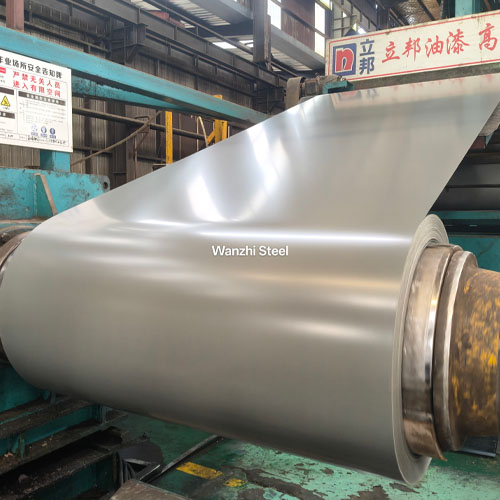
What is Protective Oil on Steel Sheet and Steel? When is it needed, when must oil be removed before fabrication?
In the steel sheet and steel industry, especially for materials such as galvanised steel sheet, electro-galvanised steel sheet EG, GA or cold-rolled steel, many customers will notice a very thin layer of oil on the surface when receiving goods. Some believe this is a sign of old, dirty goods or material “sweating”. In reality, this assessment is not accurate. In many cases, that oil layer is a temporary protective oil used by the factory or fabrication unit to support the material surface during storage, packaging, transportation, and subsequent processing.It is important to understand correctly: protective oil is not a permanent coating and not an absolute anti-rust solution. It is only a short-term support layer, helping to reduce the risk of the surface being affected during the movement of goods from warehouse to workshop, from workshop to construction project, or while awaiting fabrication. If the nature of this oil layer is misunderstood, businesses may encounter many problems such as retaining oil when it should be removed, or removing oil too early, causing the surface to lose the necessary support layer before production.1. What is protective oil on steel sheet and steel?Protective oil is a thin layer of oil applied to the metal surface to create a temporary barrier between the steel or plating layer and the external environment. The main purpose of this oil layer is to reduce the risk of direct contact with moisture, fingerprints, dirt, or some minor mechanical impacts during handling. Depending on the material type, the oil can be very thin, almost invisible to the naked eye, only creating a slightly slippery feel when touching the surface.In commercial practice, buyers often encounter protective oil on batches of cold-rolled steel, electro-galvanised steel, galvanised steel, or materials that need to maintain a relatively clean surface appearance before further fabrication. For customer groups working with mechanical engineering, electrical cabinets, metal doors, steel furniture, cable trays, stamped accessories or details requiring a stable surface, the presence or absence of protective oil will significantly affect subsequent production operations.It is also necessary to clearly distinguish between protective oil and other surface treatment layers. Protective oil is not synonymous with a passivation layer, not synonymous with a high-tech anti-fingerprint layer, nor does it replace a primer or a finish coat. It is only a short-term support solution, which can be retained in some stages but may also need to be removed before steps such as painting, bonding, printing, or surface finishing.See more related articles: How to Measure Galvanised Coating at Construction Project: Avoid Errors When Checking Z100, Z180, Z2752. Why do materials have protective oil?The first reason is intermediate rust prevention during storage and transportation. Steel sheet and steel, especially plated or cold-rolled surfaces with a good appearance, are very susceptible to damage when exposed to humid environments, hand sweat, condensed water vapor, or unsuitable packaging conditions. A thin layer of oil can reduce direct contact with these agents, thereby helping the surface remain more stable for a short period.See more related articles: Why steel sheet gets scratched during transportation and how to effectively fix itThe second reason is to limit fingerprints and minor scratches due to handling. For materials used in products where the surface is visible, such as electrical cabinet enclosures, thin mechanical parts, metal furniture accessories, or some household components, the material's appearance is very important. When workers load/unload, uncoil, cut sheets, or transfer blanks through various stages, protective oil helps the surface to be less prone to fingerprints or dry friction causing hairline scratches.The third reason is to provide lubrication during forming fabrication. When the material goes through stamping, rolling, bending, or drawing processes, the surface slipperiness affects mold friction, edge quality, and operational stability. Protective oil cannot always replace specialized processing oil, but in many cases, it helps the material “run smoother”, reduces surface dragging, or somewhat limits the risk of scratches during operation.3. What are the practical uses of protective oil?The first use is short-term surface protection. This is very important for businesses that purchase materials but do not immediately put them into production. In warehouses with limited ventilation or when goods have to go through multiple transport stages, a thin oil layer helps the surface remain more stable compared to completely dry goods. For entities that buy large quantities and then divide them into batches for gradual production, this is a significant benefit.The second use is to help maintain surface aesthetics before finishing fabrication. Many customers only look at the thickness and selling price, forgetting that a beautiful, clean, and scratch-free surface is also a quality criterion. If materials are used for exposed parts, just a few scratches or surface mold can reduce the value of the finished product. Protective oil helps mitigate this risk in the initial stage.The third use is to facilitate certain mechanical fabrication processes. In a workshop setting, blanks with moderate slipperiness are generally easier to handle than overly dry blanks. This is especially significant when businesses perform mass fabrication, requiring consistency between batches. When the surface is consistent, machine operations and operator handling are also more uniform.4. What protective oil cannot do?This is where many people misunderstand. Protective oil is not a permanent anti-rust layer. If the material is left out in the rain, placed in a prolonged humid environment, has water trapped between steel sheet layers, or is stored close to a damp floor, that thin oil layer cannot “save” the surface from the risk of stains, mold, or localized corrosion. Especially with galvanised steel sheet or electro-galvanised, prolonged moisture retention can cause storage stains, white rust, or degrade the surface.Protective oil also does not mean that the material can skip the cleaning step before painting or bonding. In many applications, if the oil is retained without proper surface treatment, paint adhesion may be poor, glue stickiness may decrease, and joints may not achieve the desired quality. In other words, protective oil is useful in the pre-fabrication stage, but if it goes into surface finishing, it may become a factor that needs to be removed.Furthermore, protective oil is not the only criterion for evaluating material quality. The presence of oil does not absolutely mean better steel; the absence of oil also does not mean poor quality goods. True quality also lies in the steel substrate, plating layer, actual thickness, surface uniformity, tolerance, material origin, and suitability for the business's fabrication needs.5. When should protective oil be retained?Oil should be retained when the material is not immediately put into painting, bonding, or surface finishing stages, especially if the goods still need short-term storage or further transportation to another workshop. In cases where the business is waiting for cutting and slitting schedules, stamping, or waiting to combine production batches, retaining the oil will be more beneficial than cleaning it completely too early.Oil should be retained when the priority is surface preservation during coil splitting, sheet cutting, internal transportation, or manual handling. Mechanical workshops working with small and medium volumes often have multiple loading and unloading operations, making the surface prone to hand contact and friction. In such cases, protective oil is a reasonable support layer.Additionally, for some basic forming stages, retaining a thin oil layer also helps reduce initial friction. However, this needs to be evaluated for each specific production line. If the production technology already has its own processing oil system or requires a very clean surface before the machine, businesses should agree on processing standards from the outset to avoid acting on intuition.6. When must oil be removed before fabrication?Businesses should remove oil when the material is about to enter stages requiring high surface cleanliness, such as powder coating, liquid painting, surface printing, film bonding, technical adhesive bonding, or certain types of welding and joining that require control of surface contamination. If oil is not removed correctly, the top finish may be affected in terms of adhesion, uniformity, or aesthetics.In applications using industrial adhesives, technical tapes, or foam tape, oily surfaces often reduce adhesion from the outset. Similarly, in finish painting, residual oil can create paint shrinkage defects, pinholes, or localized peeling. For semi-finished products targeting customers who demand high aesthetic appearance, the surface cleaning step is almost mandatory.However, oil removal must also be done at the right time. If cleaned too early and then left in storage for a long time, the surface may lose its temporary support layer and again face the risk of mold and mildew. The most reasonable approach is to arrange oil removal close to the stage requiring a clean surface, rather than removing it upon receipt of goods and then waiting for production.7. Common risks when misunderstanding protective oilThe first risk is that customers see an oily surface and immediately think it's a defective product, then demand it be completely cleaned before warehousing. If the warehouse is not dry enough or the goods are not used immediately, this decision can make the material surface more susceptible to damage during storage.The second risk is retaining the oil when the next stage requires a clean surface. This is a common mistake in small workshops that lack a unified process between purchasing, warehousing, and production. The result is that adhesion defects are only discovered during painting, bonding, or finishing, leading to wasted time and an increased rate of defective goods.The third risk is using oily material but storing it incorrectly, for example, placing it close to the ground, sealing it in humid conditions, or allowing water to seep between the sheet layers. In such cases, many mistakenly believe “it's okay because it has oil”, while in reality, prolonged moisture retention is the major cause of surface damage.8. How to correctly store materials with protective oilFirst, always prioritize dry, airy warehouses and avoid temperature differences that cause condensation. This is a basic principle that many entities overlook. Steel sheet and steel are not only afraid of direct rain but also of silent condensation inside packages or between stacked layers.Second, do not place materials close to a damp floor and do not leave torn packaging for extended periods. If the goods are coils or sheet bundles, proper use of pallets, wooden supports, or racks helps reduce the risk of moisture absorption from the warehouse floor. For opened packages, a plan for early use should be in place, and careless re-packaging should be avoided.Third, if goods have been de-oiled in preparation for painting or bonding, they should be moved to the next stage as soon as possible. The surface after de-oiling is cleaner but also more “sensitive” to the environment. Therefore, managing the time between stages is a very important factor.9. Phu Cuong Steel Sheet and Steel – Leading Reputable Large-Width Steel Sheet DistributorFor customers in mechanical engineering, doors, metal furniture, electrical cabinet fabrication, or units requiring stable materials for production, correctly understanding the surface condition, such as the presence or absence of protective oil, is only one part. More importantly, it is to choose a supplier who can advise on the right type of material, the right surface, the right specifications, and the right stage of use. This is also why many customers prioritize working with experienced suppliers rather than just buying goods based on quotations.Phu Cuong Steel Sheet and Steel – Partnering with Every Construction Project with the motto Quality Makes the Brand, currently supplies materials such as EG steel sheet, GA steel sheet, galvanised steel sheet along with various specifications serving mechanical, industrial, and construction production. The company has advantages in terms of large warehouse, billet source from genuine factory, especially capable of meeting specifications and material widths suitable for the actual needs of the production workshop.In addition to supplying materials, Phu Cuong also has a system of new technology coil slitting – stamping and bending machines, supporting cutting to specification, coil slitting, stamping and bending, fabrication at the warehouse helping customers shorten blank preparation time. The team of technicians has practical experience, understands drawings and fabrication requirements, supporting businesses in choosing materials more suitable for each intended use. Thanks to proactive machinery and processes, goods are cut flat and beautifully, to specification, limiting scratches and reducing intermediate costs.Another advantage of Phu Cuong Steel Sheet and Steel is owning its own delivery trucks, helping optimize time and logistics costs for customers in District 12, Ho Chi Minh City, and surrounding areas. For urgent orders or those requiring coordination between material supply and preliminary fabrication at the warehouse, this is a very practical plus for manufacturing customers.If you are looking for a source of EG steel sheet, GA, galvanised steel sheet or need a unit to support coil slitting, cutting to specification, stamping and bending, on-site fabrication, Phu Cuong Steel Sheet and Steel is a worthwhile option for businesses needing stability in quality, progress, and technical consultation.Contact information:Phu Cuong Steel Sheet and SteelAddress: 2177C–2177D National Highway 1A, Dong Hung Thuan Ward, District 12, Ho Chi Minh CityPhone: 0933 919 899Email: tonthepphucuong@gmail.comWebsite: tonthepphucuong.comSee more articles on the same topic:Where to Buy Steel Sheet and Steel in District 12? Suggestions for Suppliers with Stock, Fabrication, and Fast DeliveryWhy do electro-galvanised steel sheets have different paint adhesion? A perspective from surface, coating, and fabrication processCan galvanised steel sheet be welded? Technical facts many workshops don't understandGalvanised Hoa Sen Z120: Characteristics, Applications And Notes When UsingWhy Is The Steel Sheet Cut Out Skewed? Correct Understanding of Diagonal Error In Steel Sheet Fabrication
Read article →